LASIK eye surgery is the most widely performed laser vision correction procedure in the world, with millions of procedures carried out since its introduction. By precisely reshaping the cornea, LASIK corrects nearsightedness, farsightedness, and astigmatism, often reducing dependence on glasses and contact lenses dramatically. Modern LASIK uses computer-guided lasers and detailed corneal mapping, making the procedure far more precise and customizable than early versions of the surgery.
This guide gives you a balanced, up-to-date picture of LASIK as it stands in 2026: how the procedure works, who makes a good candidate, what the real risks are, what recovery feels like, and what it costs. Laser vision correction is elective surgery on a precious sense, so an informed decision matters. This article is for education only, and anything you read here should be discussed with a qualified refractive eye surgeon before you consider treatment.
Table of Contents
- How LASIK Works
- Who Is a Good Candidate (and Who Isn’t)
- Benefits and Vision Outcomes
- Risks and Possible Side Effects
- What Recovery Looks Like
- Cost of LASIK in 2026
- Alternatives to LASIK
How LASIK Works
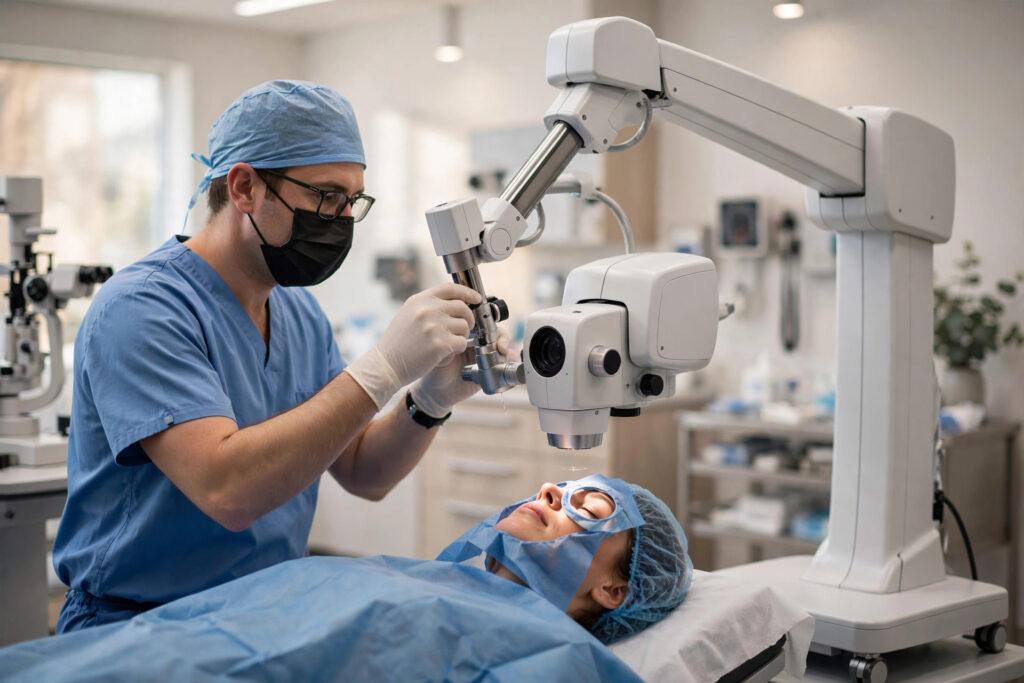
LASIK is a two-laser, two-step procedure performed on the cornea, the clear front window of the eye. First, a femtosecond laser creates a thin, hinged flap in the outer corneal tissue. The surgeon gently folds this flap back, exposing the underlying corneal bed. Second, an excimer laser removes microscopic amounts of tissue in a pre-programmed pattern, reshaping the cornea so light focuses correctly on the retina. The flap is then laid back in place, where it adheres naturally without stitches.
The entire laser time usually lasts well under a minute per eye, and the whole appointment typically takes about half an hour including preparation. Planning is heavily computerized: before surgery, the clinic maps your cornea with wavefront or topography-guided imaging, and the laser follows that personalized treatment profile. Most people remain awake throughout, with numbing eye drops for comfort and a mild sedative sometimes offered for nerves.
What surprises many first-time patients is how quickly vision begins to improve. Because the reshaping is precise and the flap heals in place, many people notice dramatically clearer vision within hours. That speed of visual recovery is one of the main reasons LASIK remains the most popular laser vision correction option in 2026, even as newer alternatives have emerged.
Who Is a Good Candidate (and Who Isn’t)
Good candidacy starts with a stable prescription. Surgeons generally want your glasses prescription to have been unchanged for at least a year or two, since operating on a still-changing eye can mean the result drifts afterward. Most candidates are adults over 18 with healthy eyes and a prescription within the treatable range for their corneal thickness. A thorough pre-operative eye exam, including corneal thickness measurement and tear film assessment, is the essential first step and is how surgeons rule out hidden problems.
Several conditions make LASIK a poor choice. Very thin corneas, keratoconus (a cone-shaped corneal disorder), uncontrolled dry eye disease, autoimmune conditions that impair healing, and certain corneal infections or scars can disqualify a patient. Pregnancy and nursing are also reasons to wait, since hormonal shifts can temporarily change the prescription. A responsible surgeon will turn away unsuitable candidates, which is why the consultation and testing process is so thorough.
Expectations matter as much as anatomy. LASIK aims to reduce dependence on corrective lenses, not to guarantee perfect vision forever, and it does not stop the natural age-related need for reading glasses that arrives in most people’s mid-40s. If you go into the consultation process understanding that, the outcome conversation with your surgeon will be far more productive.
Benefits and Vision Outcomes
The headline benefit is freedom. Many people who choose LASIK are motivated by life without the daily routine of contact lenses or glasses: swimming, travel, early mornings, and sports all become simpler. Patient satisfaction surveys consistently report high satisfaction rates, with the large majority of patients saying they would choose the procedure again. For active lifestyles, the difference can feel genuinely transformative.
Vision outcomes are strong for suitable candidates. A large majority achieve 20/20 vision or better after treatment, and most of the remainder land within a range where they function well without full-time correction. Modern wavefront-guided and topography-guided treatments have also reduced the night-vision complaints, such as halos and glare, that were more common with earlier laser generations.
There are practical benefits too. Over a lifetime, the one-time cost of LASIK can compare favorably with decades of buying contact lenses, solutions, and replacement glasses, though the math depends on your age and prescription needs. Many clinics in 2026 also offer financing plans, which is part of why cost has become less of a barrier than it was a decade ago.
Risks and Possible Side Effects
No surgery is risk-free, and an honest guide to LASIK eye surgery must cover the downsides. The most common side effect is temporary dry eye, which affects many patients in the weeks after surgery as corneal nerves heal. Artificial tears usually manage it, and it typically improves over months, but a small minority experience longer-lasting dryness that needs ongoing treatment. Your surgeon should assess your tear film before surgery, since pre-existing dry eye raises this risk.
Night-vision disturbances such as glare, halos, and starbursts around lights are the next most common complaint, particularly in the early healing period. Modern treatment profiles have made persistent night-vision problems much less common than in LASIK’s early years, but they can still occur, especially in patients with large pupils or high prescriptions. Under-correction, over-correction, and small amounts of residual astigmatism are also possible, and some patients need an enhancement procedure to fine-tune the result.
Serious complications are rare but real: flap complications, infection, and corneal ectasia, a progressive weakening and bulging of the cornea, are the risks surgeons screen hardest to prevent. This is why the FDA’s LASIK information page emphasizes realistic expectations and careful candidate screening. Choosing an experienced surgeon with modern equipment, and following every post-operative instruction, is the best way to keep an already low risk profile as low as possible.
What Recovery Looks Like
LASIK recovery is famously fast, which catches many patients off guard in a good way. Most people rest with their eyes closed for a few hours after the procedure, then notice significantly clearer vision the same evening or the next morning. Clinics typically schedule a check-up the day after surgery, and many patients return to desk work within a day or two, provided they follow the drop schedule and avoid eye rubbing.
The first week has rules worth respecting. You will use prescribed antibiotic and anti-inflammatory drops, plus frequent lubricating drops. Avoid swimming, hot tubs, and eye makeup for the period your surgeon specifies, and wear the provided eye shields while sleeping for the first few nights to protect the flap. Strenuous exercise and contact sports need a longer pause; your surgeon will give you a timeline based on your healing.
Full visual stabilization takes longer than the first dramatic improvement suggests. Minor fluctuations, mild dryness, and occasional nighttime halos can persist for several weeks to a few months while the cornea settles. Follow-up visits at intervals your clinic sets are how your surgeon confirms everything is healing as expected, so keep every appointment even if your vision feels perfect.
Cost of LASIK in 2026
LASIK pricing varies widely by region, surgeon experience, and technology used, and most clinics quote a per-eye price. In 2026, reputable providers generally fall within a broad range from budget clinics to premium practices offering the latest topography-guided platforms. Be cautious of prices that seem dramatically lower than the local average, since they may reflect older technology, less experienced surgeons, or a quote that excludes follow-up care and enhancements.
Ask exactly what the quoted price includes: pre-operative testing, the procedure itself, all follow-up visits for at least the first year, and any enhancement policy if a touch-up is needed. Some clinics bundle lifetime enhancement commitments, while others charge separately. Also clarify what happens if you are found unsuitable at the screening stage; many reputable clinics charge little or nothing for the evaluation itself.
LASIK is usually considered elective, so standard vision insurance rarely covers it, though some plans offer a discount through preferred provider networks. Health savings accounts and flexible spending accounts can often be used, and many clinics offer monthly financing. Compare the total cost of financing against paying outright, and never let a limited-time discount pressure you into a same-day decision about surgery.
Alternatives to LASIK
LASIK is not the only path to less dependence on glasses. PRK, the original laser vision correction, reshapes the cornea without creating a flap, making it an option for people with thinner corneas or those in contact sports and military service; the trade-off is a slower, more uncomfortable recovery. SMILE, a newer flapless laser procedure, is another alternative your surgeon may discuss, particularly for nearsighted patients concerned about dry eye.
For prescriptions beyond the laser-treatable range, or for eyes with conditions that rule out corneal surgery, implantable collamer lenses (ICLs) place a corrective lens inside the eye without removing tissue, and the procedure is reversible. Refractive lens exchange, essentially cataract-style surgery performed earlier in life, is sometimes recommended for patients approaching presbyopic age. Each option has its own risk and benefit profile, which is exactly what a consultation is for.
And of course, modern glasses and contact lenses remain excellent, non-surgical options. Keeping a current pair of eyeglasses as backup is wise even after successful laser surgery, since vision can change over the decades. The American Academy of Ophthalmology’s LASIK overview is a solid neutral resource to read before any consultation, and a second opinion is always reasonable when you are deciding about elective eye surgery.