
One of the first decisions new contact lens wearers face is choosing between daily disposables and monthly lenses. Both correct your vision effectively, but they differ significantly in cost, convenience, hygiene, and comfort. Getting the daily vs monthly contact lenses decision right saves you money and keeps your eyes healthier in the long run.
This guide compares the two options across every factor that matters: how they work, what they cost over a year, which is better for sensitive eyes, and how your lifestyle should influence the choice. By the end, you will know which replacement schedule fits you best.
Table of Contents
- How Daily and Monthly Lenses Differ
- Cost Comparison Over a Year
- Hygiene and Eye Health
- Comfort Comparison
- Convenience and Lifestyle Fit
- Environmental Impact
- Which Should You Choose?
How Daily and Monthly Lenses Differ
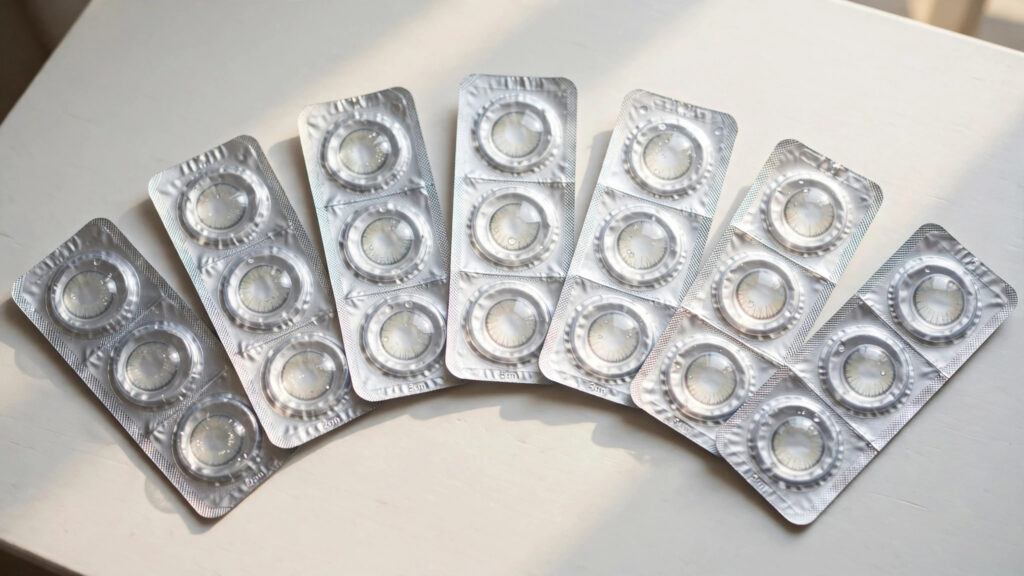
Daily disposable lenses are worn once and thrown away at the end of the day. Each morning starts with a fresh, sterile pair straight from a sealed blister pack. There is no cleaning, no storage cases, and no solutions to buy. You simply put them in, wear them, and discard them.
Monthly lenses are designed to be worn for up to 30 days, removed each night, cleaned with contact lens solution, and stored in a case. At the end of the month, you discard them and open a fresh pair. Some monthly lenses are approved for extended or continuous wear, meaning they can be slept in for a set number of nights, but most wearers remove them nightly.
The fundamental trade-off is simplicity versus ongoing cost. Dailies cost more per lens but eliminate the entire cleaning routine and its associated products. Monthlies cost less per lens but demand diligent daily care. Your willingness to maintain that routine is central to the daily vs monthly contact lenses decision.
Cost Comparison Over a Year
Daily disposables typically cost more per year than monthlies. A year’s supply of dailies for both eyes runs higher because you use 730 lenses annually versus 24 monthly lenses. Monthly lenses also require multipurpose solution, cases, and sometimes enzymatic cleaners, which narrows but does not close the gap.
However, the real-world cost picture is more nuanced. Monthly lens wearers who skip steps, stretch wearing schedules, or develop complications from poor hygiene can end up spending more on doctor visits and treatments. Dailies’ higher upfront cost buys a lower risk profile, which has real economic value.
Also consider your actual wearing frequency. If you wear contacts only a few days a week and wear glasses the rest of the time, dailies are often cheaper in practice because you only open what you use. Monthly lenses expire 30 days after opening regardless of how many days you actually wore them, so part-time wearers waste most of each pair.
Hygiene and Eye Health
This is where dailies have their clearest advantage. Every pair is sterile and fresh, which dramatically reduces the buildup of deposits, bacteria, and allergens that accumulate on reusable lenses. Studies consistently show lower rates of eye infections and complications among daily disposable wearers compared to reusable lens wearers.
Monthly lenses are safe when cared for properly, but proper care is a bigger ask than most people realize. It means rubbing and rinsing lenses every night even when you are tired, replacing solution daily rather than topping off, cleaning the case regularly, and replacing the case every few months. Each skipped step increases infection risk.
For anyone with a history of eye infections, allergies, or a tendency to cut corners on routines, dailies are the safer choice. The FDA provides contact lens safety guidance emphasizing that following the recommended replacement schedule is one of the most important things wearers can do to protect their eye health.
Comfort Comparison
Many wearers find dailies more comfortable, especially late in the day. Because each pair is fresh, there is no accumulated protein buildup or surface degradation dulling the comfort. People with dry eyes or allergies often notice the biggest difference, as a fresh lens surface irritates less than a weeks-old one.
That said, monthly lens technology has improved significantly. Modern silicone hydrogel monthlies offer excellent oxygen permeability, and some wearers find a well-maintained monthly lens perfectly comfortable for the full month. Comfort is also highly individual: the specific lens brand, your tear chemistry, and your environment all play roles.
If comfort is your top priority and you have tried monthlies with mediocre results, switching to dailies is worth discussing with your eye doctor. Sometimes the lens material matters more than the replacement schedule, and your doctor can help you sort out which factor is driving your discomfort.
Convenience and Lifestyle Fit
Dailies win on convenience for travelers, athletes, and anyone with an unpredictable schedule. No solutions to pack, no cases to keep track of, no cleaning routine when you stumble home late. They are also ideal for occasional wearers who want contacts for sports, events, or weekends without committing to a care routine.
Monthlies suit dedicated daily wearers who do not mind the routine and want to minimize cost. If you wear contacts every single day and maintain your cleaning habits reliably, monthlies deliver excellent value. They also generate less packaging waste per year, which matters to environmentally conscious wearers.
Consider your track record honestly. If you know you are the type to fall asleep in lenses or skip cleaning steps, dailies remove the temptation entirely. The best lens is the one you will actually use as directed, and advances in lens materials mean both options perform well when used correctly.
Environmental Impact
It is worth addressing the environmental question directly. Daily lenses generate more plastic waste per year: hundreds of blister packs versus a dozen monthly packs plus solution bottles. For eco-conscious wearers, this is a genuine drawback of dailies.
However, the comparison is not as lopsided as it first appears. Monthly lenses require plastic solution bottles every month or two, plus cases and packaging. Some manufacturers now offer recycling programs for blister packs and lenses, which can meaningfully reduce the footprint of daily wear.
If sustainability is a deciding factor for you, ask your eye care provider about recycling programs in your area. And remember that the most sustainable choice is the one that keeps your eyes healthy: complications from poorly maintained monthlies have their own environmental and financial costs.
Which Should You Choose?
Choose daily disposables if you value convenience and hygiene above all, wear contacts part-time, have dry eyes or allergies, travel frequently, or know you will not maintain a rigorous cleaning routine. The higher cost buys peace of mind and simplicity.
Choose monthly lenses if you wear contacts every day, maintain routines reliably, want to minimize cost, and prefer less packaging waste. They reward disciplined wearers with excellent value and comfort.
Either way, get a proper contact lens fitting from your eye care professional before deciding. Your eye doctor will evaluate your tear film, corneal shape, and lifestyle, then recommend specific brands in each category. The American Optometric Association’s contact lens resources offer additional guidance. Whichever schedule you choose, follow it exactly: never stretch dailies into multiple days or monthlies beyond 30 days.