
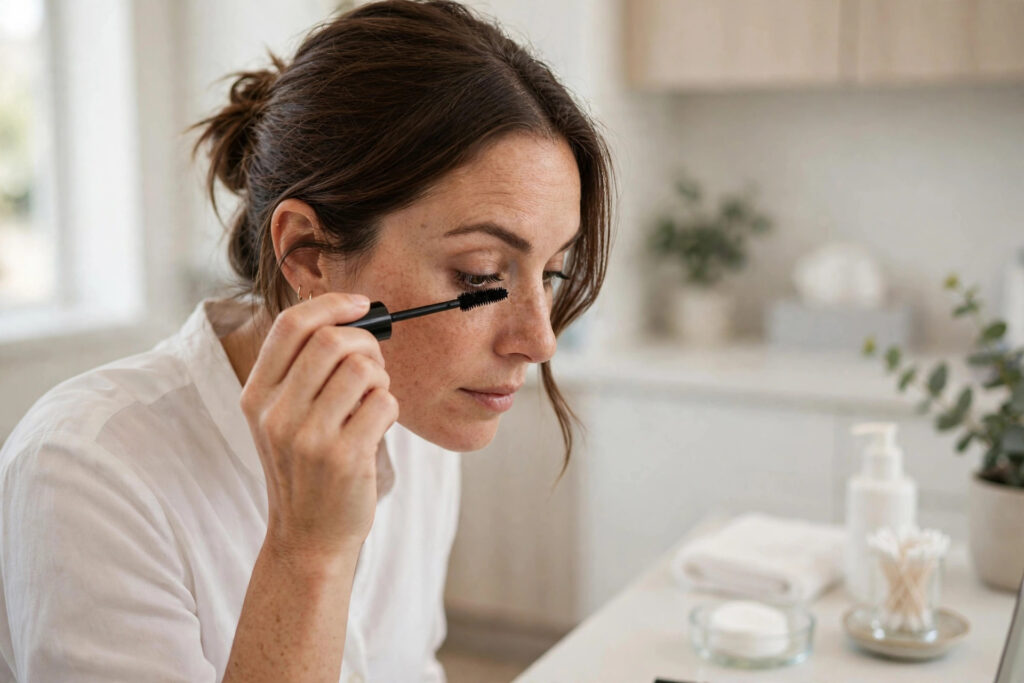
Makeup after LASIK is a question nearly every patient who wears cosmetics asks, and the answer requires a little more patience than most hope for. Eye makeup — mascara, eyeliner, eyeshadow — sits right at the edge of the surgical site, and particles, bacteria, and the pressure of application and removal can all interfere with healing. Most surgeons ask patients to avoid eye makeup for at least one to two weeks, with some products waiting even longer.
This article lays out the typical timeline for returning to makeup after LASIK, which products are riskiest, how to reintroduce cosmetics safely, and what to do if something irritates a healing eye. These are general guidelines — your own surgeon’s protocol is the one that governs your recovery.
Table of Contents
- Why Makeup Is Off-Limits Right After Surgery
- The First Week: What to Avoid
- When Each Product Type Is Safe Again
- Mascara, Eyeliner, and Lash Products
- Reintroducing Makeup Safely
- Skincare, Creams, and Treatments Near the Eyes
- What to Do If Makeup Irritates a Healing Eye
Why Makeup Is Off-Limits Right After Surgery
There are three reasons surgeons restrict makeup after LASIK, and all of them trace back to the healing corneal flap. First, cosmetic products harbor bacteria. Mascara wands, eyeliner pencils, and powder brushes collect microbes with every use, and applying them near a fresh surgical site raises the infection risk during the window when the eye is most vulnerable. Studies of used cosmetics consistently find bacterial contamination, which is harmless on intact skin but unwelcome near healing tissue.
Second, particles migrate. Eyeshadow powder, glitter, mascara fibers, and dried eyeliner flakes drift into the tear film and across the corneal surface. On a normal eye this causes brief irritation; on a healing eye it can inflame the flap edge, trigger excessive rubbing, and in rare cases contribute to flap complications. Waterproof formulas are especially problematic because they demand more aggressive removal.
Third, application and removal involve pressure and rubbing. Tugging at the eyelid to apply liner, scrubbing off waterproof mascara, or pressing with a cotton pad all transmit force to the eye. In the first weeks after LASIK, that mechanical stress is exactly what surgeons want to minimize while the flap adheres. A comprehensive post-operative OCT Scan for Eyes: What It Shows“>eye exam schedule exists partly to catch any irritation from exactly these kinds of exposures.
The First Week: What to Avoid
During the first week after LASIK, the rule is simple: no makeup on or around the eyes. That means no mascara, no eyeliner, no eyeshadow, no false lashes, no lash tinting, and no kohl. Many surgeons extend the restriction to two weeks for eye makeup specifically, even while clearing face makeup sooner. Foundation, blush, and lip products kept well away from the eye area are usually permitted within a few days, applied gently and removed without dragging anything across the eyelids.
This is also the week to avoid anything that sends fumes or particles toward the eyes: spray deodorants and hairsprays used near the face, powdery setting sprays applied carelessly, and heavily fragranced products. If you must use hairspray, close your eyes, turn away, and let the mist settle before turning back. These sound like small precautions, but the first week is when the flap is least secure, and caution here pays off for the entire recovery.
It is worth planning ahead. If you have an event in the first week after surgery, consider scheduling the procedure afterward instead — many patients find the restriction more socially awkward than medically difficult. Your surgeon’s team has heard this question many times and can help you time the procedure around your calendar.
When Each Product Type Is Safe Again
Timelines vary by clinic, but a common pattern looks like this. Face makeup kept away from the eyes — foundation, concealer on the cheeks, blush, bronzer, lipstick — is often cleared within three to seven days, applied with clean hands or brushes and removed gently. Eye makeup typically waits one to two weeks at minimum, with mascara and eyeliner at the longer end of that range because they sit closest to the lash line and are hardest to remove gently.
Products with the longest restrictions include waterproof mascara and eyeliner, glitter or shimmer eyeshadows, false eyelashes and lash extensions, lash growth serums, and anything applied with shared testers. Many surgeons ask patients to wait a full month before waterproof formulas and lash extensions, since removal involves the most tugging and the most chemical exposure near the eye. Cream eyeshadows and pencil liners, which remove more easily, are usually the first eye products cleared.
When in doubt, ask at a follow-up visit rather than guessing. Surgeons would much rather answer a quick question about a specific product than treat an irritated flap afterward. Bring the product or a photo of its ingredient list if you use anything unusual — medicated lash products and prescription eye-area treatments deserve individual review. The American Optometric Association’s eye care guidance reinforces the importance of keeping the eye area clean during healing.
Mascara, Eyeliner, and Lash Products
Mascara is the product surgeons scrutinize most. The wand goes directly against the lash line, the formula flakes as it dries, and removal requires repeated strokes across the lid. When your surgeon clears mascara — often around the two-week mark — start with a fresh tube rather than the one you were using before surgery. Old mascara is a bacterial reservoir, and beginning recovery with a contaminated product undermines the whole waiting period.
Eyeliner follows similar logic. Pencil liners that remove with gentle cleanser are preferable to liquid or gel liners in the early weeks, and tightlining — applying liner inside the waterline — should wait until healing is well established, since it places product directly against the eye’s moist surfaces. Kohl and traditional kajal, which are often applied inside the lower lid, deserve the longest wait of all.
False lashes, lash extensions, and lash lifts involve adhesives, solvents, and prolonged lid manipulation during application — all poor companions for a healing cornea. Most clinics advise waiting at least a month, and the removal process for extensions should never involve pulling or picking at the lashes yourself. Lash growth serums, including prescription ones, should be discussed individually with your surgeon, since some can cause redness and irritation even in unoperated eyes. Patients who relied on Scleral Lenses: Who Needs Them?“>contact lenses partly to show off eye makeup may be relieved to learn that lens-free eyes tolerate cosmetics just as well once healed.
Reintroducing Makeup Safely
When your surgeon gives the green light, reintroduce eye makeup gradually rather than all at once. Start with one product — say, a fresh mascara — and see how your eyes respond over a day or two before adding liner and shadow back. This staged approach makes it easy to identify the culprit if irritation appears, rather than guessing among five new-old products at once.
Hygiene rules matter more than ever during the first months. Replace mascara and liquid liner every two to three months as standard practice, never share eye makeup, and keep brushes and applicators clean — wash them weekly with gentle soap and let them dry completely. Do not add water or saliva to dried-out mascara; that introduces bacteria directly into the tube. And remove makeup every night without exception: sleeping in eye makeup is irritating for anyone and doubly so for eyes still settling after LASIK.
Removal technique is where most damage happens. Choose a gentle, fragrance-free makeup remover and press a soaked cotton pad against the closed lid for several seconds to dissolve product before wiping — never scrub. Work from the outer corner inward with light strokes, and rinse with lukewarm water afterward. If a product consistently requires aggressive removal, it is not the right product for your recovery period, no matter how much you like it. Quality How to Clean Sunglasses Properly“>sunglasses during the day also reduce the squinting and watering that can smudge makeup and tempt midday touch-ups near healing eyes.
Skincare, Creams, and Treatments Near the Eyes
Eye creams, serums, and anti-aging treatments around the orbital area raise similar questions. Most surgeons clear gentle, fragrance-free moisturizers kept away from the lash line within the first week, but advise keeping active ingredients — retinoids, alpha-hydroxy acids, vitamin C serums, and prescription topicals — away from the eye area for at least two weeks, sometimes longer. These products migrate with body heat and blinking, and chemical irritation near a healing flap is an avoidable risk.
Facials, chemical peels, microdermabrasion, and laser skin treatments near the eyes should wait until your surgeon clears them, often a month or more. The combination of steam, exfoliating agents, extraction pressure, and bright treatment lights is a lot for healing eyes to handle. When you do resume, tell your aesthetician about the LASIK and its date — a good practitioner will adjust the treatment to protect your eyes.
Eyelash tinting, eyebrow tinting, and brow lamination involve dyes and chemicals applied very close to the eyes, often with the eyes closed for extended periods. Treat these like eye makeup with a longer timeline: most clinics suggest waiting at least two to four weeks and confirming at a follow-up first. When in doubt, the conservative choice is always the safe one — healing only happens once.
What to Do If Makeup Irritates a Healing Eye
Even with careful timing, irritation can happen — a flake of mascara in the eye, a new liner that stings, redness after a full face of products. The first step is always the same: stop using the product, remove all makeup gently, and rinse with preservative-free artificial tears. Do not rub the eye, no matter how much it itches or waters.
Mild, brief irritation that resolves within an hour or two after removal is usually just that — irritation. But redness that spreads, pain that intensifies, discharge, increasing light sensitivity, or any change in vision after a makeup exposure warrants a prompt call to your surgeon. Do not try to diagnose the difference yourself; the clinic’s triage team does this daily and will tell you whether you need to be seen.
Keep a simple log if reactions recur: which product, when applied, what symptoms, how long they lasted. Patterns emerge quickly — often a single product or a specific ingredient is the trigger — and the log makes your follow-up visit far more productive. Most patients find that by the one-to-three-month mark, their eyes tolerate their full routine exactly as before, and the waiting period becomes a distant memory. Until then, patience and fresh products are the formula. The FDA’s eye cosmetic safety page offers additional background on keeping cosmetics safe for all eyes, healing or not.