
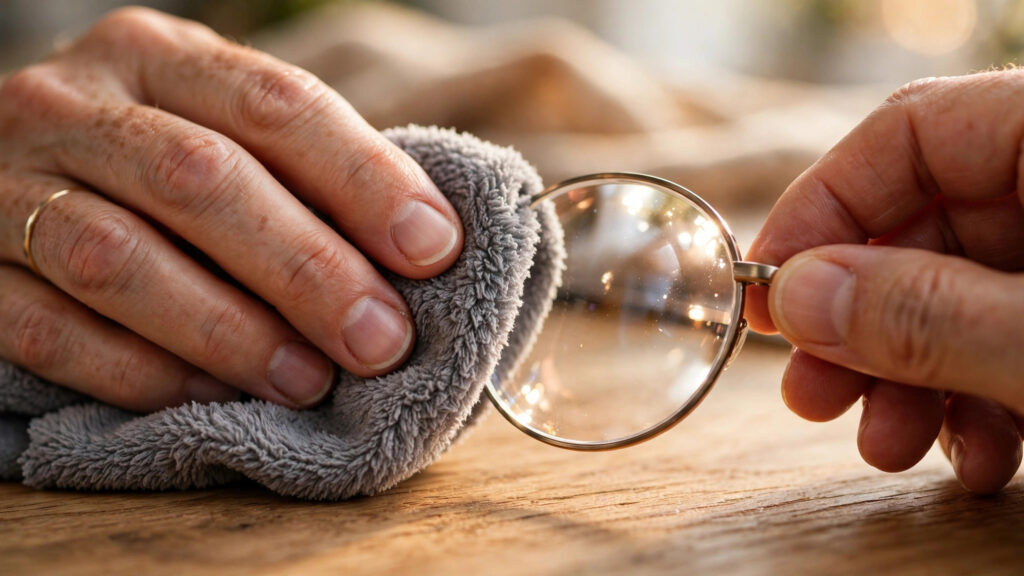
Most scratched lenses aren’t victims of accidents — they’re victims of cleaning. Wiping your glasses on your shirt, using a paper towel, or buffing them dry when they’re dusty grinds microscopic grit across the lens surface, creating the haze of fine scratches that slowly ruins clarity. The frustrating part? Proper cleaning takes about thirty seconds.
Here’s the right way to clean eyeglasses without scratching them, the mistakes that destroy lenses and coatings, and how to keep your glasses crystal clear for years.
Table of Contents
- Why Glasses Get Scratched During Cleaning
- The Right Cleaning Method, Step by Step
- Cleaning On the Go
- Mistakes That Ruin Lenses
- Protecting Anti-Reflective and Other Coatings
- Storage and Daily Habits
Why Glasses Get Scratched During Cleaning
Lens surfaces — even with hardened scratch-resistant coatings — are softer than you think. Dust, sand, and everyday airborne grit are essentially tiny rocks. When you wipe a dry lens, you drag those particles across the surface under pressure, and each one can leave a micro-scratch. One wipe won’t show damage, but hundreds of dry wipes create the cloudy haze that makes lenses look old.
Coated lenses are especially vulnerable. Anti-reflective and other specialty lens coatings sit as thin films on the lens surface; abrasive cleaning wears through them, causing the peeling and crazing that ruins otherwise good lenses. The fundamental rule: never wipe a dry, dirty lens. Always rinse or wet first.
The Right Cleaning Method, Step by Step
The gold-standard method recommended by opticians: rinse your glasses under lukewarm (not hot) tap water to wash away dust and grit. Apply a tiny drop of mild, lotion-free dish soap to each lens and gently rub with your fingertips — clean fingers, not nails — covering lenses, nose pads, and the frame crevices where oils collect. Rinse thoroughly, then shake off excess water.
Dry with a clean microfiber cloth using light pressure — blotting and gentle wiping, not aggressive buffing. That’s it. This method is safe for every lens material and coating, costs essentially nothing, and takes under a minute. Do it once daily and your lenses will stay clearer far longer. The American Academy of Ophthalmology recommends this same soap-and-water approach as the safest routine.
Cleaning On the Go
You won’t always have a sink handy. For touch-ups, use a lens spray (alcohol-free if you have premium coatings) and a clean microfiber cloth — never wipe dry. Keep a microfiber cloth in your case and wash it regularly; a dirty cloth is just sandpaper with better marketing. Pre-moistened lens wipes are convenient for travel, but choose individually wrapped ones designed for coated lenses.
If your lenses are visibly dusty or gritty and you have no water or spray, wait. Seriously — wearing slightly smudged glasses for an hour beats grinding dust into your sunglasses or everyday lenses. A quick breath-fog and shirt wipe is the classic emergency move, but make it rare, not routine.
Mistakes That Ruin Lenses
The hall of shame: paper towels and tissues (wood fibers are abrasive), shirt tails and ties (embedded dust and rough weave), household glass cleaner (ammonia and harsh solvents attack coatings), hot water (can damage lens coatings and warp frames), and saliva (unhygienic and ineffective). Each is common; each shortens lens life.
Also avoid “miracle” scratch-removal products. No cream or polish can truly remove scratches from modern coated lenses — at best they fill scratches temporarily; at worst they strip coatings. Deep scratches mean it’s time for new lenses, not a tube of promises. And if your vision seems off even with clean lenses, schedule an eye exam — the problem may be your prescription, not your cleaning.
Protecting Anti-Reflective and Other Coatings
AR coating, blue-light filters, and mirror coatings need the same gentle treatment, with one extra caution: avoid alcohol-heavy cleaners unless the coating manufacturer approves them. Some solvents degrade specific coating formulations. When in doubt, soap and water is always safe.
Hydrophobic topcoats — the layers that make water bead and smudges wipe away easily — wear down gradually with cleaning no matter what you do, but gentle methods preserve them far longer. If your lenses suddenly seem to attract smudges more than they used to, the topcoat may be wearing thin — another sign the lenses are approaching replacement time, not a cleaning failure.
Storage and Daily Habits
How you store glasses matters as much as how you clean them. Always put them in a hard case when not on your face — not in a pocket, purse, or perched on your head. Place them lens-side-up if you must set them down temporarily, and never leave them on a car dashboard where heat can damage coatings and warp frames.
Build the habit: rinse and wash daily, microfiber touch-ups as needed, case every time. Teach kids the same routine early — children’s glasses take the most abuse, and good habits protect an investment worth hundreds of dollars while keeping vision at its sharpest.