Many people assume the vision screening at school, work, or the DMV is the same as an eye exam. It is not. Screenings and comprehensive exams serve different purposes, use different tools, and catch different problems. Understanding the eye exam vs vision screening distinction ensures you get the right level of care at the right time.
This guide explains what each one includes, what screenings commonly miss, when a screening is sufficient, and why comprehensive exams remain irreplaceable. Knowing the difference protects you from the false reassurance of a passed screening.
Table of Contents
- What a Vision Screening Is
- What a Comprehensive Eye Exam Is
- Side-by-Side Comparison
- What Screenings Commonly Miss
- The Danger of False Reassurance
- When a Screening Is Enough
- Getting the Right Care
What a Vision Screening Is
A vision screening is a brief, basic check designed to identify obvious vision problems that warrant further evaluation. School screenings typically involve reading an eye chart at distance. Workplace screenings may add basic near vision or color checks. DMV screenings verify you meet minimum legal vision standards for driving.
Screenings are usually performed by nurses, trained volunteers, or automated equipment rather than eye doctors. They take a few minutes, cost little or nothing, and serve a triage function: pass means no obvious problem detected, fail means see an eye doctor for a full evaluation.
The key limitation is right in the name: screening. These checks are designed for speed and throughput, not thoroughness. They answer one narrow question, usually “can this person read the chart,” and say nothing about eye health, binocular function, or the full range of vision.
What a Comprehensive Eye Exam Is
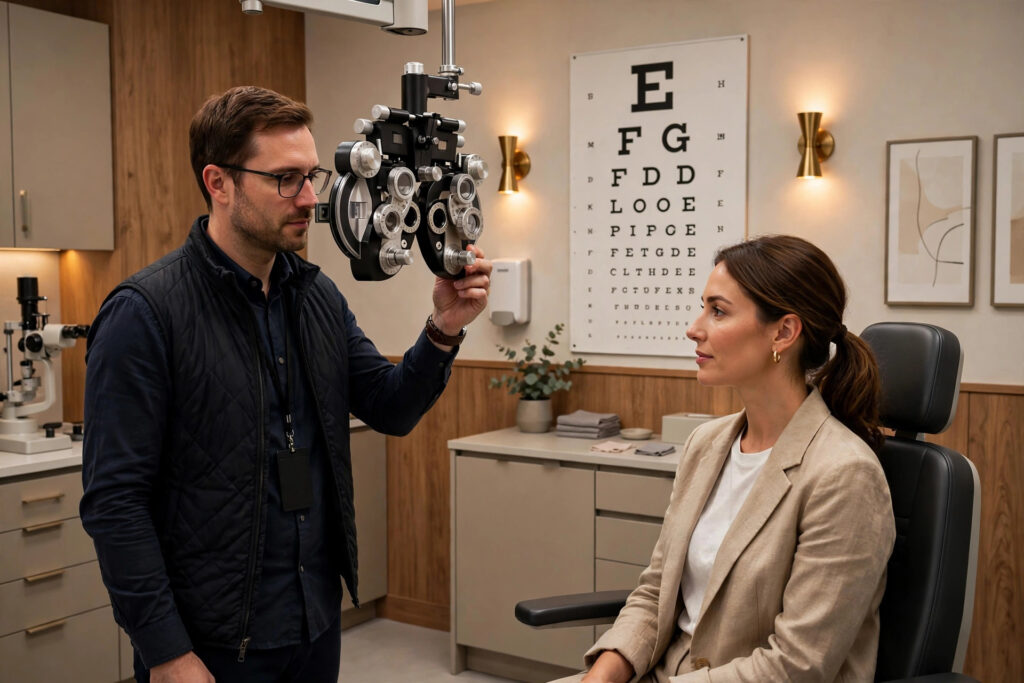
A comprehensive eye exam is a thorough medical evaluation of your vision and eye health performed by an optometrist or ophthalmologist. It includes detailed refraction to determine your exact prescription, binocular vision testing, eye pressure measurement, slit-lamp examination of the eye’s structures, and dilated retinal evaluation.
Modern exams add retinal photography, OCT imaging of the optic nerve and macula, and automated visual field testing. The doctor evaluates not just how well you see but how healthy your eyes are, screening for glaucoma, cataracts, macular degeneration, diabetic retinopathy, and even signs of systemic diseases like hypertension and diabetes.
The exam typically takes 45 to 60 minutes and produces a complete picture of your visual system. These detailed measurements also form the basis for precise contact lens fittings when you want an alternative to glasses. This depth is what separates medical eye care from basic screening.
Side-by-Side Comparison
Consider what each covers. Visual acuity at distance: both check this, though exams do it more precisely. Refraction for exact prescription: exam only. Near vision, binocular function, and eye teaming: exam only. Eye pressure and glaucoma screening: exam only. Retinal and optic nerve health: exam only. Cataract and macular degeneration detection: exam only.
Screenings also cannot prescribe glasses or contacts. A failed screening simply generates a referral; the exam that follows does the actual diagnosis and treatment. And critically, screenings produce both false negatives, missing real problems, and false positives, alarming people unnecessarily.
Think of it this way: a screening is like a metal detector at an airport, useful for catching obvious issues quickly. A comprehensive exam is like a full medical workup. Both have roles, but only one tells you that you are healthy.
What Screenings Commonly Miss
The eye exam vs vision screening gap is widest in what screenings cannot detect. Glaucoma, the silent thief of sight, is completely invisible to chart-based screenings; it requires pressure measurement and optic nerve evaluation. Early cataracts, macular degeneration, and diabetic retinopathy all progress without affecting chart acuity until advanced stages.
Screenings frequently miss hyperopia (farsightedness) in children and young adults because these patients compensate by focusing harder during the brief test, then suffer headaches and strain afterward. They miss astigmatism that degrades vision quality without dropping chart scores dramatically. They miss binocular vision problems that cause reading difficulty despite 20/20 acuity in each eye.
They also miss the systemic disease clues visible in the retina. Eye doctors regularly spot signs of diabetes, hypertension, and even brain tumors during routine dilated exams in patients who felt perfectly fine. No screening replicates this diagnostic power, which is central to preventive eye health care.
The Danger of False Reassurance
The greatest risk of screenings is not what they find but the confidence they create when they find nothing. A child who passes a school screening may still have significant hyperopia, binocular dysfunction, or early eye disease. Parents who hear “vision is fine” may delay the comprehensive exam that would catch these issues during the critical treatment window.
Adults fall into the same trap. Passing a DMV vision test does not mean your eyes are healthy; it means you can read large letters at distance on that particular day. Glaucoma, retinal problems, and early macular changes proceed invisibly behind a passed screening.
Treat every screening result, pass or fail, as preliminary information rather than a verdict. A pass means no obvious problem was detected by a limited test. It does not mean your eyes are healthy, your prescription is current, or you can skip your regular comprehensive exam. For children especially, our pediatric vision guidance explains why screenings alone are insufficient.
When a Screening Is Enough
Screenings have legitimate uses despite their limits. They are valuable public health tools for identifying children who need exams in populations with limited access to eye care. They serve as quick checks between comprehensive exams when something seems off. And regulatory screenings like DMV tests fulfill their narrow legal purpose adequately.
A screening is appropriate as a supplement to, never a replacement for, regular comprehensive exams. If a screening flags a problem, follow up with a full exam promptly rather than waiting. If a screening passes but you have symptoms or risk factors, get the exam anyway.
Employers and schools that offer screenings provide a genuine service as long as participants understand the limitations. The problem is not screenings themselves but the widespread misunderstanding that they substitute for professional eye care.
Getting the Right Care
The practical takeaway from the eye exam vs vision screening comparison is simple: maintain your comprehensive exam schedule based on age and risk factors, and treat screenings as the preliminary checks they are. Never let a passed screening delay a due exam, and always follow up a failed screening with professional evaluation.
For children, insist on comprehensive exams at the recommended intervals regardless of school screening results. For adults, the age-40 baseline exam and regular follow-ups are non-negotiable regardless of DMV outcomes. For anyone with diabetes, family history of eye disease, or symptoms, exams are essential.
The American Academy of Ophthalmology and the American Optometric Association both emphasize comprehensive exams over screenings for ongoing eye care. The National Eye Institute’s exam resources reinforce this guidance. Your vision is too important to entrust to a two-minute chart test.