
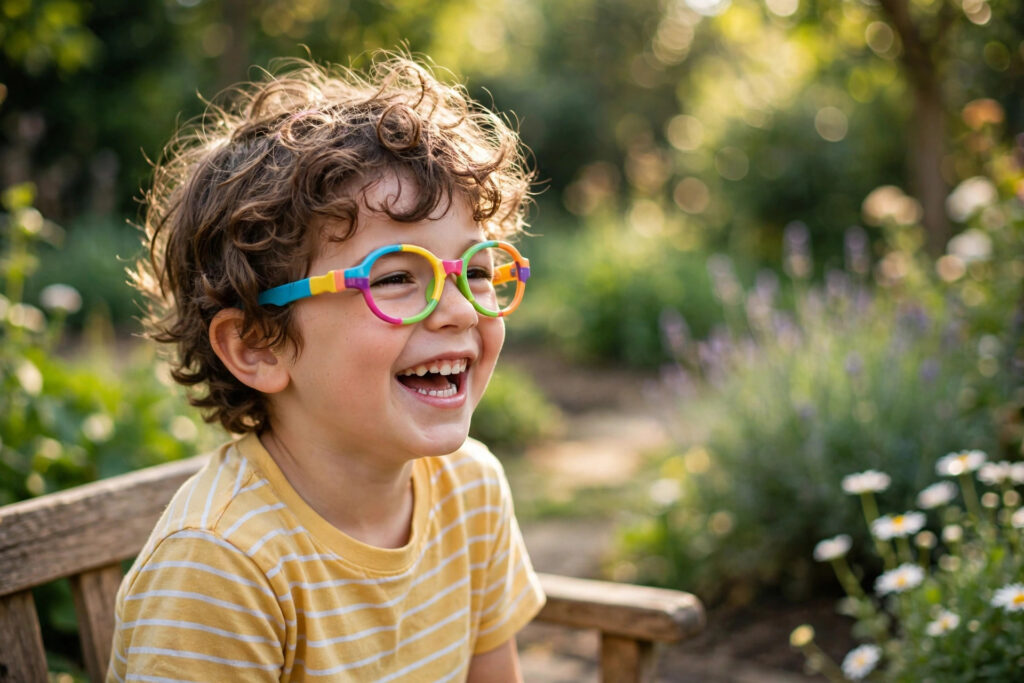
Buying glasses for a child is nothing like buying glasses for yourself. Kids need frames that survive playgrounds, lenses that protect active eyes, and fits that stay put through every adventure. The best glasses for kids and toddlers in 2026 combine serious durability with designs children actually want to wear.
This guide covers frame materials built for kid life, lens options that prioritize safety, fitting essentials for growing faces, and practical strategies for helping reluctant young wearers adjust. The right pair protects vision and survives childhood.
Table of Contents
- Frame Materials Built for Kids
- Lens Safety: The Non-Negotiable
- Fit Essentials for Growing Faces
- Toddler-Specific Considerations
- Styles Kids Actually Want to Wear
- Helping Kids Adjust to Glasses
- Maintenance and Replacement
Frame Materials Built for Kids
Children’s frames must flex, bend, and bounce back. Flexible materials like memory metal (titanium alloys that return to shape) and TR90 thermoplastic dominate the best glasses for kids and toddlers because they withstand the twisting, dropping, and sitting-on that destroy adult frames. Look for frames marketed as flexible, bendable, or unbreakable.
For toddlers and highly active kids, consider frames with no metal hinges or with spring hinges that flex outward without breaking. Some toddler frames use soft silicone or rubberized materials that are gentle on young faces and nearly indestructible. Avoid cheap rigid plastic frames; they snap at the worst moments.
Warranties matter enormously for children’s eyewear. Many kids’ frame lines include one- or two-time free replacement warranties specifically because manufacturers know what childhood does to glasses. Ask about warranty terms before buying; a slightly pricier frame with a strong replacement policy often costs less over time than cheap frames replaced repeatedly.
Lens Safety: The Non-Negotiable
Polycarbonate lenses are the standard for children’s glasses and should be considered mandatory. They are impact-resistant, lightweight, and inherently block 100% of UV radiation. For active kids, polycarbonate’s shatter resistance is a genuine safety feature that regular plastic lenses cannot match. Trivex is an excellent alternative with similar impact resistance and slightly better optics.
Never accept standard plastic (CR-39) lenses for children; they shatter on impact and have no place in kids’ eyewear. Ensure the lenses include UV protection, which polycarbonate provides inherently. Scratch-resistant coating is highly recommended since children’s lenses face constant abrasion.
For outdoor play, consider photochromic lenses that darken in sunlight, giving kids automatic sun protection without a second pair to lose. Prescription sunglasses are worthwhile for children who spend heavy time outdoors. Protecting young eyes from UV is an investment in lifelong eye health, and the American Academy of Ophthalmology recommends UV protection for children as standard practice.
Fit Essentials for Growing Faces
Children’s faces differ from adults’ in ways that affect fit: smaller nose bridges, flatter nose profiles, and shorter temple lengths. Kids’ frames are designed with these proportions in mind, featuring shorter bridges, adjustable nose pads or saddle bridges for low nose bridges, and appropriately scaled temples.
The fit checklist: frames should sit level without sliding, the bridge should rest comfortably without pinching or leaving marks, temples should hug gently without pressing, and the child’s eyes should be centered in the lenses. Check fit with the child looking down; glasses that slide immediately need adjustment or a different size.
Strap and cable temple options help active kids and toddlers keep glasses on. Elastic straps that wrap around the head prevent loss during sports and play, while cable temples that curve snugly behind the ears provide security without a full strap. For the youngest wearers, these retention features are not optional extras but essentials. A proper fit also ensures the prescription works as intended, which is why professional fitting beats online guessing for children’s eyewear.
Toddler-Specific Considerations
Toddlers present unique challenges: they pull glasses off, chew on temples, and cannot report fit problems. The best glasses for toddlers prioritize staying on and surviving removal attempts. Soft, flexible frames with head straps are the standard recommendation for children under three.
Choose the lightest possible combination of frame and lens; heavy glasses slide down tiny noses and invite removal. Small lens sizes reduce weight and stay proportional to little faces. Rounded frame shapes without sharp corners are safer for tumbles.
Expect an adjustment period measured in weeks, not days. Toddlers often need gradual introduction: short wearing periods that lengthen as tolerance builds, paired with praise and distraction. Consistency matters more than perfection; every hour of wear helps. If a toddler absolutely refuses glasses, discuss alternatives like contact lenses for specific conditions or modified wearing strategies with your eye doctor.
Styles Kids Actually Want to Wear
The best glasses for kids and toddlers are the ones children wear willingly, which means involving them in the choice. Let school-age children pick colors and styles they like from parent-approved durable options. Ownership of the decision dramatically improves compliance.
Current kids’ eyewear trends include bright colors, fun patterns, character-themed frames for younger children, and sporty designs for active kids. Older children and teens often prefer styles that mirror adult fashion. Whatever the preference, the underlying frame must still meet durability and fit standards.
Avoid the temptation to buy oversized “cute” frames; proper sizing matters for both vision correction and comfort. And consider a backup pair if your budget allows. Children lose and break glasses, and a spare prevents days of uncorrected vision while replacements are made. Some vision plans cover a second pair for children specifically for this reason.
Helping Kids Adjust to Glasses
Frame glasses positively from day one. Emphasize what they can now see rather than what is different about their appearance. Point out details they can suddenly resolve: leaves on trees, expressions across the room, words on the board. The vision improvement itself is the strongest motivator.
Normalize glasses by pointing out admired people who wear them: athletes, characters, family members. For self-conscious school-age children, acknowledge their feelings while reinforcing that glasses are common and cool. Never let siblings tease about glasses unchecked.
Build wearing into the routine: glasses go on after breakfast like shoes go on feet. Consistency prevents the negotiation cycle. Praise compliance specifically and warmly. If headaches or discomfort occur in the first week, check the fit before assuming rejection; minor adjustments often solve what looks like refusal. An accurate prescription and professional fitting are the foundation everything else builds on.
Maintenance and Replacement
Teach children basic glasses care early: clean lenses with microfiber cloths and lens spray, never shirtsleeves or paper towels. Store glasses in a hard case when not worn. Establish the habit of putting glasses in the same place to reduce losses.
Schedule eye exams every one to two years for children, annually for glasses wearers, because prescriptions change as eyes grow. Replace glasses when prescriptions change, when frames are damaged beyond adjustment, or when the child outgrows the fit. A yearly fit check catches growth-related issues.
Budget realistically: children’s glasses are a recurring expense through the growing years, but vision plans, warranties, and school-based programs help manage costs. All About Vision’s children’s eyewear guides offer additional shopping tips. The investment pays off in learning, safety, and confidence every single day.