
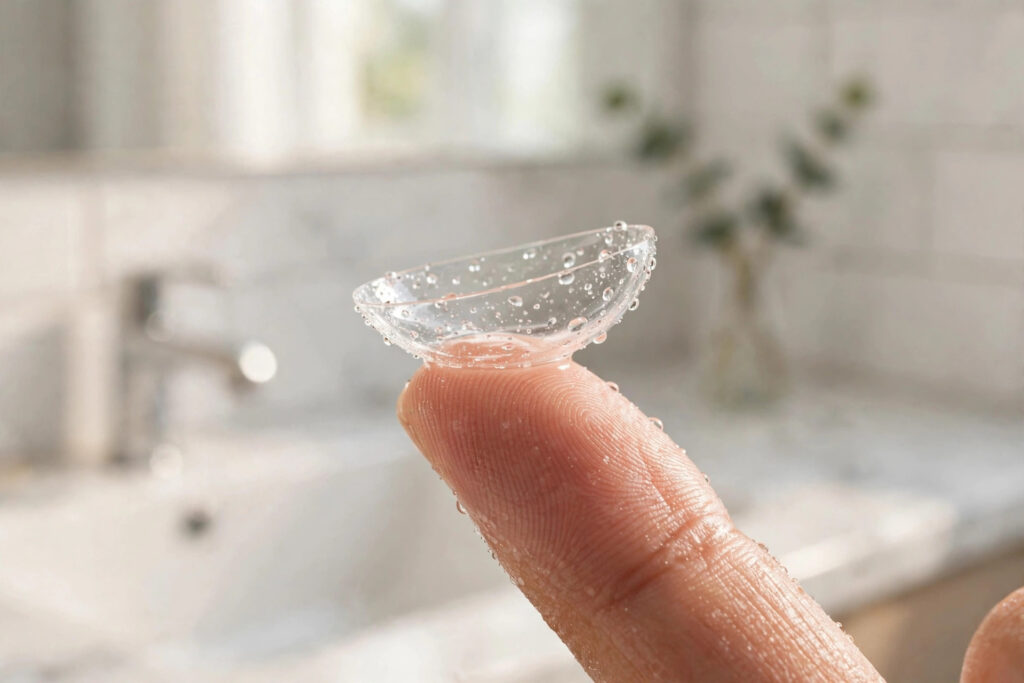
Millions of people wear contact lenses for decades — but is that actually safe? If you’re wondering whether years of daily lens wear damages your eyes, you’re asking the right question. The honest answer: contact lenses are safe long-term for most wearers, but “safe” depends heavily on how you wear them.
Here’s what decades of research say about long-term contact lens safety, the real risks, who should be cautious, and the habits that keep your eyes healthy for a lifetime of wear.
Table of Contents
- What Decades of Research Show
- The Real Long-Term Risks
- Corneal Health and Oxygen
- Who Should Be Cautious
- Habits for Lifetime-Safe Wear
- Knowing When to Take a Break
What Decades of Research Show
Large long-term studies are reassuring: compliant contact lens wearers show no significant difference in long-term eye health compared to glasses wearers. The cornea is resilient, modern silicone hydrogel lenses deliver abundant oxygen, and serious complications remain rare — estimated at a few cases per 10,000 wearers annually for daily wear with proper hygiene.
The key qualifier in every study is compliance. The research population that does well follows the rules: proper cleaning, on-time replacement, no overnight wear (unless prescribed), and regular aftercare. Non-compliant wearers account for a wildly disproportionate share of complications. Long-term safety isn’t a property of the lenses alone — it’s a property of the wearer-lens system. The National Eye Institute’s eye health resources emphasize that preventive care underpins all vision health.
The Real Long-Term Risks
The risks that accumulate over years: microbial keratitis (corneal infection — rare but potentially sight-threatening, strongly linked to overnight wear and poor hygiene), corneal neovascularization (blood vessel ingrowth from chronic oxygen deprivation, largely a legacy of older low-oxygen lenses), chronic dry eye and meibomian gland dysfunction (lens wear can exacerbate these over time), and giant papillary conjunctivitis (inflammatory reaction to deposits, more common with overworn reusable lenses).
Perspective matters: the absolute risks for compliant wearers are low, and most complications are treatable when caught early — which is why regular aftercare exams matter as much as daily habits. But “low risk” isn’t “no risk,” and the consequences of the rare severe infection can be devastating. Respecting the eye health fundamentals of lens wear is what keeps you in the safe majority.
Corneal Health and Oxygen
Oxygen is the central long-term story. The cornea breathes from the air; lenses are a barrier. Older hydrogel lenses starved the cornea, causing the neovascularization seen in long-term wearers of the 80s and 90s. Modern silicone hydrogels transmit 5–6 times more oxygen, and today’s long-term wearers show dramatically healthier corneas than previous generations.
Still, maximizing oxygen matters: choose high-Dk/t silicone hydrogel lenses, limit daily wearing hours reasonably, give your eyes regular lens-free time (evenings, weekends), and never sleep in lenses not prescribed for it. Think of it as a budget: your cornea tolerates a daily oxygen deficit, but chronic overdraft causes problems. Lens material advances keep raising the ceiling, but habits determine where you land under it.
Who Should Be Cautious
Certain people face higher long-term risks: those with pre-existing dry eye or meibomian gland dysfunction (lenses can worsen both), immunocompromised individuals (higher infection stakes), people in very dry/dusty environments, those who can’t commit to hygiene routines, and anyone with a history of corneal infections or ulcers. None of these are automatic disqualifiers — but they warrant honest discussion with your doctor.
Age itself isn’t a barrier; healthy 70-year-olds wear lenses safely. What changes with age is tear quality and healing capacity, so older wearers benefit from more frequent check-ups and often from daily disposables. If you’ve worn lenses comfortably for decades, that’s evidence your eyes tolerate them — keep doing what works and keep your appointments.
Habits for Lifetime-Safe Wear
The lifetime-safe-wear playbook: daily disposables if your prescription and budget allow (lowest infection risk, no cleaning burden), strict replacement schedules for reusable lenses, nightly removal without exception, proper cleaning technique, fresh solution daily, regular case replacement, annual (or prescribed) aftercare exams, and backup glasses you actually like wearing.
Equally important: never ration lenses to save money (overwear is the costliest “saving” in eye care), don’t push through pain or redness, and tell your doctor about any changes — new medications, health conditions, or environments. These habits are unglamorous, but they’re the entire difference between decades of safe wear and a preventable complication.
Knowing When to Take a Break
Even lifelong wearers need lens holidays: during eye infections (never wear lenses with pink eye or any infection), after eye surgery, during severe allergy flares, when starting medications that dry the eyes, or when your doctor spots early warning signs like neovascularization or chronic inflammation. Temporary breaks protect your long-term ability to wear lenses.
Some wearers eventually transition to glasses full-time — changing tear film, lifestyle, or simply preference. That’s not failure; it’s adaptation. The goal was never “lenses forever” but “great vision safely.” Whether that means contacts for decades or glasses with occasional lens use, the principle is the same: respect your eyes’ limits, follow professional guidance, and never trade short-term convenience for long-term sight.