
Scratched lenses are the most common reason glasses get replaced early. Those fine marks scatter light, create glare, and gradually degrade the vision you paid good money to correct. Anti-scratch coating promises to prevent this damage, but is anti-scratch coating on glasses worth it, or just an upsell? The honest answer depends on your lens material, habits, and expectations.
This guide explains how scratch-resistant coatings work, what they can and cannot do, which lenses need them most, what they cost, and the care habits that matter more than any coating. You will know exactly whether to pay for it.
Table of Contents
- How Anti-Scratch Coating Works
- What It Can and Cannot Do
- Which Lens Materials Need It Most
- Cost: Is It Worth the Money?
- Combining With Other Coatings
- Why Care Habits Matter More
- The Verdict
How Anti-Scratch Coating Works
Anti-scratch coating, more accurately called scratch-resistant coating since no coating is truly scratch-proof, is a thin, hard transparent layer applied to the lens surface. Typically made from polysiloxane or similar hard compounds, it is cured onto the lens in a process that bonds it molecularly to the surface, creating a shield harder than the underlying lens material.
The coating works by resisting the micro-abrasions of daily life: dust particles wiped across the lens, contact with cases and pockets, and routine cleaning. Without it, soft lens materials accumulate fine scratches that individually seem minor but collectively haze the lens over months of use.
Modern coatings are applied in vacuum chambers or through dip-and-cure processes that ensure uniform coverage on both lens surfaces. Quality varies between manufacturers: premium coatings undergo extensive abrasion testing, while bargain coatings may be thin and inconsistent. The technology is mature in 2026, and the performance gap between good and cheap coatings is real.
What It Can and Cannot Do
A quality anti-scratch coating significantly extends the cosmetically clear life of lenses under normal use. It resists the fine cleaning scratches and incidental contact that dull uncoated lenses within months. For most wearers, coated lenses stay clearer visibly longer, which directly answers whether anti-scratch coating on glasses is worth it for typical use.
What it cannot do is make lenses indestructible. Dropping glasses lens-down on concrete, wiping gritty sand across dry lenses, or tossing glasses loose in a bag with keys will defeat any coating. Deep scratches from significant impacts go straight through the thin coating layer. Think of it as armor against daily wear, not against accidents.
It also cannot repair existing scratches. Once a lens is scratched, no coating or treatment restores it; the damage is permanent. This is why getting the coating from the start matters far more than seeking fixes later. scratched lenses should be replaced, as the scattered light they produce causes glare and eye strain that undermines your eye health.
Which Lens Materials Need It Most
Standard plastic (CR-39) lenses need scratch coating most urgently. CR-39 is optically excellent but relatively soft, scratching easily without protection. For CR-39 wearers, anti-scratch coating is less an option than a necessity, and most quality labs apply it by default.
Polycarbonate lenses are inherently more impact-resistant but actually softer on the surface than many realize; they benefit significantly from scratch coating despite their toughness reputation. Do not confuse impact resistance with scratch resistance: they are different properties, and polycarbonate needs the coating for surface durability.
High-index lenses, prized for thin profiles in strong prescriptions, are also relatively soft and scratch-prone without coating. Glass lenses are naturally the most scratch-resistant but are rarely used today due to weight and shatter risk. In practice, virtually every modern lens material benefits from scratch-resistant coating, which is why it has become a near-standard inclusion in quality eyewear.
Cost: Is It Worth the Money?
Anti-scratch coating typically adds $20 to $50 to lens cost at retail, though many retailers and online sellers now include it free as a standard feature. At this price, the math strongly favors getting it: if the coating extends lens life by even six months, it pays for itself many times over compared to early replacement.
Consider the alternative cost. Replacing scratched lenses runs $100 to $400 or more depending on prescription and lens type. A $30 coating that delays replacement by a year is an outstanding return on investment. Even at the higher end of coating prices, the economics work for anyone who keeps glasses longer than a year.
When comparing eyewear prices across sellers, check whether scratch coating is included or itemized. A seemingly cheaper lens price that excludes the coating may cost more once you add it. In 2026, treat included scratch coating as a baseline expectation of quality eyewear, not a luxury.
Combining With Other Coatings
Scratch-resistant coating serves as the foundation layer for coating stacks. Anti-reflective (AR) coating, which reduces glare and improves night vision, is applied over the scratch-resistant base. Hydrophobic topcoats that repel water and smudges go on last. This layered approach means choosing AR coating automatically includes scratch protection in most cases.
UV protection is independent of these surface coatings, either inherent to the lens material like polycarbonate or added as a separate treatment. When ordering lenses, think in terms of the complete package: scratch-resistant base, AR coating for visual quality, hydrophobic topcoat for easy cleaning, and verified UV protection.
Premium coating packages bundle all of these with warranties against coating defects like crazing or peeling. If a retailer offers tiered coating options, the mid-tier bundle usually hits the sweet spot of performance and value. Understanding how lens coatings work together helps you evaluate these packages confidently — including options for children’s lenses that take extra abuse.
Why Care Habits Matter More
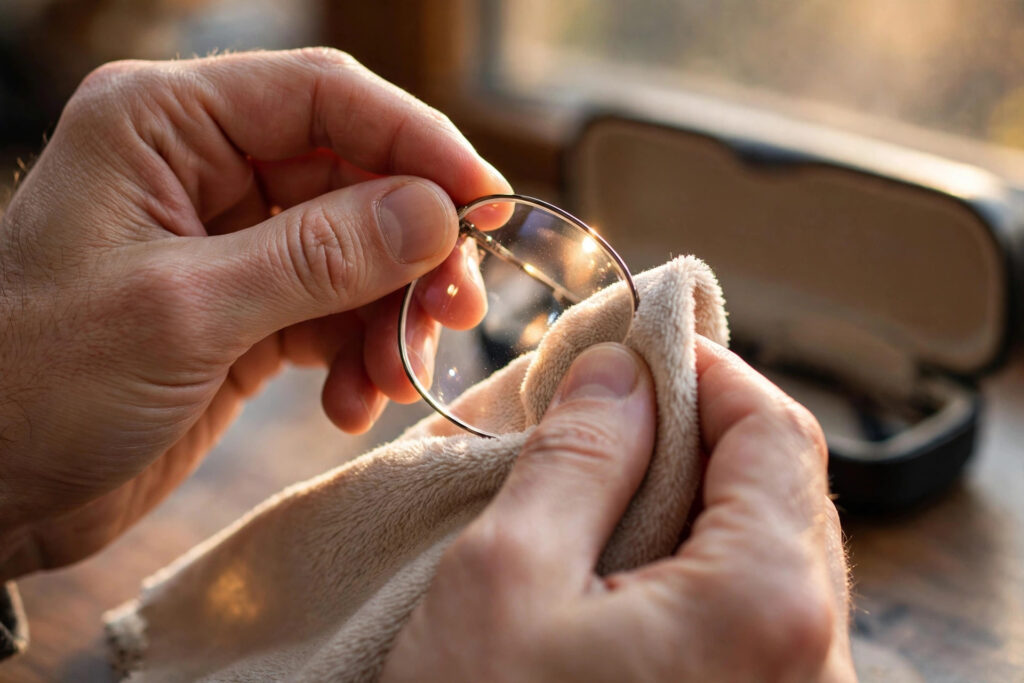
Here is the uncomfortable truth: care habits affect lens longevity more than any coating. The most common scratch cause is dry-wiping lenses with shirts, tissues, or paper towels that drag dust particles across the surface. Always rinse lenses under lukewarm water first, then clean with microfiber cloths and lens spray.
Storage habits are the second factor. Glasses belong in a hard case whenever they are not on your face, not loose in bags, pockets, or perched on car dashboards where heat can damage coatings. Dashboard heat is particularly destructive, causing coating crazing that looks like a web of fine cracks.
Handle glasses by the frames, not the lenses, to reduce fingerprint oils that require extra cleaning. Rinse off salt water and sweat promptly, as both can degrade coatings over time. These habits cost nothing and preserve any coating investment far beyond what the coating achieves alone.
The Verdict
Is anti-scratch coating on glasses worth it? Yes, for nearly everyone. At its typical cost, often included free, it measurably extends lens clarity and delays replacement. There is no meaningful downside: it does not affect optics, adds negligible thickness, and works silently in the background.
The only scenario for skipping it is if your lenses already include it as part of a coating bundle, which is increasingly the norm. Otherwise, add it. Then protect the investment with proper cleaning and storage habits, which matter even more.
For authoritative guidance on lens care and eyewear maintenance, the American Academy of Ophthalmology’s eyewear resources and All About Vision’s lens guides are excellent references. A small coating investment plus good habits keeps your lenses crystal clear for years.