
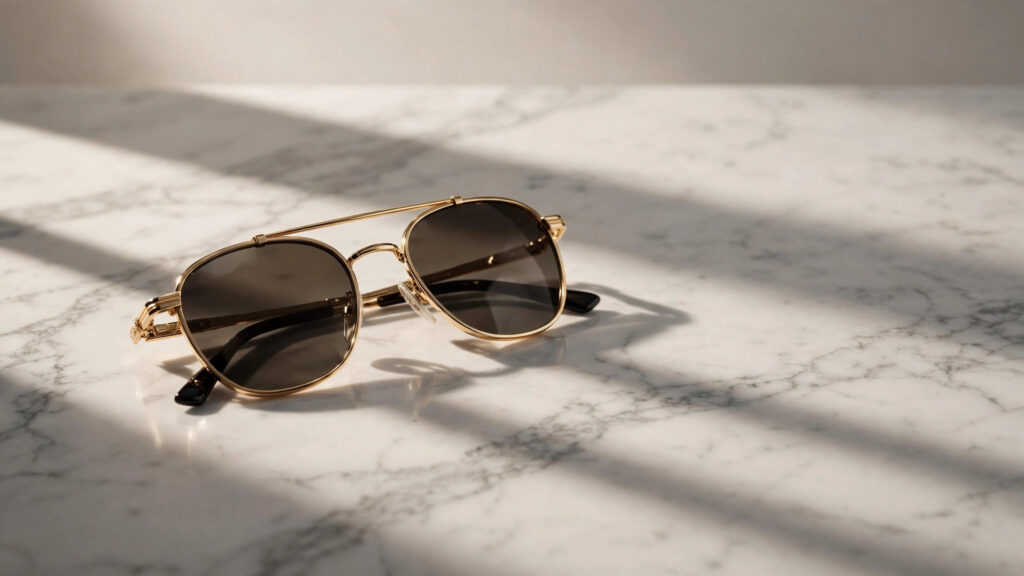
Standing in front of a wall of sunglasses ranging from $20 to $400, it’s natural to ask: are expensive sunglasses worth it? The honest answer is “sometimes” — and knowing when separates smart spending from wasted money.
This isn’t a defense of luxury pricing or a celebration of bargain bins. It’s a practical framework for deciding what your money actually buys at each price tier, and which tier fits your life.
Table of Contents
- What You’re Actually Paying For
- The Optics Question
- Durability and Cost-Per-Wear
- Warranties and Service
- The Brand Tax
- The Verdict by Buyer Type
What You’re Actually Paying For
Sunglass pricing bundles several things: lens optical quality, frame materials and construction, coatings (polarization, mirror, anti-reflective, hydrophobic), brand marketing and licensing, designer prestige, and retail markup. The first three deliver functional value; the last three mostly don’t.
A $200 pair might contain $60 of genuinely better materials and optics plus $140 of brand equity. A $30 pair might contain perfectly adequate UV protection and decent optics with zero prestige. Understanding this split is the key to the whole question — you’re not buying “better sunglasses” wholesale, you’re buying specific improvements (or specific logos).
The Optics Question
Premium lenses do offer measurably better optics: tighter manufacturing tolerances mean less distortion, especially in curved wraparound designs; better polarization films deliver more uniform glare reduction; quality base materials (Trivex, high-grade polycarbonate, NXT polyurethane) provide clearer, more impact-resistant vision than commodity plastics.
How much this matters depends on use. For ten minutes of driving to work, the difference is negligible. For eight hours on a boat, the reduced distortion and eye fatigue are genuinely noticeable. Prescription sunglasses amplify the gap further — premium freeform surfacing in prescription sun lenses is visibly superior, a point worth raising at your eye exams. Casual wearers won’t see $300 of difference; heavy users often will.
Durability and Cost-Per-Wear
Do the math that matters: cost per year of use. A $180 pair with titanium frames, quality hinges, and scratch-resistant coatings that lasts five years costs $36/year. A $25 pair replaced annually (lost, broken, scratched beyond use) costs $25/year — closer than the sticker prices suggest, and the expensive pair delivered better vision the entire time.
Premium materials genuinely last: acetate over injection-molded plastic, sprung hinges over crude ones, real screws over glued joints. But durability only pays off if you keep track of things — if you lose sunglasses regularly, expensive pairs are just expensive losses. Be honest about your track record; it should heavily influence your budget.
Warranties and Service
Established optical brands typically offer one-to-two-year warranties against manufacturing defects, and many provide repair services, replacement parts (nose pads, temple tips, screws), and professional adjustment. That service infrastructure has real value — a $150 frame repaired free beats a $40 frame replaced outright.
Budget sellers rarely offer meaningful warranties or parts. When cheap sunglasses break, they’re trash; when quality ones break, they’re often fixable. Factor this into the value equation, especially for prescription sunglasses where the lenses alone represent significant investment worth protecting with a durable frame.
The Brand Tax
Let’s be direct: beyond roughly $150-200, you’re increasingly paying for fashion licensing, not function. Designer sunglasses from luxury fashion houses are often manufactured by the same few eyewear conglomerates, in the same factories, with similar materials to mid-range optical brands — the premium is the logo and the marketing campaign.
This doesn’t make them “bad” — the quality is usually fine, and if the design brings you joy, that’s valid. But don’t confuse a fashion premium with an optical premium. The American Academy of Ophthalmology cares about UV protection and impact resistance, not logos — and both are fully available without designer pricing. Your eye health can’t tell the difference between a logo and its absence.
Fit and adjustability also scale with price. Quality frames can be fine-tuned by an optician — temple angles, nose pad positions, frame wrap — while budget frames often can’t be adjusted without breaking. Since fit determines both comfort and how well lenses stay aligned with your eyes, this serviceability is a quiet but real advantage of spending more.
The Verdict by Buyer Type
Buy budget ($15-40, verified UV400) if: you lose sunglasses often, need beaters for rough use, or buy for young kids (see our kids vision guide). The protection is real; the optics are adequate for casual use.
Buy mid-range ($75-150, optical brands) if: sunglasses are daily wear, you want real polarization and good optics without the logo tax, or you need prescription lenses. This is the value sweet spot for most people — genuine quality, fair price.
Buy premium ($200+, including designer) if: you’re a heavy outdoor user who’ll notice optical differences, you value durability and warranty service, or the design genuinely delights you and the budget allows. Just know which of those reasons is driving the purchase. And whether you wear contact lenses or glasses underneath, the same logic applies: match the investment to the use, verify UV protection always, and enjoy the sun safely.