
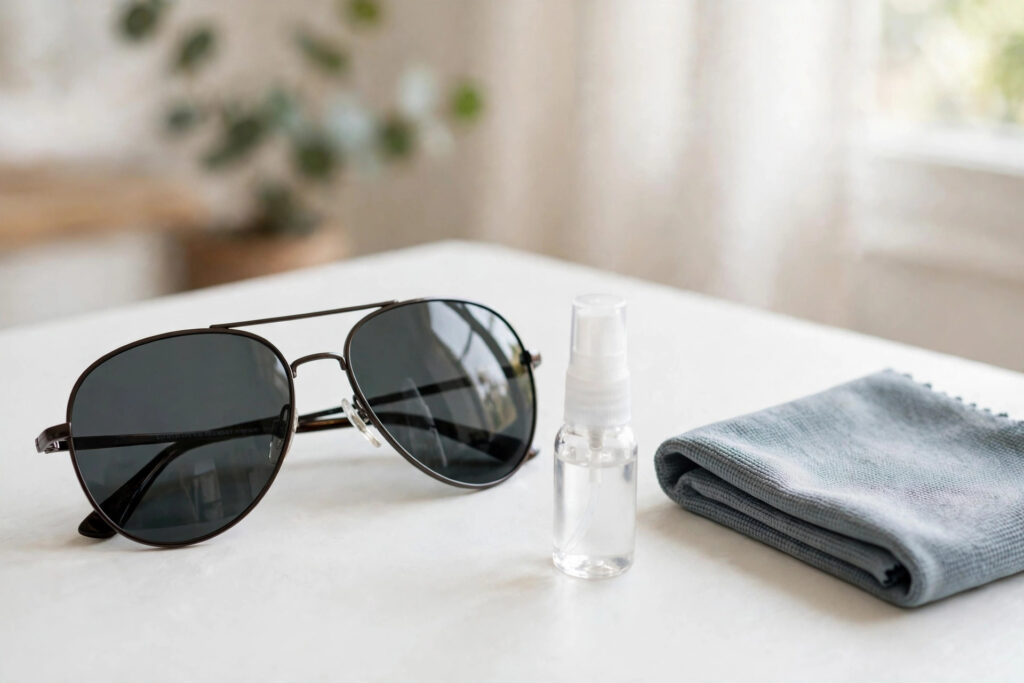
Most scratched sunglasses weren’t scratched by accidents — they were scratched by cleaning. Wiping dusty lenses with a dry shirt, using paper towels, or reaching for household cleaners grinds microscopic debris into the lens surface. Learning how to clean sunglasses properly takes two minutes and adds years to their life.
This guide covers the correct method, the tools worth owning, the mistakes that ruin lenses and coatings, and how to handle special situations like saltwater and sunscreen.
Table of Contents
- The Correct Cleaning Method
- Tools Worth Owning
- Mistakes That Ruin Lenses
- Cleaning Coated and Specialty Lenses
- Handling Salt, Sunscreen, and Tough Grime
- Daily Habits That Prevent Damage
The Correct Cleaning Method
The gold-standard method: rinse the lenses under lukewarm (never hot) running water to flush away dust and grit — this is the step most people skip, and skipping it causes most scratches. Apply a tiny drop of lotion-free dish soap to each lens, gently lather with your fingertips, rinse thoroughly, then shake off excess water and dry with a clean microfiber cloth using light straight strokes.
The rinse-first principle is everything. Dry-wiping a dusty lens drags particles across the surface like sandpaper. Thirty seconds under the tap first eliminates the abrasive risk. This same method works for eyeglasses — the physics of scratch prevention doesn’t change between frame types.
Tools Worth Owning
Keep these on hand: several clean microfiber cloths (rotate them — a dirty microfiber is just a soft scratcher), a lens-safe cleaning spray for on-the-go touch-ups, and lotion-free dish soap at home. Store microfiber cloths in a case or sealed bag; a cloth loose in a pocket collects the very grit you’re trying to avoid.
Wash microfiber cloths regularly — hand wash with mild soap, air dry, no fabric softener (it leaves residue that smears lenses). Replace cloths when they get thin or rough. These supplies cost little and they’re the difference between lenses that stay pristine and lenses that haze within a year.
Mistakes That Ruin Lenses
The hall of shame: shirt tails, tissues, paper towels, and napkins — all contain wood fibers or rough textures that scratch. Household glass cleaners (Windex and similar) contain ammonia or alcohol that strips anti-reflective and mirror coatings. Hot water can damage lens coatings and warp frames. And breath-fogging plus a dry wipe just smears oils around while grinding dust in.
Spit-cleaning deserves special mention: saliva contains enzymes and particulates that can damage coatings over time, and it’s unhygienic. The All About Vision care guides consistently rank improper cleaning as the top cause of premature lens replacement — an avoidable expense.
Cleaning Coated and Specialty Lenses
Coated lenses — anti-reflective, mirror, hydrophobic — need gentler handling because the coatings are surface treatments. Always rinse first, use only lens-safe cleaners (no alcohol-based sprays unless labeled safe for AR coatings), and wipe with minimal pressure. Mirror coatings scratch visibly, so they’re the least forgiving of shortcuts.
Polarized lenses clean like standard lenses, but avoid excessive heat which can affect the polarizing film’s lamination over time. Photochromic lenses need no special treatment beyond standard care. When in doubt about a coating, ask where you bought them or check the manufacturer’s care guidance — modern lens technology includes coatings worth protecting properly.
Handling Salt, Sunscreen, and Tough Grime
Saltwater demands immediate attention: rinse with fresh water as soon as possible, since dried salt crystals are abrasive and salt corrodes metal frames and hinges. Sunscreen and insect repellent can damage lens coatings and frame finishes — apply them first, let them absorb, then put on sunglasses, and clean promptly if transfer occurs.
For stuck-on grime, soak the glasses in lukewarm soapy water for a few minutes rather than scrubbing. Never pick at debris with fingernails or sharp objects. Patience plus soaking dissolves what force would scratch.
For glasses worn in dusty work environments — construction, woodworking, gardening — consider a two-stage approach: blow off loose dust with a blower brush or compressed air before the water rinse. In these settings, even the rinse step benefits from extra care, since fine particulates are the most scratch-prone debris lenses encounter.
Ultrasonic cleaners, popular for jewelry, are generally safe for plain lenses and sturdy frames but can damage certain coatings and loosen frame adhesives. When in doubt, stick with the manual soap-and-water method — it’s gentler and equally effective for routine cleaning.
Daily Habits That Prevent Damage
Prevention beats cleaning: always store sunglasses in a hard case (lenses facing up, folded properly), never set them lens-down on surfaces, keep them out of hot cars (heat warps frames and damages coatings), and handle by the frame rather than the lenses to reduce fingerprints.
Inspect hinges and screws periodically — a loose screw caught early is a five-second fix; caught late it’s a lost lens. These habits protect your investment and keep the optics clear. And remember that scratched lenses aren’t just cosmetic: haze and scatter from scratches cause eye strain, undermining the eye health benefits your sunglasses are supposed to deliver. When lenses are too damaged, replace them — your eyes deserve clear optics.