
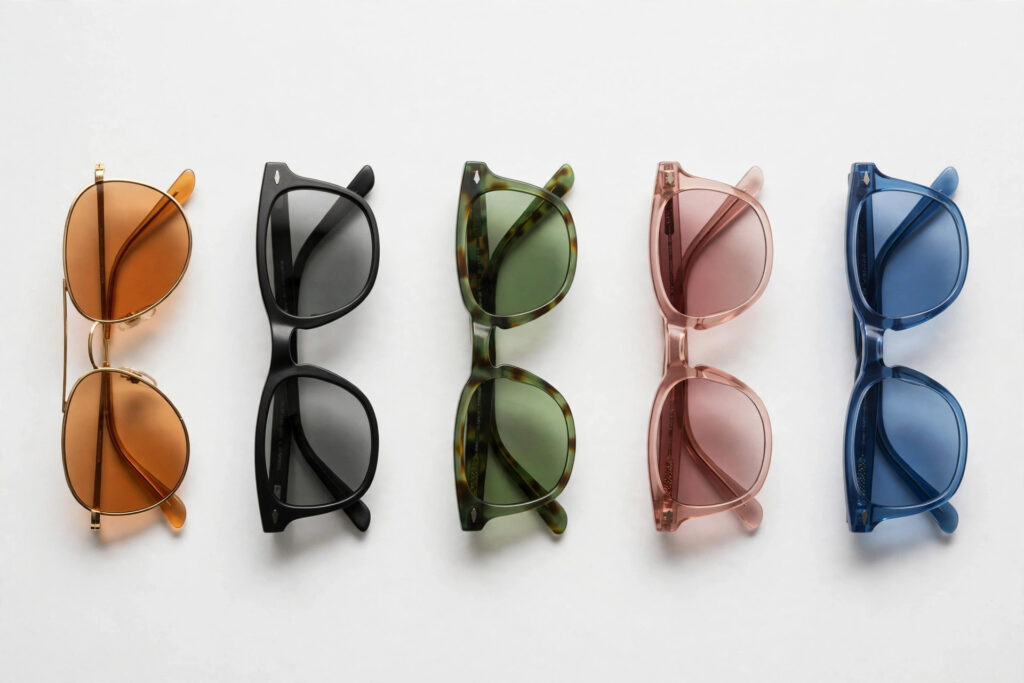
Lens color isn’t just style — each tint filters light differently, enhancing contrast in some conditions and distorting color in others. This sunglass lens colors guide explains what the major tints actually do, so you can match lens color to activity instead of choosing blindly.
The right tint can sharpen your vision for your specific needs; the wrong one just looks cool while working against you. Here’s the full spectrum.
Table of Contents
- Gray: The Neutral All-Rounder
- Brown and Amber: Contrast Champions
- Green: Balanced and Easy
- Yellow and Gold: Low-Light Specialists
- Rose and Copper: Sport Favorites
- Blue, Mirrored, and Fashion Tints
- Choosing by Activity
Gray: The Neutral All-Rounder
Gray lenses reduce brightness evenly across the spectrum without distorting color perception — what you see is simply dimmer, not different. That neutrality makes gray the best choice when true color matters: driving (traffic light recognition), boating (navigation markers), and general daily wear.
Gray is the default recommendation for first-time sunglass buyers and anyone who wants one pair for everything. Available in densities from light to very dark, it pairs well with polarization for maximum glare control. The only real weakness: gray doesn’t enhance contrast, so it won’t help you read terrain or spot a golf ball against the sky.
Brown and Amber: Contrast Champions
Brown and amber tints filter blue light preferentially, which heightens contrast and depth perception — the world looks sharper and more three-dimensional. They’re outstanding for variable light: partly cloudy days, driving through changing conditions, and activities where reading surfaces matters (fishing shallow water, trail hiking).
The trade-off is slight color distortion — whites warm up, blues shift. Most wearers adapt within minutes and never notice. Brown is arguably the most versatile performance tint, which is why it dominates golf, fishing, and driving recommendations. For all-day wear in mixed conditions, brown is hard to beat.
Green: Balanced and Easy
Green tints (including the classic G-15) offer a middle path: they dim glare while transmitting color relatively accurately, with mild contrast enhancement. They’re exceptionally comfortable for long wear — many people find green the least fatiguing tint over full days outdoors.
Green suits general outdoor use, casual wear, and anyone sensitive to the color shifts of brown or the flatness of gray. It’s the traditional choice for classic sunglass styles and remains popular because it simply works: good glare reduction, natural vision, all-day comfort. A safe, excellent default.
Yellow and Gold: Low-Light Specialists
Yellow lenses excel where others fail: low light, overcast skies, fog, and dusk. By filtering blue haze, they brighten and sharpen vision in flat light — which is why shooters, skiers, and pilots have used them for decades. They don’t darken much, so they’re for clarity, not sun protection intensity.
Important caveat: yellow tints distort color significantly and aren’t suitable for driving in all jurisdictions (some places restrict them) — check local rules. They’re a specialty tool, not an everyday tint. But for dawn patrol, overcast rounds of golf, or foggy commutes, nothing else compares.
Rose and Copper: Sport Favorites
Rose, copper, and vermilion tints are contrast-maximizers: they make objects pop against green and blue backgrounds, which is why they’re beloved for tennis, cycling, running, and skiing. Ball sports particularly benefit — a ball’s trajectory reads clearer against sky and court through a contrast tint.
They’re less ideal for true-color tasks and can feel intense for casual wear. Think of them as performance equipment: superb within their sport, unnecessary outside it. Many athletes keep a rose/copper pair alongside a neutral daily pair — the two-tint quiver covers nearly everything.
Blue, Mirrored, and Fashion Tints
Blue tints (non-mirrored) reduce visible light while imparting a cool tone; they’re popular in fashion and water sports for their glare-cutting aesthetics. Mirrored coatings in any color add brightness reduction and style — the mirror reflects light away before it enters the lens, useful in extreme brightness like snow and tropical water.
Fashion tints (purple, pink, light blue gradients) prioritize look over function — fine for style wear with proper UV protection underneath, but not performance choices. Whatever the color, verify 100% UVA/UVB protection independently: tint color never determines UV blocking — the American Academy of Ophthalmology confirms UV protection comes from lens treatment, not darkness or color — a fundamental eye health fact.
Choosing by Activity
Quick matching: driving — gray or brown (polarized); fishing — copper/amber (polarized); golf — brown or rose; skiing — dark gray/brown or mirrored, rose for flat light; running/cycling — rose, copper, or brown; beach/water — gray-green polarized; everyday — gray, green, or brown. Low light — yellow.
When buying, try tints in real conditions, not just indoors — colors render differently in actual sunlight. Discuss your primary activities during eye exams if ordering prescription sunglasses, since tint choice interacts with your lens technology options. And remember: the best tint is the one matched to your life, not the one that looks coolest on the rack.