
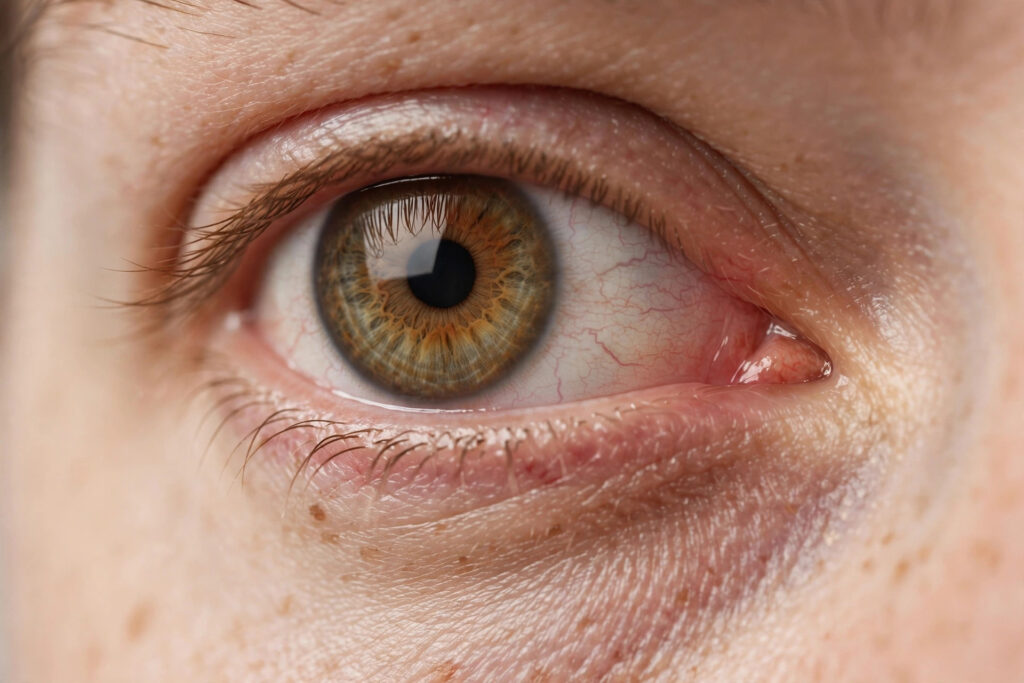
Pink eye, medically known as conjunctivitis, is the inflammation of the conjunctiva, the clear membrane covering the white of the eye and inner eyelids. It is one of the most common eye conditions, sending millions to doctors, schools sending children home, and workplaces into hygiene overdrive each year.
Not all pink eye is the same, and the type determines the treatment. Viral, bacterial, and allergic conjunctivitis look similar but require completely different approaches. Knowing which you are dealing with saves time, money, and unnecessary antibiotics.
Table of Contents
- Viral Conjunctivitis
- Bacterial Conjunctivitis
- Allergic Conjunctivitis
- How to Tell Them Apart
- Treatment by Type
- Preventing Spread
Viral Conjunctivitis
Viral conjunctivitis is the most common type, usually caused by adenoviruses, the same family behind many colds. It often starts in one eye and spreads to the other within days, frequently arriving alongside a cold, sore throat, or upper respiratory infection. Discharge tends to be watery rather than thick.
Viral pink eye is highly contagious and typically runs its course in one to three weeks. Like a cold, it cannot be cured with antibiotics; the immune system clears it. Artificial tears, cool compresses, and patience are the mainstays of care while the infection resolves.
A small percentage of viral cases develop complications like corneal inflammation that prolongs light sensitivity and blurring. If symptoms worsen after the first week instead of improving, or if vision is significantly affected, follow up with an eye doctor rather than waiting it out.
Bacterial Conjunctivitis
Bacterial conjunctivitis is caused by bacteria such as staphylococcus, streptococcus, or haemophilus. Its signature is thick, yellow-green discharge that crusts the eyelids shut overnight. It can affect one or both eyes and is common in children, though adults get it too.
Unlike the viral form, bacterial conjunctivitis responds to antibiotic eye drops or ointment, which typically clear the infection within a few days. Treatment also shortens the contagious period, which is why schools and workplaces often require treatment before return.
Contact lens wearers should stop wearing lenses immediately if bacterial conjunctivitis is suspected and discard the current pair of lenses and case. Bacterial infections in lens wearers carry a higher risk of corneal involvement, so prompt evaluation matters. Our contact lens hygiene guides explain how to prevent these infections.
Allergic Conjunctivitis
Allergic conjunctivitis is not an infection at all but an immune reaction to pollen, dust mites, pet dander, or other allergens. It almost always affects both eyes simultaneously and is dominated by intense itching, along with redness, tearing, and swollen lids. It is not contagious in any way.
Seasonal allergic conjunctivitis flares with pollen counts, while perennial allergic conjunctivitis persists year-round from indoor allergens. Some people develop giant papillary conjunctivitis, an allergic reaction to contact lenses or sutures that produces large bumps under the upper lid.
Because the cause is allergy rather than infection, antibiotics are useless and the focus is on allergen avoidance and anti-allergy medications. Rubbing the eyes, though tempting, worsens the reaction by releasing more histamine, so breaking the rub cycle is part of treatment.
How to Tell Them Apart
Discharge is the most useful clue. Watery discharge suggests viral or allergic causes, while thick yellow-green pus points to bacterial infection. Intense itching strongly favors allergy, since viral and bacterial pink eye itch mildly at most. One eye versus both eyes also helps: allergy is nearly always bilateral, viral often starts unilateral then spreads, and bacterial can be either.
Associated symptoms add context. A concurrent cold favors viral conjunctivitis. Sneezing, nasal congestion, and a known allergy history favor allergic. Eyelids glued shut in the morning favor bacterial. None of these rules is absolute, which is why uncertain cases deserve professional evaluation.
When in doubt, see an eye doctor rather than guessing. Misidentifying bacterial pink eye delays antibiotics, while misidentifying viral pink eye wastes antibiotics and contributes to resistance. Children with pink eye symptoms should be evaluated promptly; our kids’ vision resources cover common childhood eye conditions.
Treatment by Type
Viral conjunctivitis treatment is supportive: preservative-free artificial tears, cool compresses, and avoiding contact lenses until fully resolved. Antiviral medications are reserved for herpes-related conjunctivitis, a less common but more serious variant that requires specific diagnosis and treatment.
Bacterial conjunctivitis is treated with topical antibiotics, usually drops for daytime and ointment at night for severe cases. Symptoms typically improve within 24 to 48 hours of starting antibiotics, though the full course should be completed. If there is no improvement in two to three days, the diagnosis should be reconsidered.
Allergic conjunctivitis responds to oral antihistamines, antihistamine eye drops, and mast cell stabilizers that prevent the allergic cascade. For severe or persistent cases, a short course of mild steroid drops under supervision may be used. Cool compresses and refrigerated artificial tears soothe itching quickly. The American Academy of Ophthalmology provides detailed treatment guidance for each type.
Preventing Spread
Viral and bacterial pink eye spread through hand-to-eye contact and contaminated surfaces. Wash hands frequently, avoid touching or rubbing your eyes, and do not share towels, pillows, or eye makeup. Disinfect surfaces like doorknobs and phones during an active infection.
Discard eye makeup used during the infection and replace contact lens cases. Do not wear contact lenses until the infection has fully cleared and your doctor approves resuming wear. For disposable lenses, start fresh with a new pair.
Children with bacterial conjunctivitis can usually return to school after 24 hours of antibiotic treatment, while viral cases require staying home until discharge resolves. Check your school’s specific policy. A follow-up eye exam is wise if pink eye recurs frequently, since chronic recurrence can signal an underlying issue like blepharitis or blocked tear ducts.