
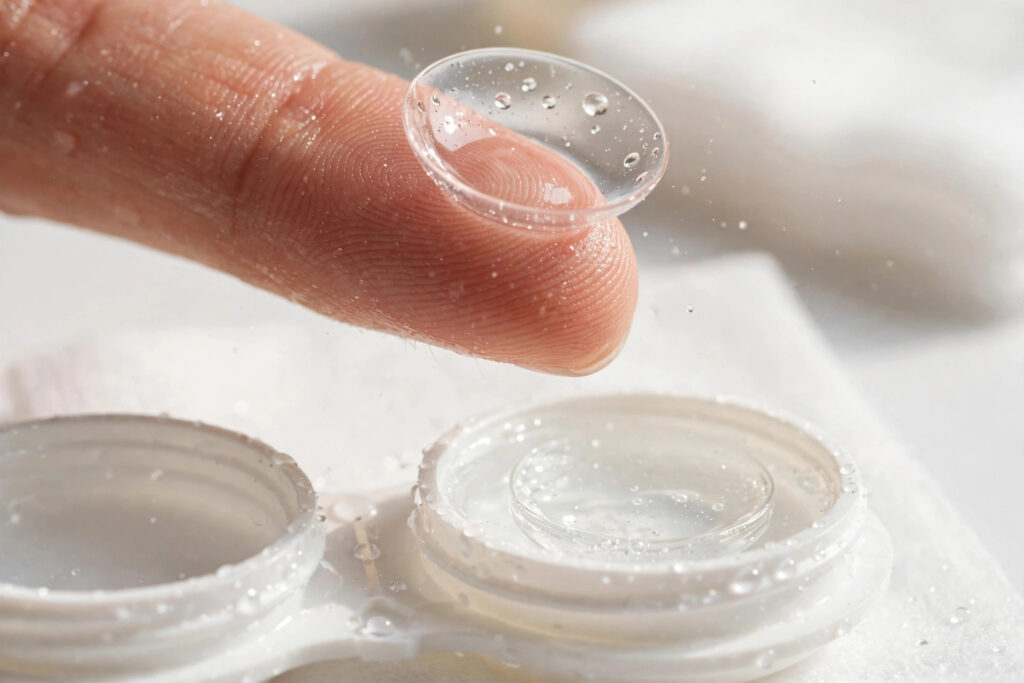
Walk into any contact lens fitting today and you’ll hear two terms: silicone hydrogel and hydrogel. Understanding the silicone hydrogel vs hydrogel lenses debate is the fastest way to grasp why modern lenses feel so different from the ones your parents wore — and why your eye doctor may steer you toward one or the other.
Both materials are soft, flexible plastics that hold water, but they move oxygen in fundamentally different ways. That single difference ripples through comfort, wearing time, eye health, and price. Let’s break down how each material works and which one fits your eyes and lifestyle.
Table of Contents
- How Hydrogel Lenses Work
- How Silicone Hydrogel Lenses Work
- Oxygen Permeability: The Key Difference
- Comfort, Deposits, and Wettability
- Cost and Availability
- Which Material Is Right for You?
How Hydrogel Lenses Work
Conventional hydrogel lenses are water-loving polymers — typically HEMA-based plastics — that transmit oxygen dissolved in their water content. More water means more oxygen: a 58% water lens breathes better than a 38% water lens. For decades, this was the only soft lens chemistry available, and it served millions of wearers well.
The catch is that oxygen delivery tops out. Even the wettest hydrogel lens delivers far less oxygen than the open eye receives, and water evaporates during wear, so a high-water lens can actually dry out and tighten on the eye by late afternoon. Hydrogels remain common in daily disposables and specialty designs, where their excellent wettability and low cost keep them competitive.
How Silicone Hydrogel Lenses Work
Silicone hydrogel lenses add silicone — the same chemistry family used in medical implants — to the hydrogel matrix. Silicone is extraordinarily permeable to oxygen, so these lenses transmit oxygen through the silicone itself, not just through water. The result is Dk/t values (oxygen transmissibility) several times higher than conventional hydrogels, even at lower water contents.
Introduced in the late 1990s and refined continuously since, silicone hydrogels now dominate the reusable lens market and much of the daily disposable segment. Lower water content also means they dehydrate less during wear, which helps them stay comfortable into the evening. This material family represents the biggest leap in lens technology in the last quarter century.
Oxygen Permeability: The Key Difference
Oxygen is the headline difference. The cornea has no blood supply and breathes directly from the air; a lens that starves it of oxygen causes the cornea to swell (edema), grow new blood vessels (neovascularization), and become more vulnerable to infection. Silicone hydrogels dramatically reduce these risks compared with conventional hydrogels.
The numbers tell the story: a typical hydrogel lens might have a Dk/t around 20-30, while silicone hydrogels range from 100 to over 175. For overnight or extended wear — where the closed eyelid already cuts oxygen supply — this margin matters enormously. The FDA approvals for extended wear schedules are overwhelmingly granted to silicone hydrogel designs, not conventional hydrogels.
Comfort, Deposits, and Wettability
Comfort is more nuanced. Early silicone hydrogels felt stiffer and attracted lipid deposits, and some wearers found conventional hydrogels more comfortable initially. But modern silicone hydrogels use plasma treatments and embedded wetting agents that make them highly wettable, and most wearers now report equal or better comfort — especially late in the day, when hydrogels tend to dry out.
Deposit behavior differs by chemistry rather than being universally better in one camp. Silicone hydrogels can attract more lipid (oily) deposits, while conventional hydrogels — particularly ionic, high-water ones — attract more protein. Your tear chemistry determines which matters more for you. People managing chronic eye health issues like meibomian gland dysfunction may do better with one material over the other, which is worth discussing at a fitting.
Cost and Availability
Conventional hydrogel lenses are generally cheaper to manufacture, and that savings shows up in the price of daily disposables and budget lens lines. If you wear dailies and replace them every morning, the oxygen advantage of silicone hydrogel matters less, and a well-made hydrogel daily can be an economical, comfortable choice.
Silicone hydrogels command a modest premium in most product lines, but the gap has narrowed considerably as manufacturing scaled up. Given that most reusable lenses — biweeklies and monthlies — are now silicone hydrogel by default, many wearers get the upgrade without specifically choosing it. Specialty designs like torics and multifocals are available in both materials, though the newest designs skew silicone hydrogel.
Which Material Is Right for You?
There’s no universal winner — only the best match for your eyes. Silicone hydrogel is the stronger default for most wearers: better oxygen, less dehydration, and broader availability in reusable modalities. It’s the clear choice for extended wear, long wearing days, and anyone with a history of corneal swelling or redness from overwear.
Conventional hydrogel still earns its place for sensitive eyes that prefer its initial comfort, for budget-conscious daily disposable wearers, and for certain specialty fits. The right answer comes from a proper fitting and follow-up — which is why regular eye exams matter even for experienced wearers. Bring your wearing habits, your dryness symptoms, and your budget to the conversation, and let the material serve the eyes, not the other way around.