
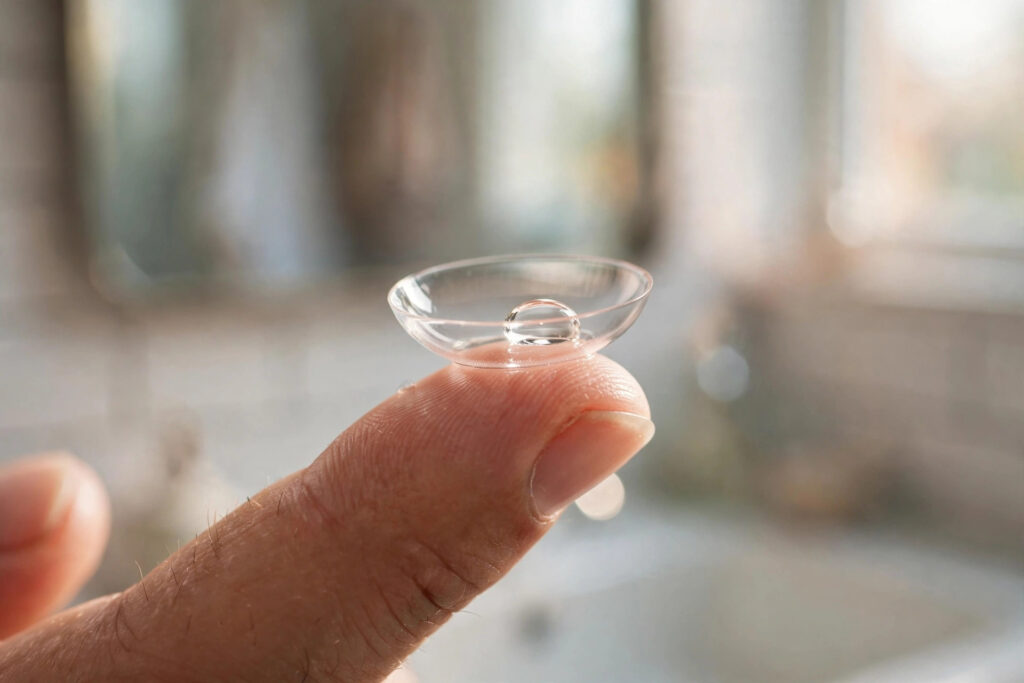
The idea of waking up with clear vision — no fumbling for glasses at 3 a.m. — is what draws people to extended wear contact lenses. These are lenses specifically approved for overnight wear, designed to keep the cornea breathing while your eyelids are closed.
But sleeping in lenses carries real risks, including a higher chance of serious eye infection. This guide covers how extended wear works, who is a good candidate, the approved wearing schedules, and the strict hygiene rules that make overnight wear as safe as possible.
Table of Contents
- What Extended Wear Means
- How Overnight Lenses Protect Your Cornea
- Approved Wear Schedules
- Who Is a Good Candidate?
- Risks and How to Minimize Them
- Daily Routine for Extended Wear Users
What Extended Wear Means
Extended wear is a regulatory term: it means the lens has FDA clearance for a specified number of nights of continuous wear, including sleep. This is different from merely napping in your daily lenses, which is never approved and always riskier. Only certain silicone hydrogel lenses carry extended wear indications, typically for up to 6 or 7 nights.
It’s also distinct from “flexible wear,” where your doctor approves occasional overnight use of a lens not formally labeled for it. True extended wear lenses are engineered — and clinically tested — for the low-oxygen environment under a closed eyelid. Understanding that distinction is step one, and keeping current with lens technology helps you know which products actually carry the approval.
How Overnight Lenses Protect Your Cornea
Closed eyelids cut the cornea’s oxygen supply roughly in half, so an overnight lens must be exceptionally breathable. Extended wear lenses use high-Dk silicone hydrogel materials — often with transmissibility values above 100 — to keep the cornea oxygenated through the night. Without that, the cornea swells, and swollen corneal tissue is far more susceptible to infection.
Material science does the heavy lifting here, but fit matters too. A lens that moves too little traps debris; one that moves too much causes mechanical irritation. Your eye care provider evaluates lens movement on the eye during the fitting, which is one reason extended wear should never be self-prescribed based on a friend’s brand.
Approved Wear Schedules
Most extended wear lenses are approved for up to 6 nights/7 days or 7 nights of continuous wear, followed by at least one night of lens-free sleep. Some newer designs carry 30-night approvals, though many doctors still recommend a more conservative schedule regardless of the label. Your eye care provider sets your personal limit based on how your eyes respond at follow-up visits.
Continuous wear doesn’t mean zero maintenance. Most practitioners still recommend removing, cleaning, and disinfecting the lenses weekly — or at minimum on the schedule your doctor specifies. The American Academy of Ophthalmology emphasizes that even approved overnight wear raises infection risk compared with daily wear, so the approved schedule is a ceiling, not a target.
Who Is a Good Candidate?
The best candidates are disciplined about hygiene, have healthy corneas and tear films, and genuinely benefit from overnight correction — shift workers, frequent travelers, parents of newborns, or anyone who needs functional vision the moment they wake. People with active lifestyles who find daytime lens handling impractical also do well.
Poor candidates include anyone with chronic dry eye, recurrent eye infections, a history of corneal ulcers, or difficulty following care instructions. Smokers and people with compromised immune systems face higher baseline risks. If you have ongoing eye health concerns, your doctor may suggest daily disposables instead — they offer the lowest infection risk of any soft lens modality.
Risks and How to Minimize Them
The headline risk is microbial keratitis, a corneal infection that can threaten vision. Studies consistently show overnight wear multiplies this risk several-fold compared with daily wear — though the absolute risk remains low for compliant wearers of approved lenses. Corneal neovascularization and giant papillary conjunctivitis are other concerns with long-term overnight use.
Minimizing risk is about discipline: never exceed your prescribed schedule, never top off old solution, replace lens cases regularly, and never wear lenses while swimming or in hot tubs. Redness, pain, light sensitivity, or discharge are stop-and-call signals — remove the lenses immediately and contact your eye doctor. Catching problems early is what keeps a manageable issue from becoming a vision-threatening one.
Daily Routine for Extended Wear Users
A practical extended wear routine still involves daily attention. Each morning, check that your eyes look and feel normal — white, comfortable, clear. Use preservative-free rewetting drops if they feel dry. Remove and clean the lenses on your doctor’s recommended interval, and always keep a backup pair of glasses with a current prescription.
Schedule follow-up eye exams at the interval your provider recommends — typically more frequent than for daily-wear patients, because early signs of overwear complications are often symptomless. Extended wear can be a genuinely life-improving option when it’s properly prescribed and carefully managed; it becomes risky only when convenience replaces vigilance.