
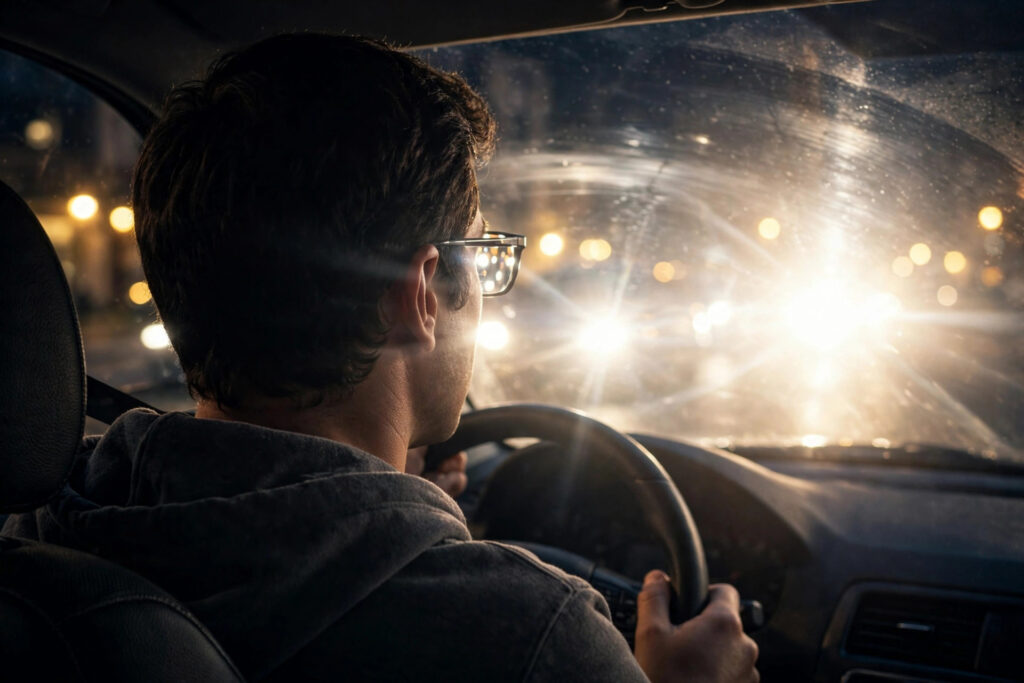
Night blindness, or nyctalopia, is the inability to see well in low light or darkness. People with the condition see fine during the day but struggle at dusk, in dim restaurants, or while driving at night. It is not a disease itself but a symptom of underlying problems in how the eyes adapt to darkness.
Because night driving is one of the most dangerous things most people do regularly, night blindness deserves serious attention. Here are its causes, how it is diagnosed, and what treatments can help.
Table of Contents
- How Night Vision Normally Works
- Common Causes of Night Blindness
- Vitamin A and Nutrition
- Diagnosis
- Treatment Options
- Staying Safe After Dark
How Night Vision Normally Works
Night vision depends on rod cells, the retinal photoreceptors specialized for low light. Rods contain rhodopsin, a pigment that breaks down in light and regenerates in darkness. Full dark adaptation takes 20 to 30 minutes, which is why stepping from a bright lobby into a dark theater initially blinds everyone.
Rods cluster in the peripheral retina, which is why you see dim stars better by looking slightly away from them. They detect light intensity but not color or fine detail, so night vision is inherently grainy and colorless compared to daytime cone vision.
Anything that damages rods, depletes rhodopsin, or clouds the optics of the eye degrades night vision. Because rods are more vulnerable than cones to several disease processes, night blindness often appears as the earliest symptom of conditions that later affect daytime vision too.
Common Causes of Night Blindness
Uncorrected nearsightedness is the most common and most easily fixed cause. Myopic eyes already struggle with distance clarity, and low light compounds the problem. Many people discover they are nearsighted precisely because night driving becomes difficult. Updated eyeglasses often resolve the complaint completely.
Cataracts scatter incoming light, and the effect multiplies in darkness when pupils dilate and more light passes through the cloudy lens periphery. Glare and halos around headlights are the classic cataract night-driving symptoms. Retinitis pigmentosa, an inherited degeneration of the rods, causes progressive night blindness often beginning in childhood or adolescence.
Glaucoma medications, particularly older miotic drops that constrict the pupil, can worsen night vision. Diabetes-related retinal changes, vitamin A deficiency, and zinc deficiency (which affects vitamin A metabolism) round out the common causes. An eye exam distinguishes among them efficiently.
Vitamin A and Nutrition
Vitamin A is literally the raw material of rhodopsin. Without enough of it, rods cannot regenerate their visual pigment and night vision fails. In developed countries, true vitamin A deficiency is uncommon but occurs with restrictive diets, fat malabsorption disorders, bariatric surgery, and alcoholism.
Early deficiency causes night blindness before any daytime symptoms, making it a useful warning sign. Treatment with vitamin A supplementation under medical supervision typically restores night vision within weeks if deficiency is the cause. Self-supplementing with high-dose vitamin A is unsafe, since the vitamin accumulates to toxic levels; get tested first.
Dietary sources include liver, eggs, dairy, and orange and dark green vegetables rich in beta-carotene, which the body converts to vitamin A. A balanced diet protects night vision as part of overall eye health, though no diet overcomes structural causes like cataracts or retinitis pigmentosa.
Diagnosis
Diagnosis starts with refraction to rule out uncorrected refractive error, then a dilated exam looking for cataracts, retinal degeneration, and optic nerve changes. Dark adaptometry can quantify exactly how well the eyes adapt to darkness, pinpointing rod dysfunction.
Electroretinography (ERG) measures the retina’s electrical responses to light flashes, distinguishing rod from cone dysfunction objectively. Visual field testing maps peripheral vision, which deteriorates early in retinitis pigmentosa. Blood tests check vitamin A and zinc levels when deficiency is suspected.
Genetic testing enters the picture for suspected inherited retinal diseases. Identifying the specific gene involved increasingly guides prognosis and, for a growing number of conditions, eligibility for gene-specific therapies. The American Academy of Ophthalmology outlines the diagnostic workup for persistent night vision problems.
Treatment Options
Treatment targets the cause. New glasses fix refractive night blindness. Cataract surgery restores night vision dramatically for cataract patients, often the most satisfying outcome they report. Vitamin supplementation corrects nutritional deficiency.
For retinitis pigmentosa, management focuses on slowing progression and maximizing remaining vision. Vitamin A palmitate supplementation has modest evidence for slowing ERG decline in some forms. Gene therapy is now a reality for specific mutations: voretigene neparvovec treats RPE65-related retinal dystrophy, and more gene therapies are in clinical pipelines.
Low vision rehabilitation helps regardless of cause. Night vision aids, improved home lighting, and mobility training with a white cane for advanced cases preserve independence. Tinted lenses that reduce headlight glare help some drivers, though nothing substitutes for addressing the underlying condition.
Staying Safe After Dark
Until the cause is treated, limit night driving. If you must drive, keep windshields clean inside and out, ensure headlights are properly aimed, reduce speed, and increase following distance. Anti-reflective coating on your eyeglasses cuts headlight glare meaningfully.
At home, improve lighting along stairs, hallways, and bathrooms. Nightlights are cheap insurance against falls. Give your eyes full adaptation time when moving between bright and dark environments rather than rushing.
Above all, do not accept worsening night vision as normal aging without investigation. While some decline occurs with age, significant night blindness always has a cause, and many causes are treatable. Quality sunglasses during the day also help, since excessive bright-light exposure can temporarily worsen dark adaptation.