
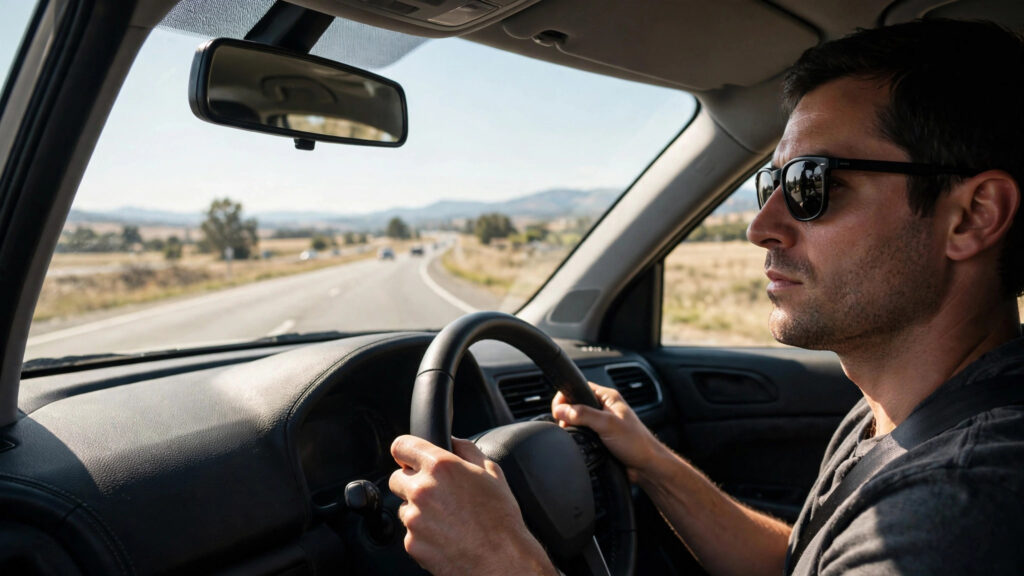
Driving demands more from sunglasses than almost any other activity. You need glare control without excessive darkening, clear peripheral vision, frames that stay put, and lenses that render traffic signals and brake lights accurately. The best sunglasses for driving in 2026 balance all of these demands while keeping you comfortable on long trips.
This guide covers the lens features that matter most behind the wheel, the tints and coatings worth paying for, frame styles suited to driving, and what to know about prescription driving glasses and night driving. Safer driving starts with seeing clearly.
Table of Contents
- Why Driving Demands More From Sunglasses
- Polarized Lenses Behind the Wheel
- Best Lens Tints for Driving
- Coatings That Help Drivers
- Frame Fit and Style for Drivers
- Prescription Driving Glasses
- Night Driving: What to Know
Why Driving Demands More From Sunglasses
Behind the wheel, your eyes face a uniquely challenging visual environment. Low sun angles at dawn and dusk blast directly through the windshield. Wet roads, other vehicles, and dashboard reflections create intense glare from multiple directions simultaneously. You need to read instruments, spot hazards in peripheral vision, and distinguish red, amber, and green signals instantly.
Ordinary fashion sunglasses often fail these tests. Lenses that are too dark reduce your ability to see in shadows and tunnels. Poor-quality lenses distort the view, causing subtle eyestrain that accumulates over long drives. Frames with thick temples block the peripheral vision you need for lane changes and intersection awareness.
The best sunglasses for driving are engineered around these specific demands rather than general sun protection. Understanding what makes driving vision unique helps you evaluate every feature that follows, and it is a matter of genuine road safety, not just comfort. Clear vision supports overall eye health by reducing the strain of squinting through glare mile after mile.
Polarized Lenses Behind the Wheel
Polarized lenses are the top recommendation for most drivers because they specifically target the horizontal glare that dominates driving: reflections off wet pavement, other cars’ hoods and windshields, and the shimmer of heat haze on highways. The reduction in squinting and eye fatigue is immediately noticeable.
There are two caveats. First, polarization can make it slightly harder to read some dashboard LCD displays and heads-up projections, though most modern vehicles use displays designed to remain visible through polarized lenses. Test your specific vehicle if this concerns you. Second, polarization can mask the sheen of icy patches in winter, so winter drivers in icy climates should weigh this trade-off.
For most drivers in most conditions, the benefits far outweigh these concerns. Our detailed polarized versus non-polarized comparison covers the technology in depth if you want the full background before choosing.
Best Lens Tints for Driving
Gray tints are the gold standard for driving because they reduce brightness evenly across the color spectrum without distorting colors. Traffic signals, brake lights, and road signs appear in their true colors, which is a genuine safety advantage. Gray is the safest default choice for any driver.
Brown and amber tints are the popular alternative. They enhance contrast and depth perception, making them excellent for overcast days and variable light. Many drivers prefer brown for the way it sharpens the view of the road. However, brown tints slightly alter color perception, so verify you can distinguish signals comfortably.
Green tints, classic in aviator styles, offer a middle ground with good contrast and fairly neutral color rendering. Avoid very dark tints for driving; lenses in the medium range, transmitting roughly 15 to 25 percent of light, suit bright daylight, while lighter tints work better for overcast conditions. Some drivers keep two pairs for different conditions. Yellow or clear “night driving” glasses are not recommended, as discussed below.
Coatings That Help Drivers
Anti-reflective coating on the back surface of sunglass lenses is one of the most valuable upgrades for drivers. It eliminates the distracting reflections of your own eyes and the car’s interior that bounce off the inside of the lens, a problem that worsens with darker tints. Backside AR coating noticeably improves driving comfort.
Scratch-resistant coatings matter because driving sunglasses live hard lives: tossed on dashboards, dropped in cup holders, and wiped with whatever is handy. A quality hard coat extends lens life significantly. Hydrophobic coatings that repel water and smudges are worthwhile for drivers in rainy climates.
Mirror coatings look stylish and add extra glare reduction, but they can scratch more easily and may draw unwanted attention in professional settings. They are a style choice rather than a driving necessity. When evaluating lens coatings for driving, prioritize backside anti-reflective treatment first.
Frame Fit and Style for Drivers
Driving frames should maximize your field of view. Look for frames with thin temples that do not block peripheral vision during lane changes and intersection scans. Wraparound styles offer excellent side protection from glare and wind, though very curved wraps can distort prescription lenses, so discuss this with your optician if you need correction.
Fit stability matters on bumpy roads and during long drives. Frames should grip gently at the temples and bridge without pressure points. Adjustable nose pads help fine-tune the fit, and lightweight materials prevent the fatigue of heavy frames pressing on your nose all day.
Aviators remain popular driving frames for good reason: large lenses, thin profiles, and minimal visual obstruction. Large rectangular and wayfarer styles work equally well. The key criteria are coverage, thin temples, and a secure fit, regardless of fashion trends.
Prescription Driving Glasses
If you wear prescription lenses, dedicated prescription sunglasses for driving are worth the investment. Clip-ons and fit-over styles are compromises: they add weight, can shift during drives, and often introduce reflections between the layers. A proper pair of prescription driving sunglasses delivers the best optics and comfort.
Consider your full prescription needs. If you are over 40 and presbyopic, progressive prescription sunglasses let you see the road, dashboard, and navigation screen clearly. For heavy computer use plus driving, some wearers prefer separate pairs optimized for each task.
Photochromic lenses that darken in sunlight are convenient for drivers who go in and out of buildings, but standard photochromics do not darken fully behind a car windshield because windshields block the UV light that triggers them. Newer formulations designed to react to visible light perform better in cars; ask your optician about car-friendly photochromic options in 2026. Pair your driving glasses knowledge with everyday frame selection guidance to build a complete eyewear wardrobe.
Night Driving: What to Know
Night driving deserves its own discussion because the rules reverse. Never wear sunglasses at night; even light tints dangerously reduce the light your eyes need. Yellow-tinted “night driving glasses” are heavily marketed but not supported by vision science: studies show they do not improve night vision and can actually reduce it slightly by cutting total light transmission.
What genuinely helps night driving is a clean windshield, properly aimed headlights, and glasses with anti-reflective coating if you wear prescription lenses. AR coating reduces the halos and starbursts around oncoming headlights that plague many night drivers. If night glare is severe, get your eyes checked; it can signal cataracts or uncorrected refractive error.
The American Academy of Ophthalmology advises against tinted night driving glasses and recommends addressing underlying vision issues instead. For daytime driving, invest in quality polarized sunglasses with proper UV protection from a reputable maker, and keep them in your car so you never drive unprotected.