
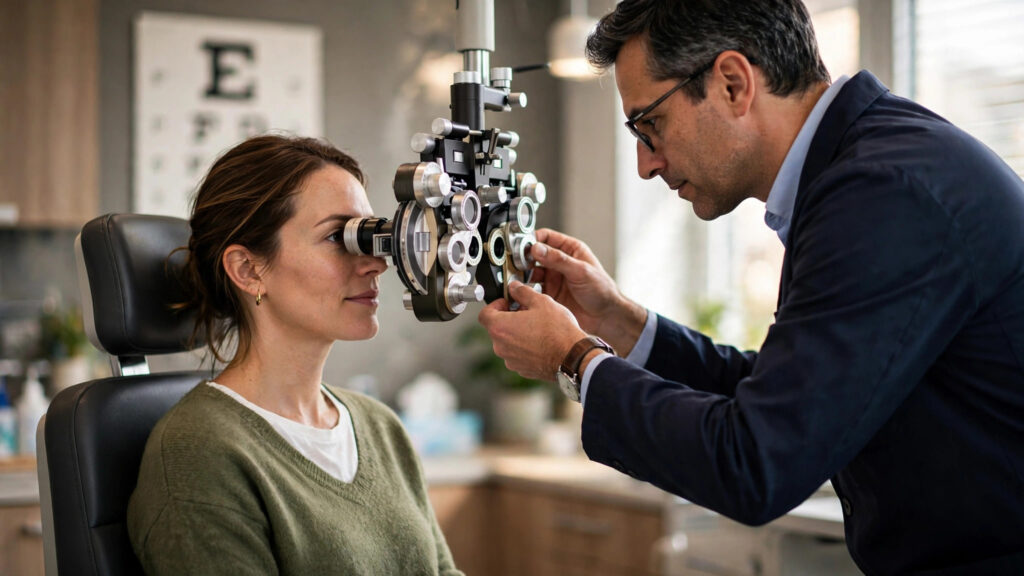
Most people walk into eye exams unprepared, then remember their questions in the parking lot afterward. A little preparation makes the exam more efficient, more comfortable, and more useful. It also helps your eye doctor give you better care.
Whether it is your first exam in years or a routine annual visit, this checklist covers what to bring, what to expect, and how to get the most from your appointment.
Table of Contents
- What to Bring
- Your Medical and Family History
- Understanding Dilation
- Questions Worth Asking
- Special Tips for Key Groups
- After the Exam
What to Bring
Bring your current glasses, even if you think the prescription is wrong. Your doctor can measure them to see exactly what changed. Contact lens wearers should bring their lens boxes or a photo of them, showing the brand, prescription, and parameters, plus a pair of backup glasses to wear home if dilation is planned.
Bring your insurance cards, both vision and medical, along with a photo ID. Bring a complete list of medications, including over-the-counter drugs, supplements, and eye drops, since many affect the eyes. A written list beats memory; include dosages.
Bring your sunglasses. If your eyes are dilated, you will be light-sensitive for several hours afterward, and the disposable shades clinics provide are flimsy. If dilation strongly affects you, arrange for someone else to drive. Your own sunglasses make the trip home far more comfortable.
Your Medical and Family History
Eye health connects to whole-body health, so expect questions about diabetes, high blood pressure, autoimmune diseases, and neurological conditions. Know your diagnoses and how well controlled they are. Diabetes and hypertension directly affect what the doctor looks for and how often you need exams.
Family history matters enormously for glaucoma, macular degeneration, and retinal detachment. Know which relatives had eye diseases and at what ages they were diagnosed. “My father had glaucoma” is useful; “my father was diagnosed with glaucoma at 55” is much more useful for risk assessment.
Note your symptoms in advance: when they started, which eye, what triggers them, and what relieves them. Blurry vision that is worse at night suggests different causes than blur that fluctuates through the day. A short written timeline prevents the appointment-time amnesia everyone experiences. Our eye health guides describe common symptoms worth mentioning.
Understanding Dilation
Dilation drops widen your pupils so the doctor can examine the retina and optic nerve thoroughly. The drops sting briefly, take 20 to 30 minutes to work fully, and blur your near vision and increase light sensitivity for four to six hours. Distance vision is less affected, but everything feels bright.
Dilation is the gold standard for detecting retinal disease, and many practices dilate routinely. The National Eye Institute calls the dilated exam the single best thing you can do for your eye health. Some offer retinal photography as a partial alternative, but photos do not replace dilation for a complete peripheral retinal view. If you have diabetes, a family history of retinal disease, or new symptoms, expect dilation.
Plan accordingly: bring sunglasses, avoid scheduling visually demanding tasks afterward, and arrange a driver if you are sensitive to the blur. The inconvenience is minor compared to the value of a fully examined retina. Children are routinely dilated at exams; our kids’ vision guides explain what young patients should expect.
Questions Worth Asking
Ask about your eye pressure and optic nerve findings if you are over 40 or have a family history of glaucoma. Ask whether your retina looked healthy, especially if you are diabetic or highly nearsighted. Ask when you should return; the interval depends on your age, risk factors, and findings, not a one-size schedule.
If you get a new prescription, ask what changed and why. Ask about lens options relevant to your life: anti-reflective coating for night driving, occupational lenses for your working distance, or prescription sunglasses. If you are considering contact lenses, ask whether your eyes are good candidates and what the fitting process involves.
Ask about symptoms you have been dismissing. Occasional flashes, new floaters, frequent headaches, and night driving difficulty are all worth mentioning even if they seem minor. Doctors can only evaluate what they know about, and patients routinely underreport the symptoms that matter most.
Special Tips for Key Groups
Contact lens wearers may be asked to remove lenses before certain tests or to arrive wearing glasses instead. Ask when booking whether to wear lenses to the appointment. Bring lens solution and a case in case removal is needed during the visit.
Seniors should bring a companion if mobility, hearing, or cognition makes appointments difficult, and should mention falls or balance issues, since vision changes contribute to fall risk. A complete medication list is especially important given the number of drugs affecting eye pressure and tear production.
Parents bringing children should schedule morning appointments when kids are alert and cooperative, bring a favorite toy or snack for waiting rooms, and avoid framing the visit as scary. Mention school performance concerns and any family history of childhood eye conditions like lazy eye. Diabetics should try to have stable blood sugar on exam day, since wild swings temporarily alter refraction.
After the Exam
If you received a glasses prescription, you are not obligated to buy from the examining office; ask for a copy of the prescription, which is your legal right. Compare prices and selection freely. Keep the prescription with your records and note the expiration date, typically one to two years.
Follow through on recommendations. If the doctor suggested a follow-up for a suspicious optic nerve, scheduled imaging, or a referral to a specialist, book it before leaving. The most common failure in eye care is not the exam but the uncompleted follow-up.
Finally, update your eyeglasses if the prescription changed meaningfully. Wearing an outdated prescription causes the eye strain and headaches people often blame on aging. A well-prepared exam followed by prompt action is the simplest formula for lifelong healthy vision.