
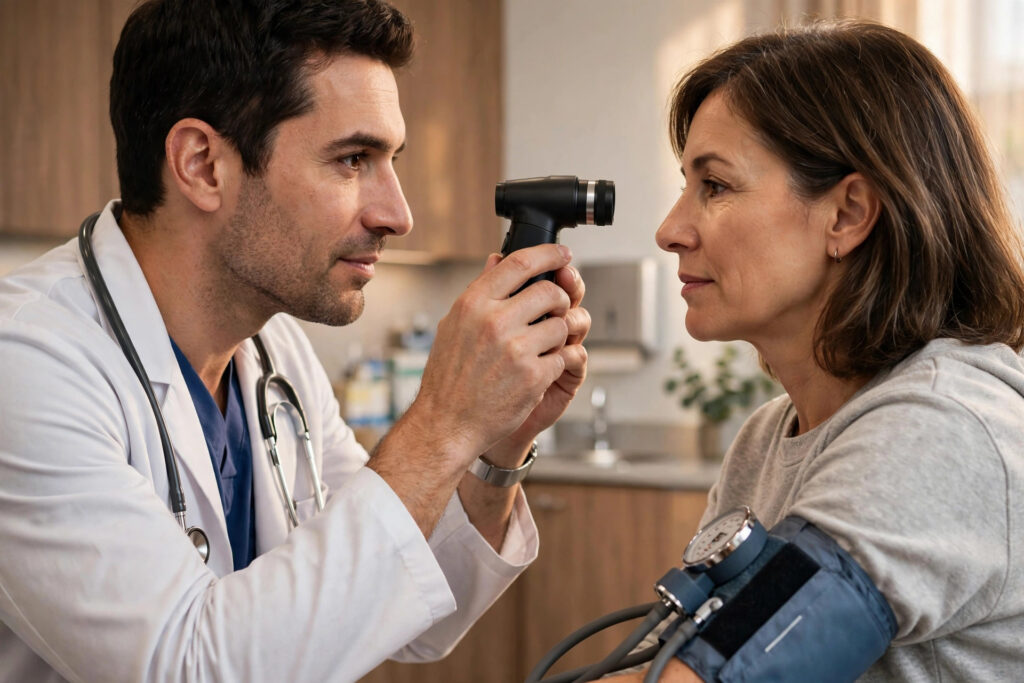
High blood pressure is famous for threatening the heart, brain, and kidneys, but the eyes are equally vulnerable. Hypertension damages the delicate blood vessels of the retina, raises the risk of glaucoma and retinal vein occlusion, and can cause sudden vision loss in hypertensive emergencies.
Because the eye is the only place where blood vessels can be directly observed without surgery, eye exams sometimes detect hypertension before any other symptom appears. Here is how high blood pressure affects your eyes and what to do about it.
Table of Contents
- Hypertensive Retinopathy Explained
- Retinal Vein and Artery Occlusions
- Blood Pressure and Glaucoma
- Hypertensive Emergencies and Vision
- Detection: What Doctors See
- Protecting Your Eyes
Hypertensive Retinopathy Explained
Hypertensive retinopathy is damage to the retinal blood vessels from chronic high blood pressure. In early stages, the arteries narrow and develop increased light reflexes, visible to an eye doctor as “copper wiring” or “silver wiring.” Small hemorrhages, cotton-wool spots (areas of nerve fiber damage), and hard exudates (lipid deposits) appear as the condition advances.
The condition is graded from mild to severe, with higher grades indicating greater vessel damage and higher risk of vision loss and cardiovascular events. Remarkably, most people with even moderate hypertensive retinopathy have no visual symptoms, which is why it is typically discovered during routine exams rather than from complaints.
The retinal changes mirror damage occurring simultaneously in the brain, heart, and kidneys. Studies show that people with hypertensive retinopathy face higher risks of stroke and heart disease, making the eye exam a window into whole-body vascular health. Controlling blood pressure can partially reverse early retinal changes.
Retinal Vein and Artery Occlusions
Hypertension is the leading risk factor for retinal vein occlusion, where a clot blocks the vein draining the retina. Branch occlusions affect part of the retina; central occlusions affect all of it. Symptoms include sudden painless blurring or vision loss in one eye, often noticed on waking. Treatment with anti-VEGF injections or laser manages the resulting macular swelling.
Retinal artery occlusion is the eye’s equivalent of a stroke: a clot blocks blood flow into the retina, causing sudden, profound, painless vision loss. It is an emergency requiring treatment within hours, and it signals high risk of brain stroke, warranting immediate comprehensive vascular evaluation.
Both conditions are substantially more likely with uncontrolled hypertension, especially combined with high cholesterol, diabetes, or smoking. Sudden painless vision loss in one eye should always trigger emergency evaluation, whatever the suspected cause.
Blood Pressure and Glaucoma
The relationship between blood pressure and glaucoma is nuanced. Chronic hypertension is associated with higher glaucoma risk, possibly through vascular damage to the optic nerve. Paradoxically, very low blood pressure, especially low nighttime diastolic pressure, also threatens the optic nerve by reducing its perfusion.
This creates a delicate balance for glaucoma patients with hypertension: blood pressure must be controlled for cardiovascular health without dropping so low, particularly at night, that optic nerve blood flow suffers. Some glaucoma patients on aggressive blood pressure treatment experience visual field worsening from nocturnal hypotension.
If you have both conditions, your eye doctor and primary care doctor should coordinate. Twenty-four-hour blood pressure monitoring sometimes reveals nighttime dips that explain otherwise puzzling glaucoma progression. Never adjust blood pressure medication based on eye concerns alone; the coordination must be medical.
Hypertensive Emergencies and Vision
When blood pressure spikes to dangerous levels, typically above 180/120, it can cause malignant hypertension with direct vision effects: blurred vision, visual field defects, and swelling of the optic disc (papilledema). This is a medical emergency requiring immediate hospital treatment to prevent stroke, vision loss, and organ damage.
Posterior reversible encephalopathy syndrome (PRES), sometimes triggered by severe hypertension, causes visual disturbances including blurred vision, visual field loss, and even cortical blindness. Prompt blood pressure control usually reverses these symptoms, but delays risk permanent damage.
These emergencies are uncommon but illustrate why severe hypertension symptoms, worst headache of your life, chest pain, shortness of breath, or sudden vision changes, demand emergency care rather than waiting for a clinic appointment.
Detection: What Doctors See
During a dilated eye exam, your doctor assesses the retinal vessels for narrowing, nicking where arteries cross veins, hemorrhages, exudates, and disc swelling. These findings are graded and tracked over time, providing an objective record of how well your blood pressure is controlled at the vessel level.
Optical coherence tomography (OCT) measures retinal nerve fiber layer thickness and macular swelling with precision, detecting subtle changes before vision is affected. OCT angiography visualizes the retinal circulation without dye, showing areas of poor perfusion.
Because eye findings sometimes precede hypertension diagnosis, eye doctors occasionally become the first to suggest blood pressure evaluation. If your eye doctor mentions hypertensive changes and you have not had your blood pressure checked recently, take the suggestion seriously. The American Academy of Ophthalmology describes the clinical signs and grading in detail.
Protecting Your Eyes
Blood pressure control is the master intervention. Medication adherence, reduced sodium intake, regular exercise, weight management, limited alcohol, and not smoking each lower pressure and each independently protects the retinal vessels. Home blood pressure monitoring helps you and your doctor see the true pattern.
Keep up with eye exams. People with hypertension should have dilated exams on the schedule their eye doctor recommends, typically annually, with more frequent monitoring if retinopathy is present. Report any vision changes promptly rather than waiting for the next scheduled visit.
Support your vessels with sunglasses outdoors, since UV-related oxidative stress compounds vascular damage, and maintain the correct eyeglass prescription so that vision changes from pressure-related causes are not masked by simple refractive blur. The eyes reward good blood pressure control with decades of clear sight.