
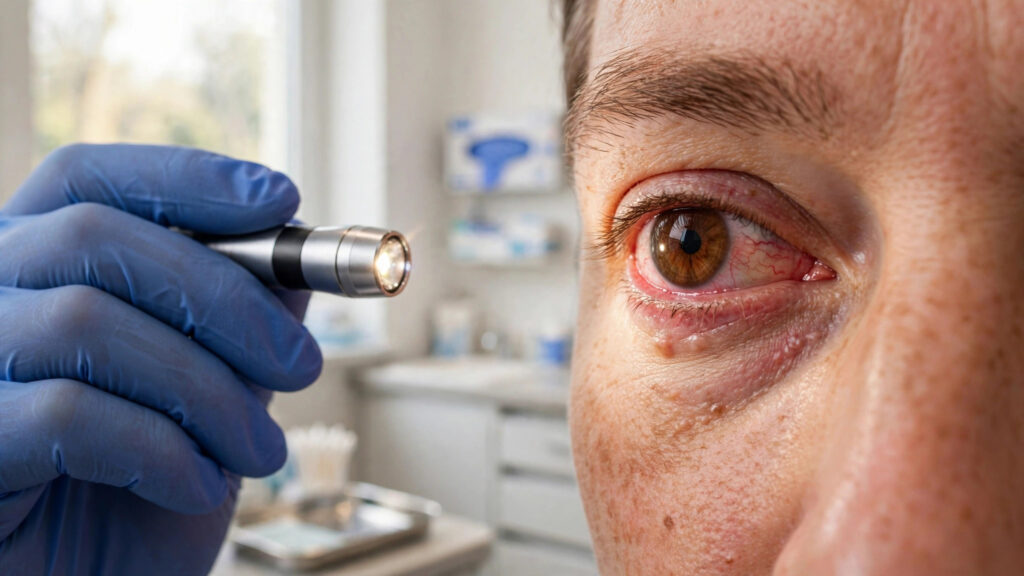
Can you wear contacts with pink eye? The short answer is no — not during the infection, and not until your eye doctor gives the all-clear. Pink eye (conjunctivitis) and contact lenses are a bad combination that can turn a minor infection into a vision-threatening one.
This article explains why lenses must come out, how long to stay in glasses, what to do with your lenses and case, and how to keep pink eye from coming back once you resume wear.
Table of Contents
- Why Contacts and Pink Eye Don’t Mix
- The Three Types of Pink Eye
- What to Do With Your Lenses and Case
- How Long to Wait Before Wearing Lenses Again
- Preventing Reinfection
- Warning Signs That Need Urgent Care
Why Contacts and Pink Eye Don’t Mix
Pink eye inflames the conjunctiva, the clear membrane covering the white of the eye and inner eyelids. A contact lens sits directly on this inflamed tissue, trapping infectious discharge against the eye and reducing oxygen to a cornea that’s already under attack. What might have been a week of redness can become a corneal ulcer if lenses stay in.
Lenses also become contaminated. Bacteria and viruses embed in the lens matrix and case, so continuing to wear them re-seeds the infection daily. The American Academy of Ophthalmology advises removing contacts at the first sign of pink eye and not resuming wear until the infection has fully resolved — a rule with no exceptions for “mild” cases.
The Three Types of Pink Eye
Not all pink eye is the same. Viral conjunctivitis — the most common type — is highly contagious, produces watery discharge, and usually resolves on its own in one to two weeks. Bacterial conjunctivitis produces thicker, yellow-green discharge, is also contagious, and typically needs antibiotic drops. Allergic conjunctivitis causes intense itching with watery discharge, isn’t contagious, and is treated with allergy management rather than antibiotics.
The type matters because it changes the timeline. Bacterial cases often clear within days of starting antibiotics, while viral cases simply run their course. Allergic pink eye may allow a faster return to lenses once symptoms are controlled — but only your eye doctor can make that call. Self-diagnosing the type is unreliable, especially when eye health is on the line.
What to Do With Your Lenses and Case
Throw away the lenses you were wearing when symptoms started — and if you wear dailies, that’s easy. For reusable lenses, discard the pair and start fresh; disinfecting may not eliminate all pathogens, and a new pair is cheap insurance against reinfection. Replace the lens case too, since biofilms in cases harbor bacteria stubbornly.
Also toss any eye makeup used during the infection, and don’t share towels, pillows, or eye drops. If you use rewetting drops, switch to a fresh preservative-free supply — the old bottle’s tip may be contaminated. This scorched-earth approach feels wasteful, but reinfection from a contaminated case is one of the most common reasons pink eye seems to “come back.”
How Long to Wait Before Wearing Lenses Again
The general rule: wait until all symptoms are gone — no redness, no discharge, no irritation — plus an extra safety margin your doctor recommends. For bacterial pink eye treated with antibiotics, many doctors clear patients 24 hours after starting treatment if symptoms are clearly improving. For viral pink eye, expect to wait until the eye looks and feels completely normal, which can take up to two weeks.
When you do resume, start with a fresh pair of lenses and consider daily disposables temporarily — a sterile lens each morning minimizes reinfection risk. If any symptoms return after resuming wear, stop immediately and call your doctor. Advances in lens technology have made dailies affordable enough that many wearers keep a trial supply specifically for post-illness transitions.
Preventing Reinfection
Pink eye spreads through hand-to-eye contact, so hand hygiene is your primary defense. Wash hands before touching lenses, never share lens solution or cases, and replace solution daily rather than topping off. Clean your glasses too — frames that sat on an infected face can reintroduce pathogens.
During any future eye infection, the same protocol applies: lenses out, glasses on, doctor consulted. Keeping up with annual eye exams also helps, since your doctor can spot the lid and tear-film issues that make some wearers more infection-prone than others.
Warning Signs That Need Urgent Care
Most pink eye is uncomfortable but not dangerous. Seek prompt care if you develop significant eye pain, light sensitivity, blurred vision that doesn’t clear with blinking, intense redness concentrated in one spot, or symptoms that worsen after several days of treatment. These can indicate the infection has spread to the cornea.
Contact lens wearers deserve a lower threshold for calling the doctor, because corneal complications progress faster under lenses. When in doubt, remove the lenses, switch to glasses, and get evaluated the same day. Your vision is worth the copay.