
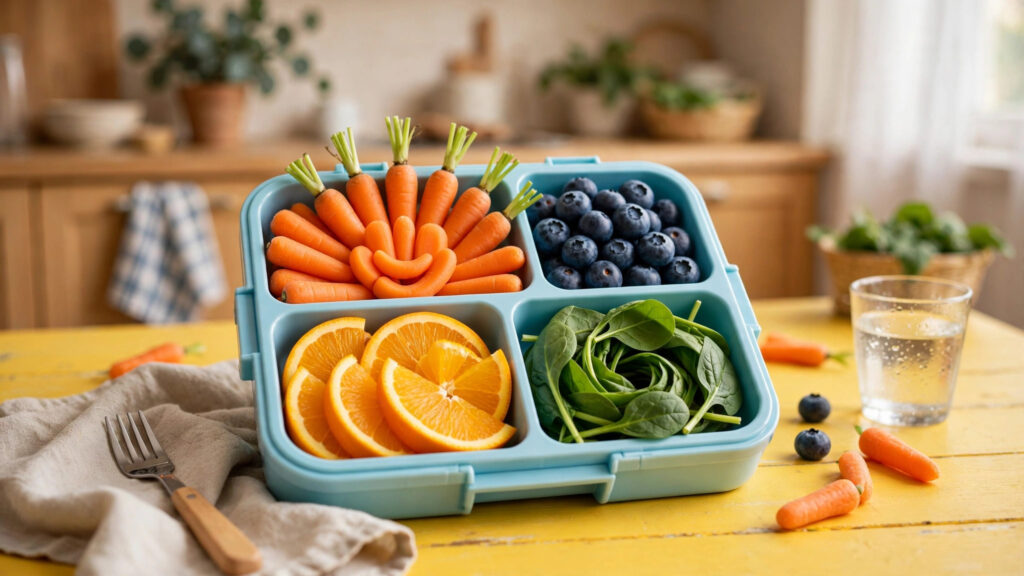
“Eat your carrots — they’re good for your eyes” turns out to be genuine nutritional wisdom, not just parental folklore. The best foods for children’s eye health deliver specific nutrients — vitamin A, lutein, zeaxanthin, omega-3 fatty acids, vitamin C, and zinc — that support everything from night vision to retinal protection.
No single food works miracles, but a varied diet rich in these nutrients gives your child’s developing visual system exactly what it needs. Here’s what to put on the plate.
Table of Contents
- Key Nutrients for Growing Eyes
- Top Foods for Children’s Vision
- Kid-Friendly Meal and Snack Ideas
- Nutrients of Concern and Deficiencies
- What About Supplements?
- Building Eye-Healthy Eating Habits
Key Nutrients for Growing Eyes
Several nutrients play starring roles in vision. Vitamin A (as beta-carotene and retinol) maintains the cornea and is essential for night vision — deficiency is a leading cause of preventable childhood blindness worldwide. Lutein and zeaxanthin are carotenoid pigments that concentrate in the macula, filtering harmful blue light and protecting retinal cells. Omega-3 fatty acids (DHA especially) are structural components of retinal cell membranes and support tear production. Vitamin C is a potent antioxidant concentrated in the eye’s lens and aqueous humor. Zinc helps transport vitamin A from the liver to the retina.
The encouraging news: children don’t need exotic superfoods to get these. Ordinary fruits, vegetables, eggs, fish, and dairy cover the bases when eaten regularly. Good nutrition complements — but never replaces — regular pediatric eye exams, which catch problems diet alone can’t fix.
Top Foods for Children’s Vision
Leafy greens (spinach, kale, collards): the richest sources of lutein and zeaxanthin. Even small amounts count — a handful of spinach in a smoothie is nearly tasteless but nutritionally potent.
Carrots, sweet potatoes, and butternut squash: loaded with beta-carotene, which the body converts to vitamin A. Roasting brings out natural sweetness kids love.
Eggs: one of the best all-rounders — lutein, zeaxanthin, zinc, and vitamin A in a kid-friendly package. The yolk holds nearly all the eye nutrients.
Fatty fish (salmon, sardines, mackerel): top sources of DHA omega-3s. Two servings a week is the target; fish sticks count in a pinch.
Citrus fruits, berries, and bell peppers: vitamin C powerhouses that support blood vessels in the eyes. Bell pepper strips are sweet, crunchy, and fun to dip.
Nuts, seeds, and legumes: zinc and vitamin E. A handful of almonds or sunflower seeds makes an easy snack. Dairy and fortified foods: vitamin A and zinc from milk, yogurt, and fortified cereals round out the picture.
Kid-Friendly Meal and Snack Ideas
Knowing the nutrients is easy; getting kids to eat them is the real challenge. Work with their preferences: blend spinach into fruit smoothies (the fruit masks the taste completely), make sweet potato fries as a side, serve “ants on a log” with bell pepper strips instead of celery, bake salmon as crispy fish tacos, and keep hard-boiled eggs ready for snacks.
Involve children in cooking — kids who help prepare vegetables are far more likely to eat them. Grow a small herb or lettuce garden; ownership breeds adventurous eating. And don’t force the issue at every meal: repeated, no-pressure exposure (it can take 10–15 tries) is how children learn to like new foods. Pairing new foods with dips — hummus, yogurt ranch, guacamole — dramatically improves acceptance. A child who eats colorfully is also more likely to embrace other eye-healthy habits as they grow.
Nutrients of Concern and Deficiencies
In developed countries, true vitamin A deficiency is rare but not unheard of — it’s most likely in extremely picky eaters, children with fat-malabsorption conditions, or those on very restricted diets. Warning signs of deficiency include night blindness (trouble seeing in dim light), dry eyes, and frequent eye infections.
Iron deficiency, while not directly an eye nutrient issue, causes fatigue that can masquerade as visual problems in school-age children. If your child is a severely restricted eater, mention it to the pediatrician, who can check nutrient levels with a simple blood test. Most children eating even a moderately varied diet get enough eye nutrients without special effort.
What About Supplements?
For most children, food beats pills. Children’s multivitamins can fill gaps for picky eaters, but high-dose “eye health” supplements formulated for adults (like AREDS2 formulas) are not appropriate for children and can deliver excessive vitamin A, which is toxic in overdose.
Omega-3 supplements (fish oil or algae-based gummies) are reasonable for children who won’t eat fish, but check with the pediatrician for dosing. The bottom line: a supplement can’t compensate for a diet of beige processed foods, and no supplement improves vision beyond normal or corrects refractive error. Save your money for quality groceries and your child’s next eye exam.
Building Eye-Healthy Eating Habits
The goal isn’t perfection — it’s a pattern. Aim for colorful plates: the pigments that make fruits and vegetables red, orange, yellow, and dark green are often the very carotenoids eyes need. “Eat the rainbow” is genuinely good vision advice for kids.
Model the behavior yourself, keep healthy options visible and accessible, and limit sugary drinks that displace nutritious foods. The National Eye Institute lists diet as a cornerstone of lifelong eye health — and habits built in childhood tend to stick. Combine good nutrition with outdoor play, limited recreational screen time, protective eyewear in the sun, and regular eye exams, and you’re giving your child’s eyes every advantage. For active kids, don’t forget UV-protective sunglasses — nutrition protects from the inside, sunglasses from the outside.