
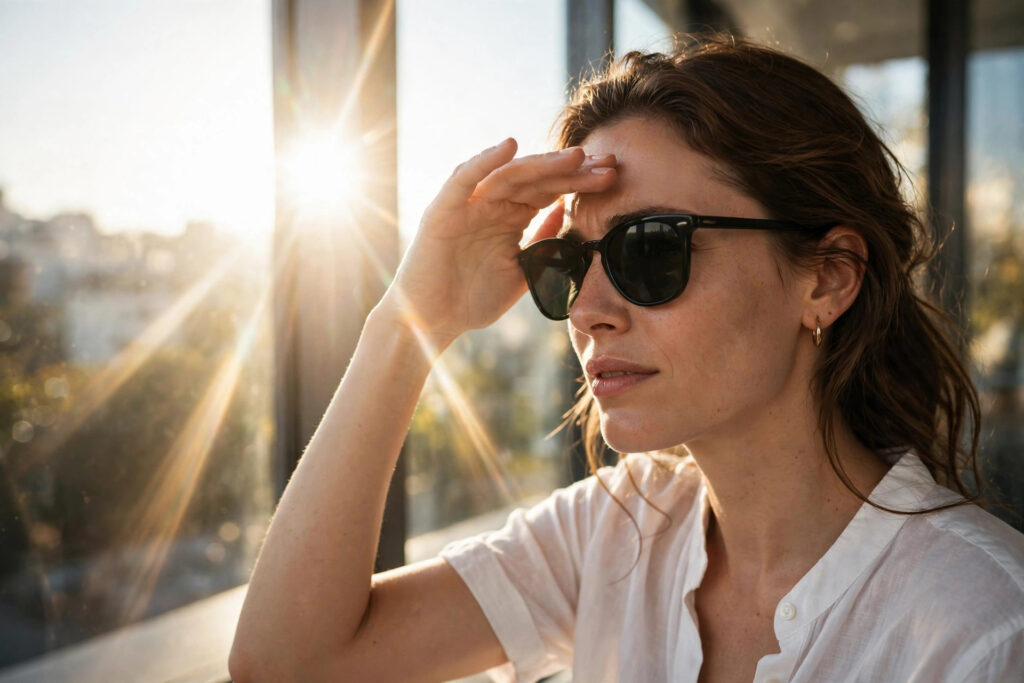
Light sensitivity, or photophobia, is an abnormal intolerance of light that causes discomfort or pain in normal lighting conditions. It ranges from mild squinting on bright days to an inability to tolerate ordinary indoor lighting. For those who experience it, photophobia is not a preference for dim rooms but a genuine neurological and ocular symptom.
Because so many different conditions cause it, photophobia is best understood as a signal pointing to an underlying issue. Here are the causes and the practical steps that bring relief.
Table of Contents
- What Photophobia Feels Like
- Eye-Related Causes
- Migraine and Neurological Causes
- Medications and Other Triggers
- Practical Relief Strategies
- When to Seek Care
What Photophobia Feels Like
Photophobia manifests as eye pain, burning, squinting, tearing, or headache triggered by light. Bright sunlight is the classic trigger, but many sufferers also struggle with fluorescent office lighting, car headlights at night, and even the glow of screens in dark rooms. The discomfort is real and physiological, not psychological.
Severity varies enormously. Mild photophobia means preferring sunglasses on bright days, which is normal. Moderate photophobia means needing sunglasses even on overcast days or indoors near windows. Severe photophobia means ordinary indoor lighting causes pain, significantly restricting daily activities.
Photophobia often travels with other symptoms that hint at the cause: eye redness suggests surface disease, headache suggests migraine, and eye pain with vision changes suggests inflammation or infection. The company photophobia keeps is diagnostically valuable.
Eye-Related Causes
Dry eye is one of the most common causes of light sensitivity. An unstable tear film leaves the cornea’s nerve endings exposed and hyper-reactive to light. Many people are surprised to learn their photophobia resolves once their dry eye is properly treated.
Corneal problems are potent triggers: abrasions, ulcers, infections, and inflammation of the cornea all cause significant photophobia because the cornea is so densely innervated. Uveitis, inflammation inside the eye, produces photophobia with deep aching pain and blurred vision. Even a small corneal foreign body can make normal light feel blinding.
Other ocular causes include conjunctivitis, blepharitis, and post-surgical sensitivity after LASIK or cataract surgery, which is usually temporary. Albinism and total color blindness involve reduced pigment or cone function that increases light sensitivity from birth. An eye exam with slit lamp evaluation identifies these surface and internal causes efficiently.
Migraine and Neurological Causes
Migraine is the most common neurological cause of photophobia. Up to 80 percent of migraine sufferers experience light sensitivity during attacks, and many have it between attacks as well. The mechanism involves hyperexcitable visual pathways in the brain rather than any eye abnormality, which is why the eye exam can be completely normal.
Other neurological causes include meningitis, where photophobia accompanies fever, headache, and neck stiffness as an emergency; traumatic brain injury and concussion, where light sensitivity can persist for months; and trigeminal neuralgia affecting the ophthalmic branch. Blepharospasm, involuntary eyelid closure, is both aggravated by light and a cause of light avoidance.
The FL-41 tint, a specific rose-colored lens tint, has research support for reducing photophobia in migraine and blepharospasm. It filters the blue-green wavelengths most provocative to sensitive visual systems. Tinted lenses are a management tool, not a cure, but for many sufferers they meaningfully expand what lighting they can tolerate.
Medications and Other Triggers
Many common medications list photophobia as a side effect. These include certain antibiotics, acne medications like isotretinoin, some antidepressants, antihistamines that worsen dry eye, and medications that dilate the pupil. If light sensitivity began after starting a new drug, review the timing with your doctor.
Dilated pupils from any cause increase light sensitivity simply by admitting more light. This includes the dilation drops used during eye exams, which is why clinics hand out disposable sunglasses afterward. Recreational substances and some herbal supplements can also dilate pupils or irritate the ocular surface.
Digital eye strain contributes a modern trigger: hours of screen work destabilize the tear film and fatigue the visual system, lowering the threshold at which light becomes uncomfortable. Addressing screen habits often reduces photophobia that seemed to have no cause.
Practical Relief Strategies
Quality sunglasses are the first-line defense. Choose wraparound styles with UV400 protection and polarization to cut glare from all angles. For indoor sensitivity, FL-41 tinted lenses or lightly tinted prescription glasses reduce the provocative wavelengths while keeping vision functional. Avoid wearing dark sunglasses indoors habitually, as this can increase sensitivity over time through dark adaptation.
Control your light environment. Replace harsh fluorescent or cool-white LED lighting with warmer, dimmable alternatives. Use anti-glare screen filters, enable night modes, and position screens to avoid reflections. Wide-brimmed hats add portable shade that sunglasses alone cannot provide.
Treat the underlying cause. Artificial tears for dry eye, migraine management with your doctor, allergy treatment, and contact lens hygiene improvements each address specific drivers. Relief is usually a combination of environmental control and cause-directed treatment rather than a single fix. The American Academy of Ophthalmology summarizes evaluation and management options.
When to Seek Care
Seek prompt care for photophobia that appears suddenly, especially with eye pain, redness, vision changes, headache with fever and neck stiffness, or after eye trauma. These combinations suggest infection, inflammation, angle-closure glaucoma, or meningitis, conditions where delay risks vision or life.
Schedule a routine evaluation for gradual or persistent light sensitivity without red-flag symptoms. The workup distinguishes ocular surface disease, refractive issues, and neurological causes, each with different treatments. Bring a list of medications and note when the sensitivity began and what triggers it.
Do not accept severe photophobia as a personality trait. It is a symptom with causes, and most causes are treatable. From dry eye therapy to migraine management to simple tinted lenses, the path from light-fearing to light-tolerant is well traveled, and an eye doctor is the right guide to start with.