
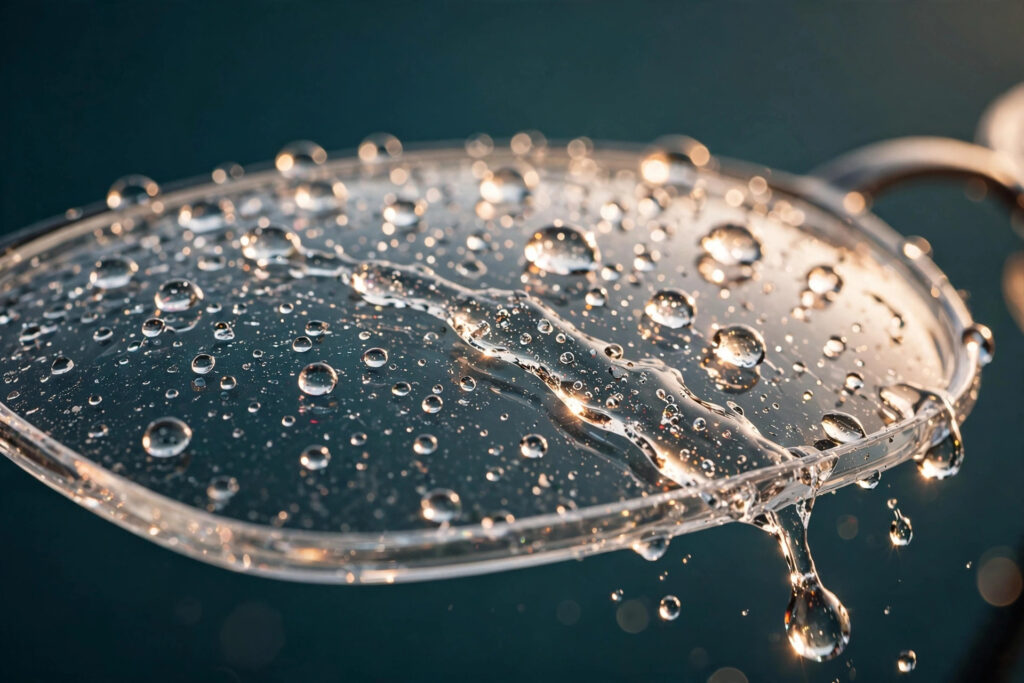
Rain-speckled lenses, foggy glasses when you walk indoors, fingerprints that never quite wipe away: these daily annoyances have a common solution. Hydrophobic coating on glasses creates an invisible shield that repels water, resists smudges, and keeps lenses clearer with less effort. Understanding its benefits helps you decide whether to add it to your next pair.
This guide explains how hydrophobic coatings work, the practical benefits in daily life, how they combine with other coatings, their durability, and whether the upgrade is worth the cost. Clearer lenses with less fuss is a compelling promise; here is the reality behind it.
Table of Contents
- How Hydrophobic Coating Works
- Water Repellency in Daily Life
- Smudge and Fingerprint Resistance
- Easier Cleaning and Maintenance
- How It Fits the Coating Stack
- Durability and Lifespan
- Is It Worth the Cost?
How Hydrophobic Coating Works
Hydrophobic coating is an ultra-thin topcoat, typically a fluoropolymer, applied as the final layer over anti-reflective coating. It dramatically lowers the surface energy of the lens, which changes how liquids behave on contact. Instead of spreading into a film, water beads into tight droplets that roll off with minimal residue.
The same low surface energy resists oils from fingerprints and skin, preventing them from bonding strongly to the lens. Smudges that do form sit loosely on the surface rather than adhering, making them far easier to wipe away. The coating is only nanometers thick and completely invisible, affecting neither optics nor appearance.
Related oleophobic properties specifically target oils, and most modern “hydrophobic” coatings are actually hydro-oleophobic, repelling both water and oil. Some formulations add anti-static properties that reduce dust attraction. Together, these create a lens surface that actively resists the contaminants of daily life rather than passively collecting them.
Water Repellency in Daily Life
The most dramatic hydrophobic coating benefit appears in rain. Uncoated lenses collect water droplets that scatter light and blur vision; coated lenses shed water as beads that roll away, maintaining remarkably clear vision in wet conditions. For commuters, cyclists, and anyone caught in unexpected rain, the difference is immediately obvious.
The benefit extends to humidity and temperature transitions. Walking from cold air into a warm building fogs uncoated lenses instantly; hydrophobic coatings reduce fogging severity and clear faster because condensation cannot form a uniform film. While dedicated anti-fog coatings perform better for extreme fogging, hydrophobic topcoats provide meaningful everyday improvement.
Sweat during exercise and steam from cooking similarly bead rather than film on coated lenses. Active wearers consistently rate water repellency among the most appreciated coating benefits because it addresses a frustration they encounter constantly. For sunglasses worn around water, hydrophobic coating is particularly valuable.
Smudge and Fingerprint Resistance
Fingerprints are the eternal enemy of clear lenses, and hydrophobic coating is the best defense. Oils from skin contact bead on the low-energy surface instead of spreading into the hazy films that plague uncoated lenses. The result is lenses that stay visibly cleaner between cleanings.
This matters more than it sounds. Smudged lenses scatter light, reduce contrast, and contribute to eye fatigue as your visual system works around the haze. For people who handle their glasses frequently, adjust them often, or have oily skin, smudge resistance meaningfully improves the daily wearing experience and supports comfortable eye health by reducing strain.
The oleophobic component also resists cosmetics, sunscreen, and environmental oils that migrate onto lenses during normal wear. Makeup wearers and outdoor workers notice particular improvement. Lenses simply look cleaner, which enhances both vision quality and the cosmetic benefit of anti-reflective coating beneath.
Easier Cleaning and Maintenance
Because contaminants bond weakly to hydrophobic surfaces, cleaning becomes faster and gentler. A quick wipe with a microfiber cloth removes what would require spray and effort on uncoated lenses. Less aggressive cleaning means less micro-abrasion over the lens lifetime, indirectly extending clarity.
This ease of cleaning encourages better habits. Wearers who dread the cleaning ritual clean less often and tolerate hazier lenses; those with coated lenses maintain clarity effortlessly. The psychological factor is real: low-friction maintenance gets done, high-friction maintenance gets postponed.
Standard cleaning rules still apply: rinse before wiping to remove abrasive dust, use microfiber cloths, avoid paper products and harsh chemicals. Hydrophobic coating makes proper cleaning easier, not optional. Treat the coating as an assistant to good habits, and review our lens care best practices to protect your investment.
How It Fits the Coating Stack
Hydrophobic coating is the final layer in the standard coating stack: scratch-resistant base coat, anti-reflective layers, then the hydrophobic/oleophobic topcoat. It cannot be applied alone effectively; it needs the AR layers beneath for proper adhesion and function. This is why hydrophobic coating is typically sold as part of premium AR packages rather than standalone.
When comparing AR coating tiers, the hydrophobic topcoat quality is often what separates mid-tier from premium. Basic AR may include a simple hydrophobic layer, while premium coatings feature advanced formulations with better durability, stronger oleophobic performance, and anti-static properties.
UV protection sits independently of this stack, either inherent to the lens material or added separately. The complete premium lens in 2026 typically includes: scratch-resistant base, multi-layer AR, hydrophobic/oleophobic topcoat, and verified UV protection. Understanding the stack helps you evaluate package deals intelligently.
Durability and Lifespan
Hydrophobic topcoats are the least durable layer in the coating stack because they sit on the surface bearing the brunt of cleaning and environmental exposure. With normal care, expect the water-beading performance to remain strong for one to two years, gradually diminishing as the fluoropolymer layer wears.
You will notice the decline when water stops beading tightly and smudges become stubborn again. The underlying anti-reflective coating continues functioning; only the easy-clean topcoat fades. This gradual wear is normal and expected, not a defect.
Harsh chemicals, abrasive cleaning, and excessive heat accelerate topcoat wear. Alcohol-based cleaners, in particular, strip hydrophobic layers faster. Stick to lens-specific sprays and microfiber cloths to maximize coating life. Some manufacturers offer reapplication services, though replacing lenses at the normal prescription cycle is usually more practical.
Is It Worth the Cost?
Hydrophobic coating is rarely sold alone; it comes bundled in AR coating packages. As part of a mid-tier or premium AR package, it adds genuine daily value for almost every wearer. The question is less whether hydrophobic coating is worthwhile than which AR tier to choose, and the hydrophobic topcoat strengthens the case for at least mid-tier.
It is most valuable for active lifestyles, rainy climates, frequent outdoor use, and anyone bothered by constant smudges. Office workers in dry environments benefit least, though easier cleaning appeals universally. If choosing between basic AR and premium AR, the superior hydrophobic topcoat is a legitimate reason to upgrade.
All About Vision’s lens coating guides offer deeper comparisons of coating tiers. The bottom line on hydrophobic coating on glasses benefits: water repellency, smudge resistance, and easier cleaning deliver tangible daily improvements that most wearers appreciate from the first rainy day.