
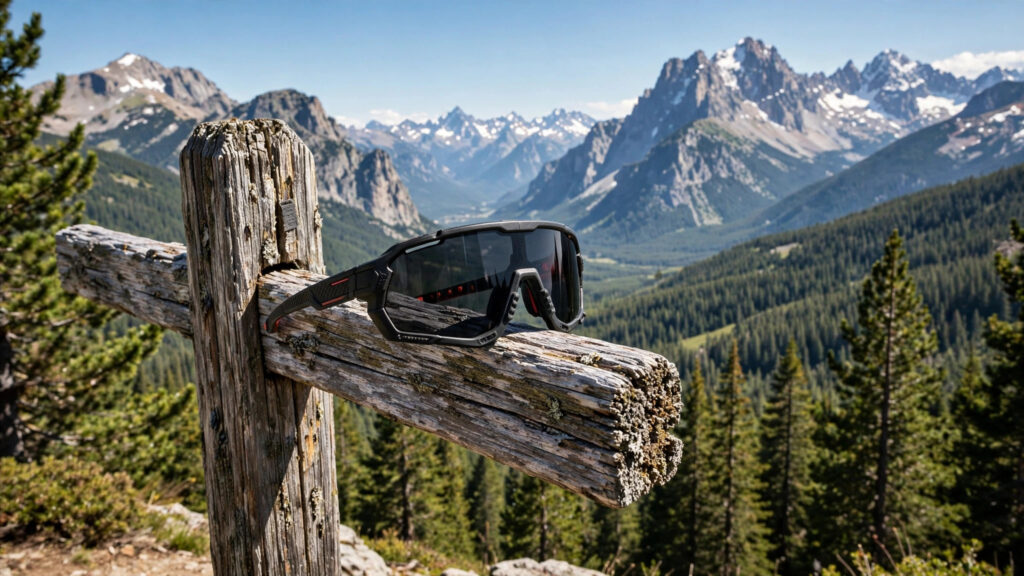
Trail sunglasses face tougher demands than almost any other eyewear: intense high-altitude UV, rapidly changing light through forest canopy, dust, sweat, and the occasional drop onto rock. The best sunglasses for hiking balance protection, visual clarity, and toughness without weighing you down.
Whether you’re day-hiking local trails or trekking above the treeline, here’s what to look for and which features actually matter on the trail.
Table of Contents
- Altitude and UV: The Hidden Danger
- Lens Tints for Trail Conditions
- Coverage, Fit, and Fog Prevention
- Durability for the Trail
- Photochromic Lenses for Variable Light
- Prescription Hikers: Options
Altitude and UV: The Hidden Danger
UV intensity increases roughly 4-5% for every 1,000 feet of elevation gain. At 10,000 feet, you’re getting nearly 50% more UV than at sea level — and if there’s snow, reflection doubles the assault. High-altitude hikers without proper protection risk photokeratitis, the painful corneal sunburn that can strike within hours.
This makes 100% UVA/UVB protection non-negotiable for hiking sunglasses, not a nice-to-have. Wraparound coverage matters equally — UV enters from the sides and below (rock and snow reflect upward), so flat fashion frames leave dangerous gaps. Protecting your eye health on the trail starts with coverage, not just lens rating.
Lens Tints for Trail Conditions
For varied trail environments, contrast-enhancing tints win: brown, copper, and rose lenses make trail features — roots, rocks, elevation changes — stand out against dirt and foliage backgrounds. Gray lenses preserve true color but offer less terrain definition. For bright alpine conditions above treeline, darker gray-green or mirrored lenses handle the intensity.
Consider conditions specifically: desert hiking demands maximum darkness and glare control; forest hiking benefits from lighter contrast tints that perform in dappled shade. Interchangeable lens systems let you adapt — dark for exposed ridges, lighter for canopy cover. Polarization helps around water and snow but isn’t essential for every trail; some hikers prefer non-polarized for reading icy patches.
Coverage, Fit, and Fog Prevention
Wraparound 8-base frames seal out side light, wind, and dust — the trifecta of trail eye irritation. The fit must survive sweat and movement: hydrophilic nose pads and temple grips, adjustable features, and light weight (under 30g) for all-day comfort under a pack’s hip belt and shoulder straps.
Fogging plagues hikers during steep climbs and temperature shifts. Vented lens designs, anti-fog coatings, and frames that sit slightly off the face promote airflow. The All About Vision resource on sport eyewear notes ventilation as the top fog-fighting feature — more effective than coatings alone. Test fit with your hat or buff, since headwear changes how frames seal.
Durability for the Trail
Trail sunglasses get dropped, sat on, and stuffed in hip-belt pockets. Polycarbonate or Trivex lenses resist impact and won’t shatter — a safety feature as much as a durability one. Flexible nylon frames bend instead of breaking; look for robust hinges and scratch-resistant coatings, since trail dust is abrasive.
Carry a hard case and use it — most trail sunglass deaths happen in transit, not on faces. A microfiber cloth in a sealed bag stays cleaner than one loose in a dusty pocket. And bring a retainer strap for scrambles and windy ridges; losing sunglasses miles from the trailhead is both a vision and a safety problem.
Weight-conscious backpackers should note that every gram counts, and sunglasses are no exception. Ultralight frameless or half-frame designs shave grams while maintaining coverage. But don’t sacrifice durability for minimal weight on rugged routes — a broken pair ten miles from the trailhead is worse than a few extra grams.
Desert and canyon hikers face unique reflected glare from light-colored rock. In these environments, side coverage matters as much as lens darkness — canyon walls bounce UV from every direction. Deep-wraparound designs with side shields, borrowed from glacier glasses, are worth considering for slot canyons and bright desert traverses.
Photochromic Lenses for Variable Light
Hiking’s constantly changing light — blazing meadow to dark forest and back — makes photochromic lenses genuinely appealing. They darken in exposed sections and clear in shade automatically, eliminating lens swaps. Modern photochromics transition fast enough to keep up with most trail light changes.
The trade-off: they won’t get as dark as dedicated glacier glasses at extreme altitude, and temperature affects their performance. For moderate hiking with variable canopy, they’re excellent; for serious alpine or snow travel, pair them with (or choose instead) dedicated dark glacier glasses with side shields. Advances in lens technology keep narrowing this gap.
Prescription Hikers: Options
Prescription hikers can choose direct prescription trail sunglasses (freeform lenses handle wraparound curves well), prescription inserts behind a shield, or contact lenses with non-prescription trail shades. For multi-day trips, dailies plus trail sunglasses minimize hygiene fuss — a practical combo many backpackers swear by.
Whatever the approach, keep the prescription current — reading trail markers, maps, and distant terrain demands sharp distance vision. Discuss your hiking habits during regular eye exams so your provider can recommend the right combination. And for young hikers, start the sunglass habit early per our kids vision guidance — mountain UV is no place for unprotected young eyes.