
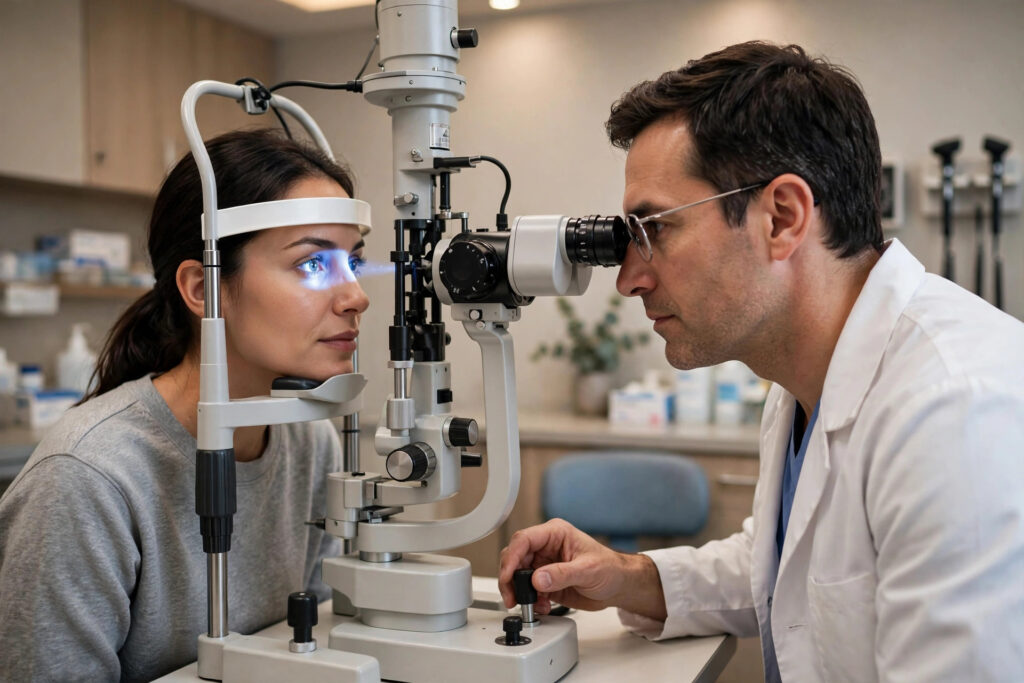
LASIK can be life-changing for the right patient, but it is not right for everyone. Surgeons turn away a meaningful share of people who come in for evaluation, not because the procedure is flawed, but because careful screening is what keeps it safe. Understanding the candidacy requirements helps you walk into an evaluation with realistic expectations.
This article covers the main factors surgeons assess, from age and prescription stability to corneal thickness and eye health, and the situations where LASIK may not be advised. It is general information only, not medical advice, and only a qualified refractive surgeon can determine whether you are a candidate.
Table of Contents
- Age and Prescription Stability
- Corneal Thickness and Shape
- General Eye Health
- Lifestyle and Occupation Factors
- When LASIK May Not Be Advised
- What Happens During the Evaluation
Age and Prescription Stability
Most surgeons require patients to be at least 18, and many prefer to wait until the early to mid-twenties. The reason is prescription stability: teenage eyes are still changing, and performing LASIK on a shifting prescription invites regression, meaning vision could drift back toward nearsightedness within a few years. The FDA approval for LASIK specifies age 18 and older.
Surgeons typically want your glasses or contact lens prescription to have been stable for at least one to two years before surgery. If your prescription has changed recently, waiting is the safer move, even if it is disappointing. Pregnancy and nursing are also reasons to postpone, since hormonal changes can temporarily shift refraction and dry the eyes.
Bringing a history of past prescriptions to your evaluation helps the surgeon assess stability. If you have been seeing the same eye doctor for routine exams, those records are valuable evidence of whether your vision has settled.
Corneal Thickness and Shape
LASIK works by reshaping the cornea with an excimer laser, which removes microscopic amounts of corneal tissue. That means you need enough corneal thickness to begin with, and enough remaining tissue after the ablation to keep the cornea structurally strong. Pachymetry, a quick ultrasound or optical measurement, determines your corneal thickness during screening.
The amount of tissue removed depends on how strong your prescription is: higher corrections require deeper ablation. This is one reason people with very high prescriptions are sometimes better served by alternatives. Pupil size matters too, since larger pupils can be associated with a higher risk of post-operative glare and halos at night.
Corneal topography maps the curvature of your cornea in fine detail. Irregular topography can reveal early keratoconus, a progressive thinning disorder that is a strong contraindication for LASIK. Modern diagnostic technology has made this screening far more sensitive than it was in the early days of refractive surgery, which is a major reason outcomes have improved.
General Eye Health
Beyond the cornea, surgeons screen for conditions that could compromise healing or outcomes. Significant dry eye is a common reason for caution, since LASIK temporarily disrupts corneal nerves and can worsen dryness for months. Clinics routinely evaluate tear film quality and may treat dry eye before considering surgery.
Other red flags include glaucoma or elevated eye pressure, cataracts, significant blepharitis or other eyelid disease, and a history of herpes simplex keratitis in the eye. Autoimmune conditions and certain medications that impair healing, such as some immunosuppressants, also factor into the decision. A history of eye injury or previous eye surgery needs full disclosure.
This screening is not meant to be discouraging, it is the heart of safe refractive surgery. A clinic that screens rigorously, even if it means telling some patients no, is a clinic you can trust more, not less. The American Academy of Ophthalmology describes a thorough candidacy evaluation as essential to good outcomes.
Lifestyle and Occupation Factors
Your daily life shapes whether LASIK is a good fit even when your eyes qualify. Contact sports athletes, military personnel, and people in occupations with a risk of eye trauma sometimes consider alternatives like PRK, which does not create a corneal flap. If you box, play martial arts, or work in a high-impact environment, discuss this with your surgeon.
Expectations matter too. LASIK corrects distance vision, but it does not prevent presbyopia, the age-related loss of near focus that begins in the forties. Patients approaching that age should understand they will likely still need reading glasses afterward. Monovision LASIK, correcting one eye for distance and one for near, is an option some patients try with contact lenses first before committing surgically.
Night driving demands also deserve honest discussion. Most patients see well at night after modern LASIK, but a small number experience halos or starbursts around lights, especially with larger pupils. If you drive extensively at night for work, raise this during your evaluation.
When LASIK May Not Be Advised
Several situations call for postponing or ruling out LASIK. Unstable or still-changing prescriptions, active eye disease or infection, and severe dry eye top the list. Pregnant or nursing patients should wait until hormones stabilize. People with very thin corneas relative to their prescription may be told that removing enough tissue would leave the cornea too weak.
Certain systemic conditions require extra caution. Uncontrolled diabetes can affect healing and cause fluctuating vision, and autoimmune diseases like rheumatoid arthritis or lupus can complicate recovery. These are not always absolute disqualifiers, but they demand evaluation by both your eye surgeon and your treating physician.
Being told no is not the end of the road. Alternatives such as PRK, SMILE, or implantable collamer lenses (ICLs) have different candidacy profiles, and some patients who are poor LASIK candidates are excellent candidates for one of these. Others find that modern eyeglasses or specialty contact lenses serve them well, and there is no shame in that outcome.
What Happens During the Evaluation
A proper LASIK evaluation takes one to two hours and is far more thorough than a routine eye exam. Expect corneal topography and tomography, pachymetry, tear film and dry eye assessment, pupil measurement in dim light, a dilated retinal exam, and a precise refraction. Many clinics dilate your pupils, so arrange not to drive yourself home.
The surgeon should review the findings with you directly, explain your specific risk profile, and discuss alternatives honestly. You should leave understanding not just whether you qualify, but why, and what your realistic expected outcome is. This is also the time to ask about enhancement policies and long-term follow-up.
If you are told you are a candidate, take a few days before scheduling. A reputable clinic will not pressure you to book on the spot. The FDA’s overview of LASIK risks and benefits is a useful pre-read so you arrive informed, and a second opinion is always reasonable for an elective procedure.