
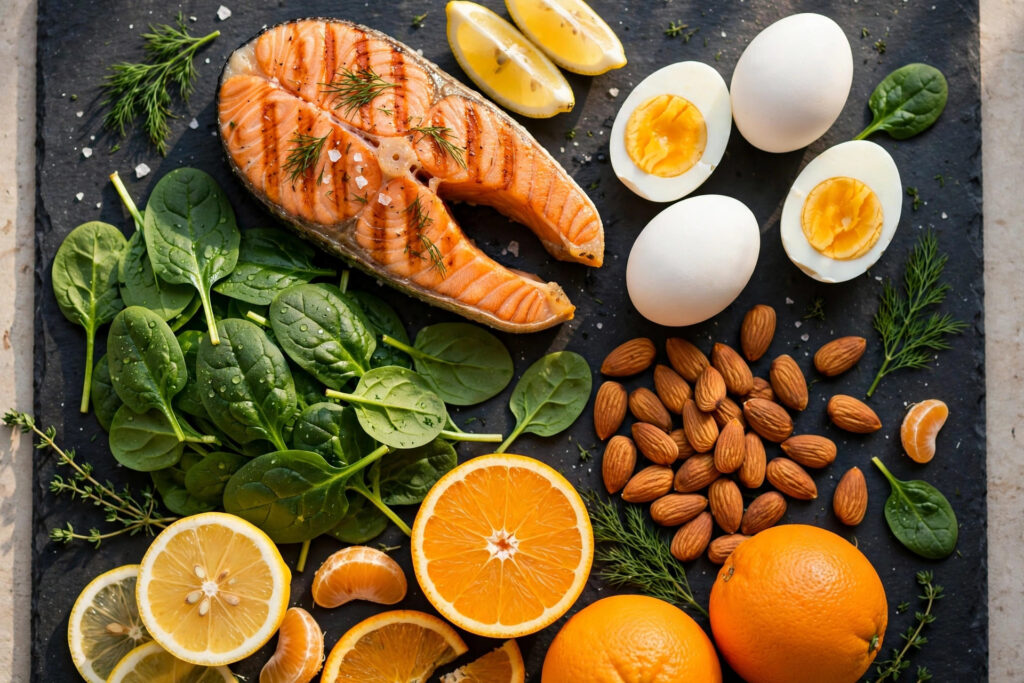
The eyes are among the most metabolically active tissues in the body, and they depend on a steady supply of specific nutrients to function and defend themselves against damage. While no diet gives you superhuman vision, consistent nutrition meaningfully influences your risk of cataracts, macular degeneration, and dry eye.
The best foods for eye health are not exotic or expensive. They are familiar whole foods, rich in a handful of well-studied nutrients. Here is what to eat and why it matters.
Table of Contents
- The Key Nutrients Your Eyes Need
- Leafy Greens and Colorful Vegetables
- Fatty Fish and Omega-3s
- Fruits, Nuts, and Eggs
- Foods That Harm Eye Health
- Putting It on the Plate
The Key Nutrients Your Eyes Need
Lutein and zeaxanthin are carotenoids concentrated in the macula, where they form the macular pigment that filters harmful blue light and neutralizes oxidative damage. Higher macular pigment density is associated with lower macular degeneration risk. The body cannot make these compounds; they must come from food.
Omega-3 fatty acids, particularly DHA, are structural components of retinal cell membranes. They support tear production and reduce ocular surface inflammation, making them relevant to both retinal health and dry eye. Vitamins C and E are antioxidants that protect the lens and retina from oxidative stress, while zinc helps transport vitamin A to the retina.
Vitamin A itself is essential for the visual pigments in rod cells; deficiency causes night blindness. The landmark AREDS2 trial confirmed that specific combinations of these nutrients slow progression of intermediate macular degeneration, providing the strongest evidence that nutrition affects eye disease outcomes.
Leafy Greens and Colorful Vegetables
Dark leafy greens are the single best food group for eyes. Kale, spinach, collard greens, and Swiss chard are exceptionally rich in lutein and zeaxanthin. Just a cup of cooked kale delivers many times the daily amounts associated with macular benefit in studies. Rotate varieties to keep meals interesting.
Orange and red vegetables supply beta-carotene, which the body converts to vitamin A. Sweet potatoes, carrots, red bell peppers, and butternut squash are excellent sources. Red bell peppers add a bonus of vitamin C, with one pepper providing well over a day’s requirement.
Broccoli and Brussels sprouts combine lutein with vitamin C and sulforaphane, a compound studied for cellular protection. The pattern is simple: the more deeply colored the vegetable, the more eye-relevant phytonutrients it typically contains. Frozen vegetables retain these nutrients well, so cost and convenience are no barrier.
Fatty Fish and Omega-3s
Salmon, sardines, mackerel, trout, and tuna are the richest dietary sources of DHA and EPA omega-3s. Two servings of fatty fish per week is the intake level associated with reduced dry eye symptoms and healthier retinal aging in population studies. Sardines and mackerel are affordable options with even higher omega-3 density than salmon.
For non-fish eaters, algae-based omega-3 supplements provide DHA directly, bypassing the inefficient conversion of plant omega-3s. Flaxseed, chia, and walnuts supply ALA, a plant omega-3 with modest conversion to the forms the eye uses. They are worthwhile additions but not full substitutes for DHA sources.
Preparation matters little for the nutrient content; baked, grilled, or canned fish all deliver omega-3s. If mercury is a concern, choose smaller fish like sardines and trout, which accumulate less mercury than large predators. The American Academy of Ophthalmology includes fatty fish among its top eye-healthy foods.
Fruits, Nuts, and Eggs
Citrus fruits, berries, and kiwi deliver vitamin C, which concentrates in the eye’s aqueous humor at levels far exceeding blood levels, suggesting an active protective role. Blueberries and blackberries add anthocyanins, pigments studied for retinal blood flow and night vision support.
Nuts and seeds provide vitamin E and zinc. A daily handful of almonds, sunflower seeds, or pistachios covers significant vitamin E needs. Oysters are the richest zinc source, but beef, pumpkin seeds, and chickpeas contribute meaningfully for non-shellfish eaters.
Eggs deserve special mention: the yolk contains lutein and zeaxanthin in a highly bioavailable form, plus zinc and vitamin A. The fat in the yolk actually improves absorption of the carotenoids, making eggs one of the most efficient eye foods per serving. For growing eyes, our kids’ vision guides include nutrition tips for families.
Foods That Harm Eye Health
Diets high in refined sugar and refined carbohydrates are associated with higher risk of macular degeneration and diabetic retinopathy, partly through blood sugar spikes and partly through the metabolic syndrome they promote. Sugary drinks are the most concentrated source and the easiest to cut.
Excessive alcohol depletes B vitamins and vitamin A, impairs nutrient absorption, and is linked to earlier cataract formation. Heavy drinking also raises blood pressure, which damages retinal vessels. Moderation protects the eyes along with the liver.
Highly processed foods heavy in trans fats and sodium promote the cardiovascular disease that underlies much retinal vascular damage. The eyes share their blood supply with the brain and heart; what clogs one system’s vessels harms them all. An eye exam can actually reveal early signs of dietary vascular damage in the retinal vessels.
Putting It on the Plate
You do not need a special “eye diet,” just a consistent pattern. Build meals around vegetables with a serving of greens daily, include fatty fish twice a week, snack on nuts and fruit instead of processed snacks, and choose whole grains over refined ones. This Mediterranean-style pattern is the best-studied eating pattern for eye health.
Supplements have a specific, limited role. The AREDS2 formula benefits people with intermediate macular degeneration, but evidence does not support megadose eye vitamins for the general population. Get nutrients from food first and discuss supplements with your doctor, especially if you smoke or take medications.
Protect the nutrition you eat with sunglasses outdoors, since UV damage and poor nutrition compound each other in macular degeneration risk. Diet and sun protection together form the practical core of lifelong vision preservation.