
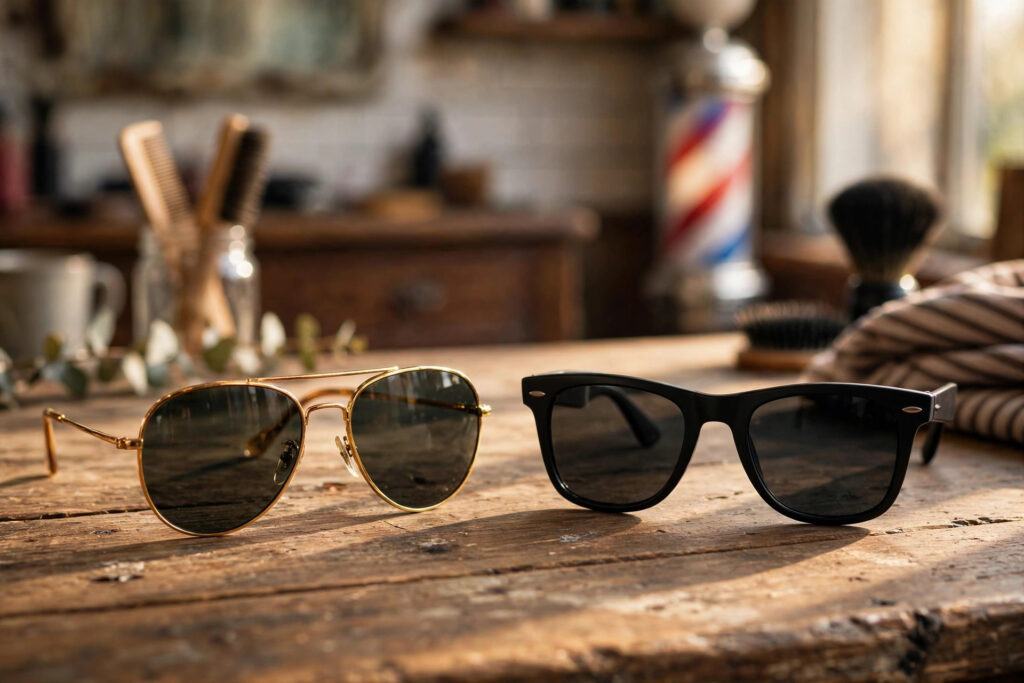
Few style debates are as enduring as aviator vs wayfarer. These two silhouettes have dominated sunglasses for the better part of a century, and choosing between them comes down to face shape, personal style, and how much coverage you want from your lenses.
Both are timeless, both come in countless variations, and both can look incredible — on the right face. This guide breaks down the differences so you can answer “which suits you” with confidence instead of guesswork.
Table of Contents
- The Aviator Profile
- The Wayfarer Profile
- Face Shape Matchup
- Coverage and Function
- Style and Personality
- Making the Final Call
The Aviator Profile
Aviators were designed in the 1930s for U.S. military pilots: large teardrop lenses, thin metal frames, and a double or triple bridge. The teardrop shape follows the cheekbone, giving maximum coverage with minimal frame weight. The American Academy of Ophthalmology recommends sunglasses that block 100% of UV rays whenever you are outdoors. Classic aviators use metal — gold, silver, or gunmetal — though modern versions experiment with acetate and mixed materials.
The aviator’s strength is its lightness, both visual and physical. Thin metal frames nearly disappear on the face, and the large lens area offers excellent sun protection — a genuine eye health advantage, since UV damage accumulates with every unprotected hour outdoors. Oversized aviators lean fashion-forward; classic sizes lean timeless.
The Wayfarer Profile
Wayfarers arrived in the 1950s as a rebellion against delicate metal frames: bold, trapezoidal acetate frames with a distinctive tilt. Where aviators whisper, wayfarers declare. The thick frame draws attention to the eyes and adds structure to the face, which is why they’ve been a cultural staple from Hollywood to rock stages for seventy years.
Wayfarers suit a huge range of prescriptions too — their generous lens area accommodates stronger corrections easily, something worth discussing if you’re considering eyeglasses or prescription sunglasses. Modern wayfarer-inspired shapes range from faithful reproductions to softened, rounded reinterpretations.
Face Shape Matchup
Here’s the practical core of the aviator vs wayfarer decision. Aviators flatter oval, heart, and square faces: the curved teardrop softens angular jawlines and balances wider foreheads. They can overwhelm very small or narrow faces, where the large lens dominates rather than complements.
Wayfarers shine on round, oval, and heart-shaped faces — their angular lines add definition where the face is soft. On very square faces, wayfarers can emphasize angularity, though many people wear that contrast intentionally. Round faces should generally avoid round aviators in favor of the wayfarer’s angles; square faces often prefer the aviator’s curves. When in doubt, try both on and photograph yourself — the camera reveals what the mirror hides.
Coverage and Function
Functionally, aviators usually win on coverage. The teardrop extends lower on the cheek, blocking reflected UV from below — significant because up to 10% of UV reaches your eyes via ground reflection. For driving, boating, or snow, that extra lower coverage matters.
Wayfarers sit higher and closer, which some wearers prefer for a secure, stable fit during activity. Their thicker frames also block more peripheral light from the sides. For maximum protection in either style, look for wraparound-influenced variants and confirm 100% UVA/UVB blocking — style never excuses weak lens protection.
Style and Personality
Style is subjective, but the archetypes are clear. Aviators read as sleek, adventurous, slightly retro-cool — the Top Gun effect is real and enduring. They pair naturally with casual and outdoor wardrobes and dress up surprisingly well with the right metal finish.
Wayfarers read as bold, artistic, confident — the frame does visual work, framing the eyes like architecture. They anchor streetwear and creative-professional looks effortlessly. Neither is “better”; they’re different instruments. Your wardrobe, your grooming, and the statement you want to make should all vote.
Another practical consideration is lens interchangeability. Many aviator and wayfarer lines now offer models with easily swapped lenses, letting you switch tints for driving, water, or low light without buying multiple frames. If you split time between bright highways and shaded city streets, this flexibility is worth prioritizing when you shop.
Finally, think about longevity. Both silhouettes have survived nearly a century of fashion cycles, which means replacement lenses, parts, and timeless styling are easy to find. A classic shape from a reputable maker is one of the safest eyewear investments you can make — it will look as current in ten years as it does today.
Comfort over long wear also differs slightly. Aviators’ thin metal construction and adjustable nose pads distribute weight delicately, while wayfarers’ acetate build offers a secure, planted feel. Try each for several minutes in-store — pressure points reveal themselves with time, not at first glance.
Making the Final Call
Still torn? Consider lifestyle: active outdoor types often prefer the aviator’s coverage and lightness; urban daily wearers often prefer the wayfarer’s presence and stability. Consider face size: petite faces usually suit classic wayfarers or smaller aviators; larger faces can carry oversized versions of either.
And remember the non-negotiables regardless of style: 100% UV protection, quality hinges, and a fit that doesn’t slide or pinch. A well-made pair in either silhouette, fitted properly — ideally confirmed during regular eye exams if you need prescription lenses — will serve you for years. The best sunglasses are the ones you’ll actually wear every sunny day.