
Walk out of any LASIK clinic and you will carry a small pharmacy with you: several bottles of eye drops, each with its own schedule, and instructions that can feel overwhelming when your eyes are still hazy. Understanding what each drop does and why the schedule tapers the way it does makes the whole regimen easier to follow, and following it is one of the most important parts of healing well.
This article explains the three main types of eye drops after LASIK, what typical schedules look like, practical tips for getting drops in correctly, and the mistakes that cause the most trouble. It is general information, not medical advice. Your surgeon’s specific prescriptions and schedule always take precedence; never adjust or stop prescribed drops without their direction.
Table of Contents
- Why Drops Matter So Much After LASIK
- Antibiotic Drops: Preventing Infection
- Steroid Drops: Controlling Inflammation
- Lubricating Drops: Comfort and Healing
- What a Typical Schedule Looks Like
- Tips for Using Drops and Mistakes to Avoid
Why Drops Matter So Much After LASIK
LASIK creates a corneal flap and reshapes the tissue beneath it. In the days after surgery, that flap is sealing, the surface is recovering, and the eye’s tear film is temporarily disrupted because corneal nerves were cut during the procedure. Eye drops manage each of these challenges: preventing infection while the eye is vulnerable, calming the inflammatory response to the laser, and keeping the surface moist while natural tear function recovers.
Skipping drops is one of the few things entirely within a patient’s control that can genuinely compromise results. Infections after LASIK are rare precisely because antibiotic prophylaxis is routine; inflammation that goes unchecked can affect healing quality; and a dry ocular surface heals more slowly and feels miserable. The drop regimen is not busywork, it is active treatment.
It also helps to know that the schedule is front-loaded by design. The first week carries the most intensive dosing because that is when infection risk and inflammation peak. As healing progresses, the regimen simplifies, which is why the tapering schedule exists. A follow-up Eye Dilation: What to Expect and Side Effects“>eye exam lets your surgeon confirm healing is on track before drops are reduced or stopped.
Antibiotic Drops: Preventing Infection
Antibiotic drops are prescribed to prevent bacterial infection while the corneal flap is sealing and the eye’s surface defenses are disrupted. They are typically used for a short course, often around the first week after surgery, with dosing several times daily at the start. Your surgeon chooses the specific antibiotic; patients do not need to comparison-shop this one.
Because the course is short, the main risk is stopping early once the eyes feel fine. Finish the full prescribed course exactly as directed, even if your eyes feel perfect by day three. Antibiotic resistance and incomplete prophylaxis are population-level concerns, but the personal rule is simple: complete the course.
Store antibiotic drops as directed, note the discard date once opened, and never share your bottles with anyone else. If you experience significant stinging, redness, or swelling that seems linked to a particular drop, report it rather than silently stopping; your surgeon can substitute a different formulation. The American Academy of Ophthalmology’s LASIK page describes the standard post-operative medication routine.
Steroid Drops: Controlling Inflammation
Steroid, or corticosteroid, drops calm the eye’s inflammatory response to the laser treatment. Some inflammation is a normal part of healing, but excessive inflammation can cause haze, discomfort, and slower visual recovery. Steroids are typically started at a higher frequency and tapered down over several weeks as healing progresses.
The taper matters and should never be improvised. Stopping steroids abruptly can cause a rebound of inflammation, while using them longer than directed carries its own risks, including elevated eye pressure and, with prolonged use, cataract formation. Your surgeon monitors eye pressure at follow-up visits partly for this reason. Follow the tapering schedule exactly as written.
Shake the bottle if the label says to, since steroid suspensions settle, and wait the directed interval between different drops so one does not wash out the other. If your schedule becomes confusing, write it out as a daily checklist rather than relying on memory; during the hazy first days, a written schedule prevents both missed and doubled doses.
Lubricating Drops: Comfort and Healing
Artificial tears are the workhorse of LASIK recovery and the drops you will use longest, often for several months. They compensate for reduced tear production while corneal nerves regenerate, keep the healing surface moist, and relieve the grittiness and burning that most patients feel in the early weeks. Unlike the medicated drops, they are used as needed, which in practice means very frequently at first.
Choose preservative-free formulations, especially when dosing frequently. Preservatives in multi-dose bottles can irritate a healing ocular surface when used many times daily, which is why surgeons overwhelmingly recommend preservative-free single-use vials for the post-operative period. They cost more, but this is not the place to economize.
Keep vials everywhere: bedside, desk, bag, car. Dry environments like airplanes, air-conditioned offices, and windy outdoors will remind you why. Many patients find that consistent lubrication in the first months correlates directly with comfort, and comfort correlates with not rubbing the eyes, which protects healing. Even long after surgery, UV Protection in Sunglasses: What to Look For“>sunglasses outdoors reduce wind-driven dryness.
What a Typical Schedule Looks Like
While every surgeon customizes, a common pattern looks like this: on surgery day and the first week, antibiotic drops several times daily alongside steroid drops at a similar frequency, plus artificial tears as often as every hour while awake. The antibiotic typically finishes within the first week or so. Steroids taper over the following weeks, for example from four times daily down to twice daily, then once daily, then stopped, with the exact steps set by your surgeon.
Artificial tears continue on an as-needed basis for months, gradually decreasing as natural tear function returns. Follow-up visits usually align with these transitions: the day-one and one-week visits confirm early healing, and the one-month visit often marks the end of medicated drops for uncomplicated cases. Your surgeon’s schedule is calibrated to your eyes, so treat any example, including this one, as illustrative only.
Set phone alarms for the medicated drops during the first week; it is easy to lose track when dosing is frequent. If you miss a dose, take it when you remember unless it is nearly time for the next one, and never double up. When multiple drops are due at the same time, wait several minutes between them so each has time to absorb. Former Best Contact Lenses for Dry Eyes in 2026“>contact lens wearers should note that rewetting drops for lenses are not substitutes for the prescribed post-operative regimen.
Tips for Using Drops and Mistakes to Avoid
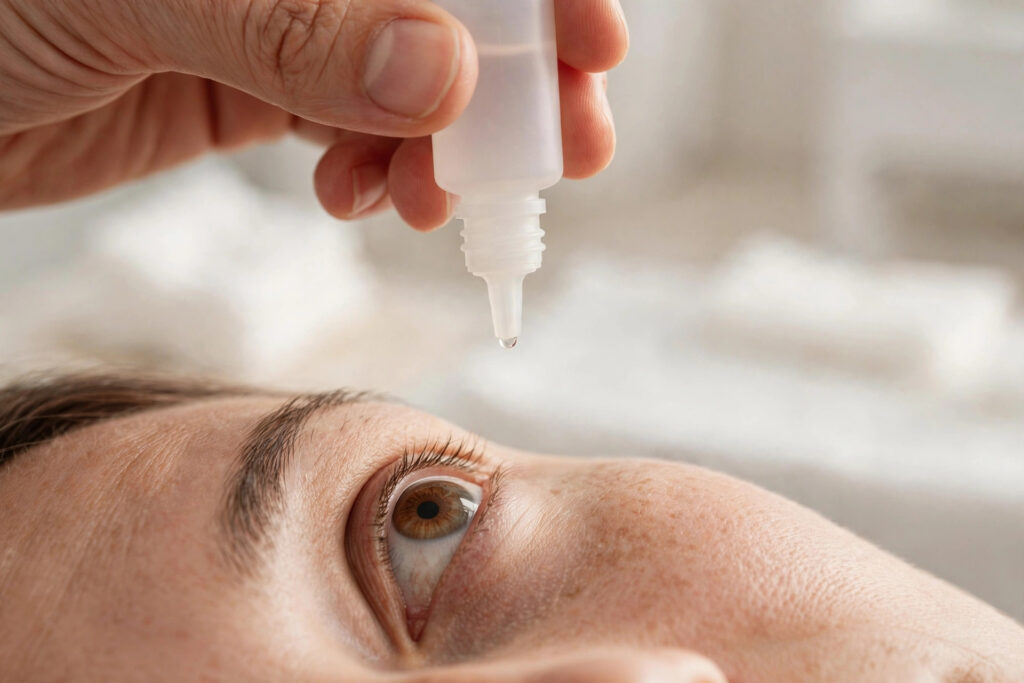
Technique matters. Wash your hands, tilt your head back, gently pull down the lower lid to form a pocket, and let a single drop fall in without the bottle tip touching the eye or lashes. Touching the tip to the eye contaminates the bottle. Close the eye gently afterward rather than squeezing, and press lightly on the inner corner for a minute to reduce drainage into the nose, which also reduces the odd taste some drops cause.
The most common mistakes are stopping drops early because the eyes feel fine, improvising the steroid taper, using preserved tears too frequently, and contaminating bottle tips. Another frequent one is confusing bottles that look alike; keep them labeled or stored separately, and double-check before each dose during the groggy first days.
Finally, do not add drops your surgeon did not prescribe, including redness-relief or “get the red out” products, which can irritate healing eyes. If dryness persists beyond the expected months or any drop seems to cause a reaction, report it at your follow-up rather than self-adjusting. The National Eye Institute’s dry eye resources explain the tear film science behind why lubrication matters so much during healing.