
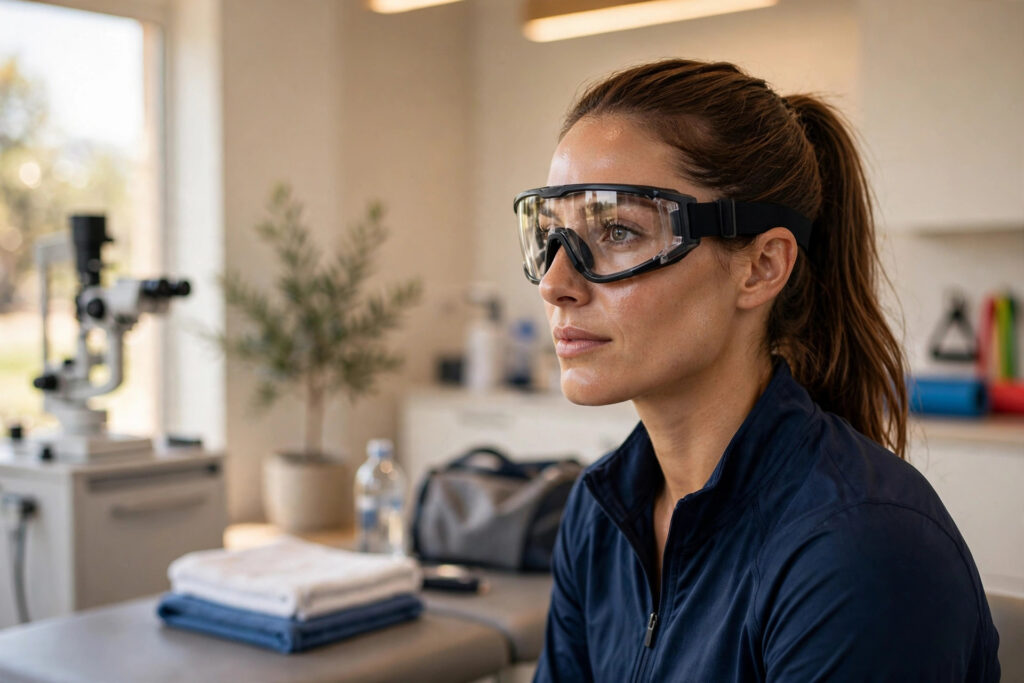
For athletes and pilots, vision is equipment. Glasses slip, fog, and break; contact lenses dry out, dislodge, and demand fussy hygiene on the road. It is no surprise that laser eye surgery is popular among people whose performance depends on what they see. But sports and aviation add considerations that the average patient never faces, from impact risks to strict vision standards.
This article covers why active people choose laser correction, how different sports shape the choice of procedure, what pilots and military aviators need to know about regulations, and realistic timelines for returning to training and competition. This is general information only. Athletes should discuss their sport-specific risks with both a qualified refractive eye surgeon and their team medical staff.
Table of Contents
- Why Athletes Choose Laser Correction
- Sport-Specific Considerations
- Vision Demands by Sport
- Pilots and Aviation Vision Standards
- Recovery and Return-to-Play Timelines
- Choosing the Right Procedure for Your Sport
Why Athletes Choose Laser Correction
The practical case is obvious to anyone who has played in glasses. Frames bounce during a run, fog climbing out of a pool, and shatter on contact. Contact lenses solve the frame problem but introduce their own: dryness in wind and air-conditioned arenas, lenses folding or washing out in water sports, and infection risk when hygiene slips during travel. Laser correction removes the middleman, giving athletes unaided vision that cannot be knocked off their face.
Beyond convenience, there is a performance argument. Peripheral vision is wider without frames, depth perception is more natural without the minification that strong glasses cause, and there is no rain-spattered lens between the athlete and the ball. Many athletes describe the change as removing a layer between themselves and the game, which is a psychological boost on top of the optical one.
There is also a durability argument for the eyes themselves. Repeated eye injuries from broken glasses are a real, if uncommon, hazard in contact and ball sports. Quality Gradient vs Solid Lens Tints: Which Is Better?“>sunglasses and protective eyewear still matter for UV and impact protection after surgery, but the day-to-day fragility of corrective eyewear is gone.
Sport-Specific Considerations
Contact and combat sports raise the flap question. LASIK creates a corneal flap that, while it heals firmly, can theoretically be dislodged by severe direct trauma to the eye even years later. For boxers, martial artists, rugby players, and others who take regular blows to the face, many surgeons prefer flapless options: PRK or SMILE. PRK has no flap at all, and SMILE’s tiny incision leaves the cornea structurally closer to its natural state.
Water sports add infection and healing considerations. Swimming pools, lakes, and oceans are off-limits during early healing after any corneal procedure, typically for a couple of weeks or as the surgeon advises. Surfers and divers should plan surgery in the off-season. Dry environments matter too: cyclists, skiers, and runners in wind face more post-operative dryness, making aggressive lubrication and wraparound eye protection part of the recovery plan.
High-altitude and aviation-adjacent athletes should know the history. Older radial keratotomy, a 1980s-90s procedure, caused vision shifts at altitude, but modern LASIK, PRK, and SMILE do not carry that problem. Still, anyone operating in extreme environments should mention it at screening so the surgeon can confirm the all-clear. A sport-aware OD vs OS on Your Prescription Explained“>eye exam that includes corneal mapping is the foundation for these decisions.
Vision Demands by Sport
Not all sports need the same vision. Ball sports like baseball, tennis, and cricket reward sharp dynamic visual acuity, the ability to resolve a fast-moving object, plus strong contrast sensitivity for picking a ball out of background clutter. Target sports like golf, archery, and shooting prize fine detail and steady focus. Motorsports demand excellent peripheral awareness and rapid focus shifts between instruments and track.
Modern wavefront-guided and topography-guided laser platforms aim to do more than correct the glasses prescription; they address subtle higher-order aberrations that affect contrast and night vision quality. For athletes, discussing these customized treatments at consultation is worthwhile, since the visual demands exceed those of desk work. The goal is not just 20/20 on a chart but robust vision in glare, dusk, and rain.
One nuance: dominant-eye considerations. In sports like archery or shooting where one eye does the aiming, surgeons sometimes discuss slight under-correction strategies or monovision for older athletes, though these are highly individual decisions. Young athletes with straightforward prescriptions usually aim for full distance correction in both eyes. The American Optometric Association’s vision resources offer useful background on how vision supports athletic performance.
Pilots and Aviation Vision Standards
Pilots face a second gatekeeper beyond the surgeon: the aviation medical authority. In the United States, the FAA permits laser vision correction for all classes of medical certificates, including airline transport pilots, provided vision meets the standards at examination and healing is complete. There is no longer a mandatory grounding period written into the regulations for modern procedures, though individual aviation medical examiners may advise waiting until vision stabilizes.
Military aviation has its own, historically stricter rules, which have relaxed over the years as data accumulated. Each service branch sets its own policy on which procedures are acceptable and what waiting periods apply before flight status. Military pilots and applicants should check current service-specific guidance rather than relying on general information, since these policies are updated periodically.
The practical advice for pilots is sequencing: get the surgery done, complete healing, confirm stable excellent vision, and then present for the medical examination with documentation from the surgeon. Do not schedule a medical exam in the early healing weeks. And because cockpit environments are dry, pilots prone to dryness should discuss tear film management as part of surgical planning. Parents of young aspiring aviators will find related guidance in pediatric eye care resources covering 7 Signs Your Child Needs Glasses“>kids vision development and screening.
Recovery and Return-to-Play Timelines
Timelines vary by procedure and sport, and the surgeon’s instructions always take precedence over general guidance. As a rough framework: after LASIK, many athletes resume light non-contact training within a few days, once the early follow-up confirms normal healing. PRK’s surface healing stretches the timeline, with most athletes waiting one to two weeks before training and longer before contact. SMILE generally falls between the two.
Return to full contact or competition takes longer. Surgeons typically want the cornea well healed and vision stable before clearing sparring, tackling, or game play, often several weeks. Water sports wait until the surgeon clears swimming, and dusty or windy outdoor training calls for protective eyewear during the healing months. Rushing back risks flap complications, infection, or simply a slower visual recovery.
Plan surgery around the competitive calendar. The off-season is the obvious window, giving weeks of buffer before performance matters. Athletes with fixed seasons should work backward from the first competition and add margin; a complication, however unlikely, is far easier to manage in May than in August. Communicate the plan to coaches and medical staff early so training loads can be adjusted.
Choosing the Right Procedure for Your Sport
There is no universal best procedure for athletes, only the best fit for a given eye and sport. LASIK offers the fastest visual recovery, which appeals to athletes with tight schedules and low eye-trauma risk. PRK trades slower recovery for maximum structural integrity, suiting contact-sport athletes and those with thinner corneas. SMILE splits the difference for many patients, with quick recovery and no full flap.
For very high prescriptions or thin corneas, implantable lenses may enter the discussion, offering excellent optical quality without removing corneal tissue. Each option carries its own risk profile, recovery demands, and cost, and the right choice emerges from the screening data plus an honest conversation about the sport’s demands.
Start with a surgeon experienced in treating athletes, and bring specifics: your sport, position, level of contact, season dates, and any history of eye injury. Ask how many athletes they have treated and what they recommend for your discipline. Whatever you choose, keep up with regular eye exams afterward and protect your investment with sport-appropriate eyewear. The American Academy of Ophthalmology’s LASIK overview is a solid reference to review before your consultation. Discuss everything with a qualified refractive eye surgeon who understands athletic demands.