
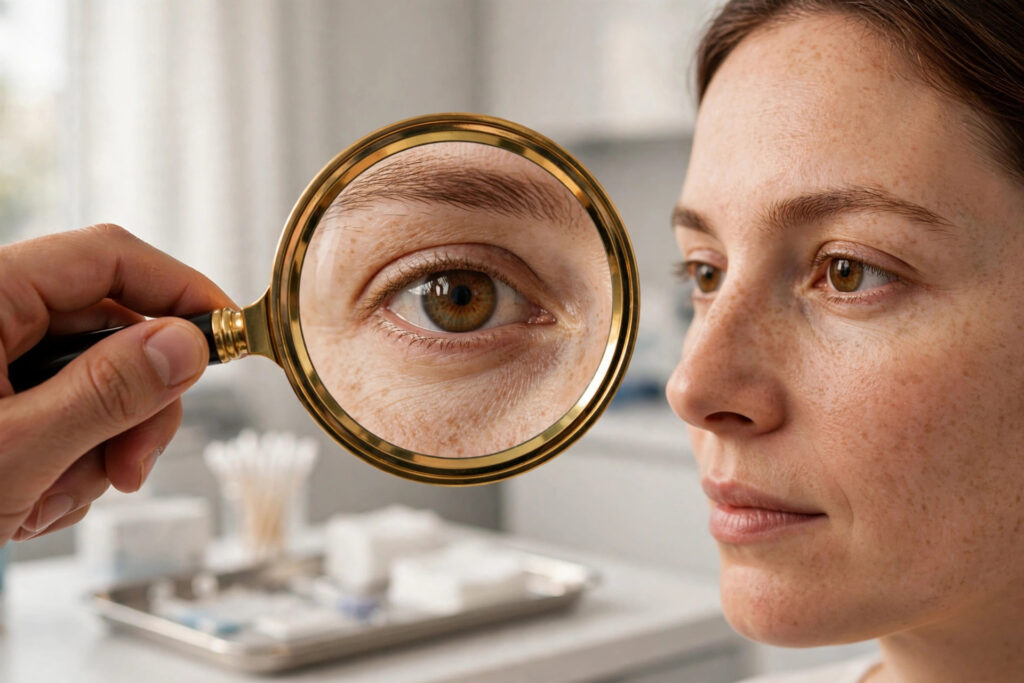
LASIK has been performed for decades, yet myths about it refuse to die. Stories of blindness, agonizing pain, and ruined night vision circulate online and at dinner parties, often based on outdated information from the procedure’s early years. Separating fact from fiction matters, because decisions about elective surgery should rest on evidence, not fear or hype.
Below, ten of the most persistent LASIK myths are examined against what refractive surgeons and clinical evidence actually show in 2026. This is educational information, not personal medical advice. Any decision about your own eyes belongs in a conversation with a qualified refractive eye surgeon.
Table of Contents
- Myths 1-2: Blindness and Pain
- Myths 3-4: Permanence and Age Limits
- Myths 5-6: Night Vision and Both-Eyes Timing
- Myths 7-8: Contacts Afterward and Thin Corneas
- Myths 9-10: Instant Recovery and Identical Procedures
- How to Evaluate LASIK Claims You Encounter
Myths 1-2: Blindness and Pain
Myth 1: LASIK can make you go blind. This is the most frightening and the least supported by evidence. Total vision loss from LASIK has not been documented in the medical literature; the procedure reshapes the cornea’s surface and does not enter the inner eye where the retina and optic nerve live. Serious complications that significantly reduce vision are exceedingly rare in properly screened patients treated by experienced surgeons using modern equipment. The realistic risks are lesser ones: dry eye, temporary halos, or a need for an enhancement, all of which your surgeon should discuss openly.
That is not the same as zero risk, and honest surgeons will never promise that. But the blindness narrative belongs to the procedure’s earliest era, when screening was cruder and lasers less precise. Today’s multi-step candidacy process exists specifically to filter out the eyes that would have produced the bad outcomes of decades past. The FDA’s LASIK risk information gives a sober, detailed account of what can actually go wrong and how often.
Myth 2: LASIK is extremely painful. The procedure itself is done under numbing eye drops, and most patients report feeling pressure and strange sensations rather than pain. The laser reshaping takes well under a minute per eye. Afterward, the common description is grittiness, burning, or the feeling of an eyelash in the eye for a few hours, managed with lubricating drops and rest. Significant pain after LASIK is unusual and worth reporting to your surgeon promptly, since it can signal a complication that needs attention.
Myths 3-4: Permanence and Age Limits
Myth 3: LASIK results last forever with no touch-ups ever needed. The corneal reshaping itself is permanent, but your eyes are not frozen in time. Prescriptions can drift slightly with age, and the natural lens inside the eye continues its own aging process, which is why reading glasses arrive in the mid-40s regardless of LASIK. A small share of patients eventually choose an enhancement procedure years later. Thinking of LASIK as a durable correction rather than a lifetime guarantee sets the right expectation.
Myth 4: You are too old for LASIK after 40. There is no strict upper age cutoff. What matters is eye health: stable prescription, healthy corneas, no significant cataracts, and realistic expectations. Many patients in their 40s, 50s, and beyond have successful outcomes, though the conversation shifts; surgeons will discuss how the procedure interacts with presbyopia and whether lens-based options might serve better once early cataracts appear. A comprehensive Does Insurance Cover Eye Exams?“>eye exam determines candidacy far better than a birthdate does.
The related myth, that young adults should rush in at 18, also deserves a note. Surgeons generally want to see a stable prescription for a year or more, which for many people means waiting until the early to mid-20s. Patience at the front end protects the result at the back end.
Myths 5-6: Night Vision and Both-Eyes Timing
Myth 5: LASIK permanently ruins night vision. Halos, starbursts, and glare around lights at night are real and common in the early weeks after surgery, and they unsettle many patients. In the large majority of cases these effects fade over weeks to months as the cornea heals and the brain adapts. Persistent night vision disturbances are uncommon with modern wavefront-guided treatments and appropriately sized treatment zones. Patients with naturally large pupils in dim light should discuss this specifically at screening, since pupil size relative to the treatment zone is the main risk factor.
Myth 6: Both eyes can never be treated on the same day. In the early days of LASIK, surgeons often treated one eye at a time, days or weeks apart, out of caution. Modern practice in many clinics is bilateral same-day treatment, which patients overwhelmingly prefer for its single recovery period. The shift reflects decades of safety data and better technology. Some surgeons still stage the eyes for particular cases, and either approach is legitimate; the myth is that same-day treatment is inherently reckless, which the evidence does not support.
After surgery, protecting healing eyes from bright light is sensible, and quality sunglasses with full UV protection are standard post-operative advice for outdoor time.
Myths 7-8: Contacts Afterward and Thin Corneas
Myth 7: You can never wear contact lenses again after LASIK. False. The cornea’s new shape can make fitting contacts trickier, sometimes requiring specialty lenses, but many post-LASIK patients wear contacts successfully years later, for instance to fine-tune remaining astigmatism or for presbyopia management. Needing contacts occasionally after LASIK is not a sign of failure; it is one of several tools for optimizing vision across a lifetime.
Myth 8: Thin corneas automatically disqualify you from all laser surgery. Thin corneas may rule out standard LASIK, but PRK skips the flap and preserves more structural tissue, SMILE avoids a full flap, and implantable lenses bypass the cornea almost entirely. Each has its own candidacy criteria, and many patients declined for LASIK go on to excellent outcomes with an alternative. The American Academy of Ophthalmology’s LASIK pages note that candidacy depends on the full set of measurements, not one number.
If you currently wear Why Do My Contacts Feel Dry? Causes and Fixes“>contact lenses and are considering surgery partly for freedom from them, remember that a proper lens-free interval before screening keeps your measurements accurate.
Myths 9-10: Instant Recovery and Identical Procedures
Myth 9: Vision is perfect the instant you sit up, with zero recovery effort. Many patients do see remarkably well within hours, which feeds this myth. But the full story includes days of dryness and fluctuation, weeks of gradual sharpening, months of follow-up visits, and a strict drop regimen. LASIK recovery is fast compared to most surgeries, not absent. Going in expecting a completely effortless process sets you up for unnecessary anxiety when your eyes feel gritty on day two.
Myth 10: All LASIK is the same, so just find the cheapest price. The word LASIK covers a wide range of technology generations, from older broad-beam lasers to modern wavefront-guided and topography-guided platforms, and an even wider range of surgeon experience and screening rigor. Bargain pricing that skips thorough screening or bundles no follow-up care is a red flag, not a deal. The surgeon’s judgment, the diagnostic workup, and the technology generation matter more than the brand name on the laser.
Related marketing myths include the idea that a clinic’s advertised “20/20 or free” promise removes all risk. Enhancement policies are worth understanding, but no policy can guarantee biology. Judge clinics on transparency, screening thoroughness, and willingness to say no to poor candidates.
How to Evaluate LASIK Claims You Encounter
When you meet a dramatic LASIK claim online, run it through a few filters. Check the date: horror stories from the 1990s describe a different procedure than the one performed in 2026. Check the source: anonymous forum posts lack the context of the patient’s screening, surgeon, and technology. Check for absolutes: words like always, never, and guaranteed are marketing language, not medical language.
Prefer primary sources: the FDA’s LASIK pages, the American Academy of Ophthalmology, and peer-reviewed summaries over influencer anecdotes. And bring your questions to a consultation. A good surgeon welcomes skeptical, well-read patients; the questions above make for an excellent consultation checklist, and the answers you get will tell you a great deal about the clinic.
Finally, remember that the alternative to surgery keeps improving too. Modern Best Glasses for Computer Use in 2026“>eyeglasses with advanced coatings and high-index materials remain a superb option, and for some eyes they are the wiser choice. The goal was never LASIK at any cost; it is the best vision solution for your particular eyes, chosen with clear facts. Discuss your situation with a qualified refractive eye surgeon before deciding.