
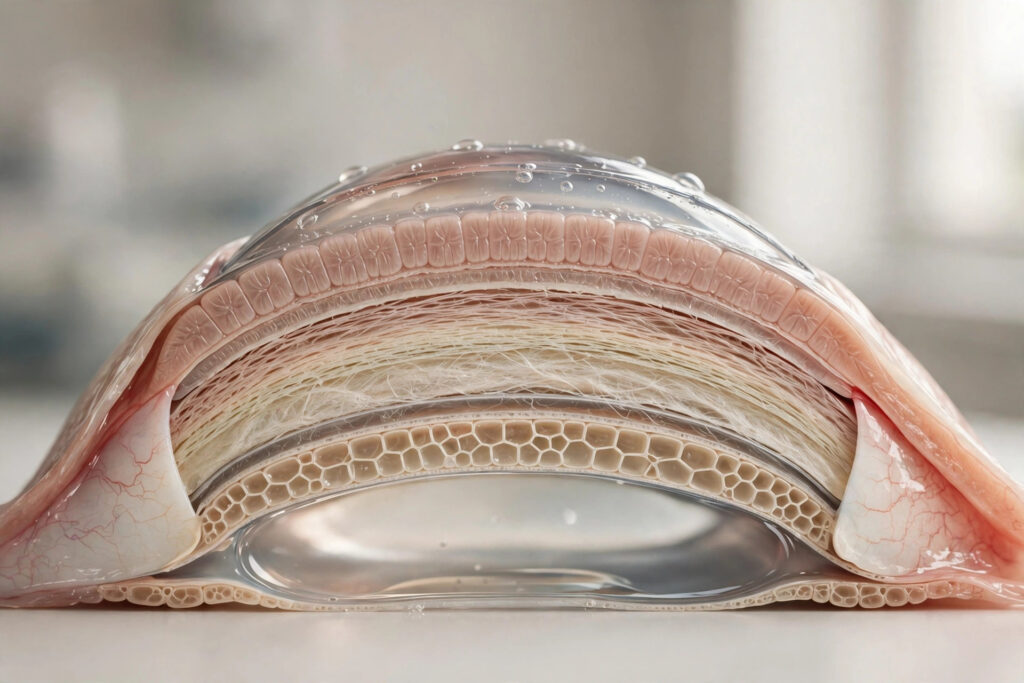
Being told your corneas are too thin for LASIK can feel like a dead end, but it is often just a detour. Corneal thickness is one of the most important safety measurements in refractive surgery, and when it falls short for a LASIK flap, several other procedures may still be excellent options. Understanding why thickness matters is the first step toward finding the right alternative.
This article explains what counts as a thin cornea, why LASIK demands a minimum thickness, which procedures are designed for thinner corneas, and how a thorough screening maps your safest path. This is general information only. Only a qualified refractive eye surgeon, working from your own corneal measurements, can determine which option suits your eyes.
Table of Contents
- Why Corneal Thickness Matters in Laser Surgery
- What Counts as a Thin Cornea
- Best Laser Options for Thin Corneas
- When LASIK Is Still Possible
- The Implantable Lens Alternative
- What Your Screening Should Include
Why Corneal Thickness Matters in Laser Surgery
Laser vision correction reshapes the cornea by removing microscopic amounts of tissue. The cornea must retain enough untouched tissue afterward to keep its shape stable under the eye’s internal pressure for the rest of your life. Remove too much, and the weakened cornea can slowly bulge forward, a serious complication called ectasia that distorts vision and is difficult to reverse.
LASIK is the most tissue-demanding of the common procedures because it does two things: it cuts a flap through the front layers of the cornea, and then it removes reshaping tissue beneath that flap. The flap itself, typically around 100 microns thick, does not count toward the structural tissue left behind. So LASIK consumes thickness twice, which is why it needs the most generous starting measurement.
This is not a flaw in LASIK; it is the reason the pre-operative screening exists. Surgeons measure your cornea with a device called a pachymeter and calculate exactly how much tissue your prescription would require. If the math does not leave a safe margin, a responsible surgeon will decline LASIK and discuss alternatives. That refusal is a sign of a careful practice, not a failure of your eyes.
What Counts as a Thin Cornea
Average central corneal thickness in adults is roughly 540 to 560 microns, though normal ranges vary widely and somewhat by ethnicity. Many surgeons start to exercise extra caution below about 500 microns, and consider corneas under roughly 480 microns thin for LASIK purposes. These are general guideposts, not hard cutoffs; the real calculation combines thickness with your prescription strength, since stronger prescriptions remove more tissue.
A mildly nearsighted patient with a 490-micron cornea may have plenty of margin for LASIK, while a highly nearsighted patient with a 520-micron cornea might not. This is why thickness alone never tells the whole story. The American Academy of Ophthalmology’s LASIK overview emphasizes that candidacy depends on the full combination of measurements, not any single number.
It is also worth knowing that thin corneas are simply a natural variation for most people, like being tall or short. Only a small minority of thin corneas signal an underlying condition such as early keratoconus, a progressive thinning disorder. A good screening distinguishes between the two using corneal topography, which maps the cornea’s shape for the irregular patterns that suggest disease. If keratoconus is suspected, laser surgery of any kind is off the table, and the conversation shifts to managing the condition itself.
Best Laser Options for Thin Corneas
PRK is the classic answer for thin corneas. Instead of cutting a flap, PRK removes the thin outer epithelial layer and applies the reshaping laser directly to the surface. Because no flap consumes thickness, nearly all of the remaining tissue counts toward structural safety. PRK can treat the same range of prescriptions as LASIK, and its long-term visual outcomes are comparable. The trade-off is recovery: the surface takes several days to regrow, with more discomfort and a slower return to sharp vision than LASIK.
SMILE, the small-incision lenticule procedure, is another option surgeons consider for borderline corneas. It avoids a full flap, removing tissue through a tiny incision instead, which preserves more of the cornea’s strong front layers. Many surgeons view SMILE as biomechanically gentler than LASIK for equivalent corrections, making it a frequent recommendation when thickness is adequate but not generous.
Modern PRK variants with faster-healing protocols have narrowed the recovery gap considerably, and in 2026 many clinics offer refined surface procedures that patients tolerate well. The choice between PRK and SMILE for a thin cornea depends on your prescription type, corneal shape, lifestyle, and the surgeon’s experience with each technique. Advances in High Index 1.74 Lenses Explained“>lens technology also mean that staying in glasses or contacts remains a perfectly respectable outcome if no surgical option fits safely.
When LASIK Is Still Possible
A thin cornea does not automatically disqualify you from LASIK. If your prescription is mild, the tissue removal may be small enough to leave a safe residual bed even with a thinner starting point. Surgeons also have some control over the flap: thinner flaps, created with modern femtosecond lasers, consume less tissue than the thicker flaps of earlier mechanical devices, stretching the safety margin a little further.
Some clinics use a calculation called the percent tissue altered, which estimates what fraction of the cornea the procedure would affect. Lower percentages are safer, and this metric sometimes clears patients whose raw thickness number looked borderline. It is one more reason to get a second opinion from a reputable surgeon rather than accepting a single screening result as final.
That said, there is a line that should not be crossed, and ethical surgeons will not cross it. If multiple independent screenings conclude that LASIK would leave your cornea too thin, believe them. The alternatives below exist precisely for this situation, and choosing the safer procedure is always the better outcome. A thorough pre-operative What Is 20/20 Vision? Explained Simply“>eye exam with corneal mapping is what separates a safe plan from a risky one.
The Implantable Lens Alternative
When the cornea is too thin for any laser reshaping, implantable collamer lenses, often called ICLs, offer a completely different approach. Instead of removing corneal tissue, the surgeon places a thin corrective lens inside the eye, in front of the natural lens. Because the cornea is barely touched, its thickness becomes nearly irrelevant to the decision.
ICLs can correct a wider range of prescriptions than laser procedures, including very high nearsightedness that would require unsafe amounts of tissue removal. The procedure is reversible, the lens can be removed or exchanged, and it provides excellent visual quality, often with better night vision than laser options. It is also a strong choice for patients with dry eyes, since the corneal nerves are left undisturbed.
The trade-offs are that ICL is intraocular surgery, which carries a different risk profile than surface laser work, including small risks of cataract formation or pressure elevation that require long-term monitoring. It also tends to cost more than LASIK. For the right patient, though, particularly younger adults with thin corneas and high prescriptions, many surgeons consider it the premium option. Discuss the full risk comparison with a qualified refractive eye surgeon.
What Your Screening Should Include
A screening worthy of your trust goes well beyond a single thickness number. Expect corneal topography and tomography, which map both the front and back surfaces of the cornea in three dimensions; pachymetry at multiple points, not just the center; tear film and dry eye assessment; pupil measurement in dim light; and a dilated retinal exam. Clinics that rush this process or skip the mapping are cutting the exact corner that keeps you safe.
Ask direct questions: How much tissue would my prescription remove? How much residual bed would remain? What is my percent tissue altered? A surgeon who answers clearly and shows you the numbers is demonstrating the transparency you want. Be cautious of any clinic that approves everyone or pressures you to book on the spot.
Finally, remember that non-surgical correction keeps improving. Modern Is Anti-Reflective Coating Worth It?“>eyeglasses with high-index lenses can be thin and light even for strong prescriptions, and today’s contact lenses are more comfortable than ever. Laser surgery is elective, and the best decision is the one that protects your long-term eye health, even if that decision is to wait or to choose glasses. The National Eye Institute’s refractive error resources are a solid neutral starting point for understanding your options.