
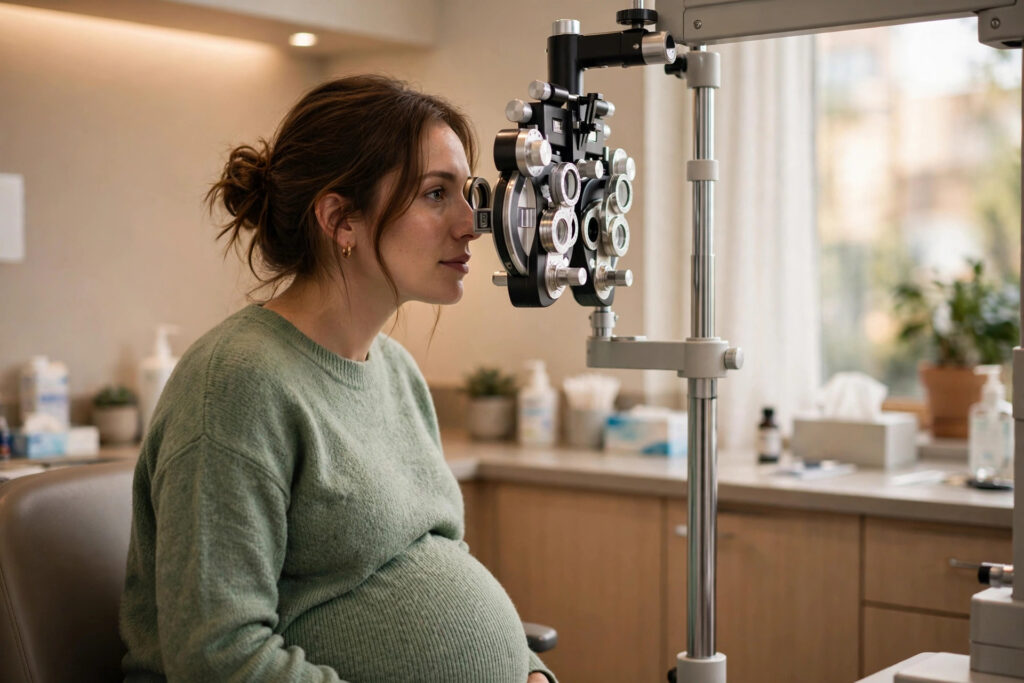
Pregnancy changes the body in countless ways, and the eyes are no exception. Hormonal shifts can temporarily alter vision, corneal thickness, and tear production, which is why refractive surgeons consistently advise against scheduling LASIK during pregnancy. If you are expecting, planning a pregnancy, or nursing, the question is not whether laser eye surgery can work for you, but when the timing is right.
This article covers why surgeons ask patients to wait, how pregnancy and breastfeeding affect the eyes, what the risks of proceeding would be, and how to plan your LASIK journey around family plans. As always, this is general information, not medical advice. A qualified refractive eye surgeon should evaluate your individual situation before any decision is made.
Table of Contents
- Why Pregnancy Complicates LASIK Timing
- Hormone-Driven Vision Changes
- Safety of LASIK During Pregnancy
- Medications and Breastfeeding Considerations
- Timing After Pregnancy and Nursing
- Planning Your LASIK Journey Around Family Plans
Why Pregnancy Complicates LASIK Timing
LASIK works by permanently reshaping the cornea to match a stable prescription. The key word is stable. During pregnancy, fluctuating levels of estrogen and progesterone can change corneal hydration, thickness, and curvature, which in turn can shift your refractive prescription temporarily. Operating on a moving target is the fundamental problem: a correction calculated for a pregnancy-influenced prescription may not match your eyes once hormones settle.
Surgeons typically require a prescription to be stable for at least a year before LASIK. Pregnancy interrupts that stability, so the clock effectively restarts. Many clinics advise waiting until the prescription has been stable again for several months after delivery and, ideally, after breastfeeding has ended. This is not excessive caution; it is the same stability logic that applies to every LASIK candidate, simply extended across a period of known hormonal change.
Dry eye is another pregnancy-related factor. Many pregnant patients notice drier, more sensitive eyes, and tear film changes can affect both the accuracy of pre-operative measurements and comfort during healing. Since post-LASIK dryness is already a common temporary side effect, starting from a baseline of pregnancy-related dryness adds avoidable discomfort. The American Academy of Ophthalmology notes that pregnancy can cause a range of vision changes, most of which resolve after delivery.
Hormone-Driven Vision Changes
The most commonly reported vision change in pregnancy is a mild shift in prescription, usually toward nearsightedness, along with increased sensitivity to contact lenses. Corneal swelling from fluid retention can steepen the cornea slightly, and changes in the lens of the eye may also contribute. For most women these shifts are subtle and reverse after delivery, which is exactly why new How to Read Your Glasses Prescription: A Simple Guide“>eyeglasses prescriptions are generally not recommended during pregnancy unless vision changes are significant.
Contact lens wearers often notice lenses feeling less comfortable during pregnancy, sometimes from the second trimester onward. Reduced tear production and changes in tear chemistry can make lenses feel dry or gritty. Some women temporarily switch to glasses, which is a perfectly reasonable bridge. If you are already considering LASIK partly because contacts have become uncomfortable, that motivation is valid, but the procedure itself should still wait until your eyes have settled.
Less commonly, pregnancy can unmask or worsen conditions such as dry eye syndrome or, rarely, contribute to retinal concerns in women with pre-existing diabetes. These are separate medical issues that deserve their own evaluation. The practical takeaway is straightforward: treat pregnancy as a season for monitoring your vision, not for permanently altering it.
Safety of LASIK During Pregnancy
There is no established evidence that the LASIK laser itself harms a developing baby, and the procedure involves no radiation or systemic drugs. The safety concern is different and twofold: accuracy of the outcome, and the medications used around the procedure. Because pregnancy can shift the prescription and corneal measurements, a correction performed during pregnancy carries a higher chance of overcorrection or undercorrection, which could mean needing glasses again or a later enhancement.
The medication question is the more direct safety issue. LASIK protocols typically include antibiotic and anti-inflammatory eye drops before and after surgery, and occasionally oral medications for anxiety or pain. While eye drops have limited systemic absorption, many surgeons and obstetricians prefer to avoid any non-essential medication exposure during pregnancy. The FDA’s LASIK guidance lists pregnancy among the conditions patients should discuss carefully with their surgeon.
There is also the matter of the healing response. Hormonal changes can influence corneal healing in unpredictable ways, and surgeons prefer the stable, predictable healing environment of a non-pregnant patient. None of this means LASIK is forbidden forever for mothers; it means the procedure belongs in the chapter after pregnancy and nursing, when measurements are trustworthy again.
Medications and Breastfeeding Considerations
Breastfeeding raises similar medication questions. The post-operative drop regimen after LASIK includes steroids and antibiotics, and while only small amounts reach the bloodstream from eye drops, nursing mothers and their doctors often prefer to minimize infant exposure. Many surgeons therefore advise waiting until breastfeeding is finished before scheduling surgery, or at minimum discussing the specific drop protocol with both the surgeon and the pediatrician.
Hormonal fluctuations do not stop at delivery. Prolactin and other hormones involved in nursing can continue to influence corneal hydration and prescription stability. Women who are nursing often notice their vision has not fully returned to its pre-pregnancy baseline. Surgeons generally look for a stable refraction over consecutive visits before clearing a patient, and that stability is easiest to confirm once nursing has ended.
If you are not breastfeeding, the waiting period is shorter but not zero. The body needs time after delivery for fluid balance and hormones to normalize. Most clinics suggest waiting at least a few months postpartum and confirming prescription stability with a comprehensive Online Eye Exams vs In-Person: Pros and Cons“>eye exam before proceeding with candidacy screening.
Timing After Pregnancy and Nursing
There is no single universal waiting period, because it depends on how quickly your vision stabilizes. A commonly cited guideline is to wait at least three to six months after delivery, and until breastfeeding has ended, before undergoing final LASIK measurements. The real criterion is documented stability: matching prescriptions at two visits spaced months apart.
Use the waiting period productively. Keep your existing glasses or Contact Lenses for Teenagers: A Parent’s Guide“>contact lenses updated enough for daily life, attend regular eye exams so changes are tracked, and start researching surgeons without pressure. Many clinics offer free or low-cost initial consultations, and there is no harm in having an early conversation about your timeline, even if surgery itself is a year away.
One more consideration: the demands of a newborn. LASIK recovery is quick, but the first days involve frequent lubricating drops, no eye rubbing, and follow-up visits. Scheduling surgery when you have support at home and can rest makes the experience smoother. Some mothers prefer to wait until the baby is sleeping more predictably, which often coincides naturally with the end of nursing.
Planning Your LASIK Journey Around Family Plans
If you are planning a pregnancy in the near future, the usual advice is to have LASIK either well before conceiving or after the family-building chapter is complete. Having the procedure done, healed, and stable before pregnancy avoids the entire timing question, and a completed LASIK correction does not affect a future pregnancy or delivery. There is no evidence that prior LASIK complicates childbirth, including the pushing phase of labor, in women with otherwise healthy eyes.
If pregnancy is already underway, treat LASIK as a future project. Note any vision changes you experience, keep up with eye exams, and protect your eyes from UV exposure with good sunglasses, since pregnancy can increase light sensitivity for some women. When the time comes, a full candidacy workup, including corneal mapping and tear film assessment, will determine whether LASIK or another procedure suits your eyes.
The bottom line is patience with a payoff. Waiting until hormones, prescriptions, and nursing have settled gives the surgeon the stable measurements needed for the best possible outcome, and it removes any medication concerns for the baby. Discuss your family timeline openly at your consultation so the surgeon can help you pick the right moment. A qualified refractive eye surgeon will always prefer to wait a few months rather than operate on an unstable prescription.