
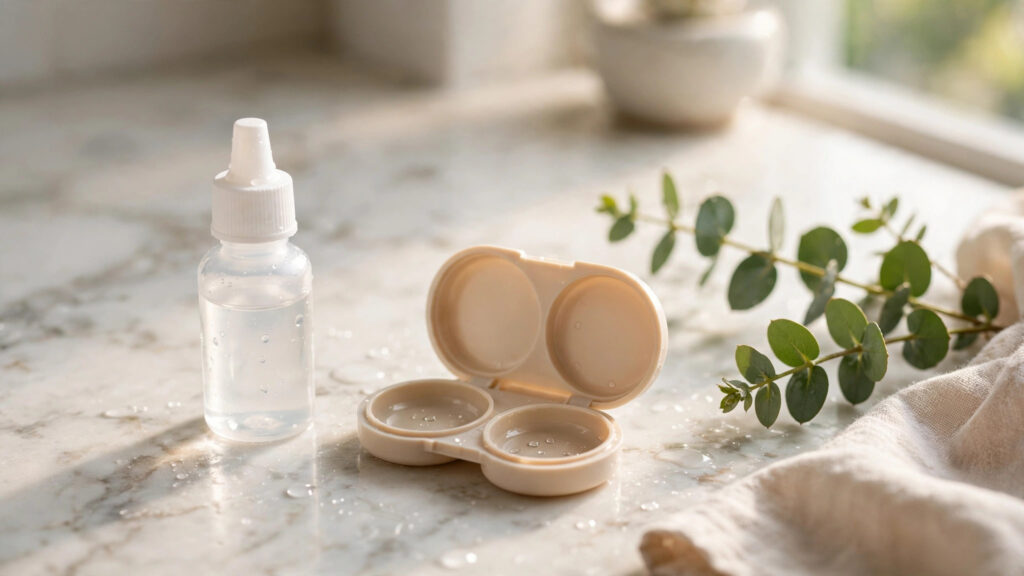
Every contact lens wearer knows the 3 p.m. feeling: lenses tightening, blinking getting scratchy, eyes begging for moisture. The best rewetting drops for contacts solve this in seconds — but only if you choose drops actually formulated for lens wear and use them correctly.
Not all eye drops are lens-safe. Some contain preservatives or active ingredients that bind to lens material, and “redness relief” drops can make things worse. Here’s how to pick the right drops and get the most out of them.
Table of Contents
- What Rewetting Drops Do
- Preservative-Free: Why It Matters
- What to Look for on the Label
- Drops to Avoid With Contacts
- How and When to Use Rewetting Drops
- When Drops Aren’t Enough
What Rewetting Drops Do
Rewetting drops are lubricating drops specifically formulated for use with contact lenses in the eye. They supplement your tear film, rehydrate the lens surface, flush away light debris and allergens, and reduce friction between the lens and eyelid. The relief is usually immediate — one drop per eye restores the smooth, cushioned feel of a fresh lens.
They work best as maintenance, not rescue. A drop used proactively at midday keeps the lens surface wettable; drops used after hours of dryness are fighting an uphill battle against a dehydrated lens. Think of them as part of your wearing routine, like the lens case hygiene habits that protect your eye health day to day.
Preservative-Free: Why It Matters
Preservatives like benzalkonium chloride (BAK) keep multi-dose bottles sterile, but they can irritate the ocular surface and accumulate in soft lens material, releasing slowly onto the eye all day. For occasional users this rarely matters; for anyone using drops multiple times daily — which describes most lens wearers reaching for relief — preservative-free is the safer choice.
Preservative-free drops come in single-dose vials: twist, use, discard. They’re slightly less convenient and a bit pricier, but they eliminate the preservative variable entirely. If your eyes sting after using preserved drops, or you need drops more than four times a day, switching to preservative-free often resolves the problem on its own.
What to Look for on the Label
Look for “lubricant eye drops” or “rewetting drops” explicitly labeled safe for use with contact lenses — soft lenses specifically, since some drops are only approved for rigid lenses. Common lubricating ingredients include carboxymethylcellulose, hyaluronic acid (sodium hyaluronate), and glycerin. Hyaluronic acid-based drops are particularly popular with lens wearers for their long-lasting moisture retention.
Check that the drops are compatible with your lens type. Most modern rewetting drops work with both soft and rigid lenses, but the label is the authority. When in doubt, the guidance from All About Vision is a reliable reference for matching drop formulations to lens materials.
Drops to Avoid With Contacts
Never use redness-relief (“get the red out”) drops with lenses in. Their vasoconstrictor ingredients shrink blood vessels cosmetically while potentially worsening dryness, and they can interact with lens materials. They also mask redness that might be signaling a real problem — exactly what you don’t want.
Similarly, avoid medicated drops — allergy, antibiotic, or steroid formulas — with lenses in unless your doctor specifically instructs otherwise. Most are formulated for the bare eye and need a lens-free window to work properly. And skip any “natural” or homemade remedies; only sterile, properly formulated products belong anywhere near contact lenses.
How and When to Use Rewetting Drops
Technique matters: wash hands, tilt your head back, pull down the lower lid, and let one drop fall into the pocket without touching the bottle tip to your eye or lens. Blink gently a few times to spread it. One drop per eye is usually enough; flooding the eye just wastes product.
Timing beats quantity. Use drops before long screen sessions, before entering dry environments like airplanes, and at the first hint of dryness rather than waiting for full-blown discomfort. Keep single-dose vials in your bag, desk, and car so they’re always within reach. Consistent light use outperforms occasional heavy use, and it’s gentler on the lens technology keeping your vision clear.
Storage matters too: keep single-dose vials at room temperature and discard any vial immediately after use — they’re not designed for resealing, and a partially used vial can harbor bacteria. For multi-dose preservative-free bottles (which use special one-way valves), follow the discard-after-opening timeframe on the label, typically around three months.
When Drops Aren’t Enough
If you’re using rewetting drops constantly and still uncomfortable, the drops aren’t the problem — something else is. Common culprits: overworn lenses past their replacement schedule, a lens material that doesn’t suit your tear chemistry, undiagnosed dry eye or meibomian gland dysfunction, or environmental factors like office air quality.
See your eye doctor rather than escalating drop use indefinitely. They may change your lens material, switch you to daily disposables, treat the underlying ocular surface, or adjust your wearing schedule. Regular eye exams catch these issues early — drops are a tool for comfort, not a substitute for diagnosis.