
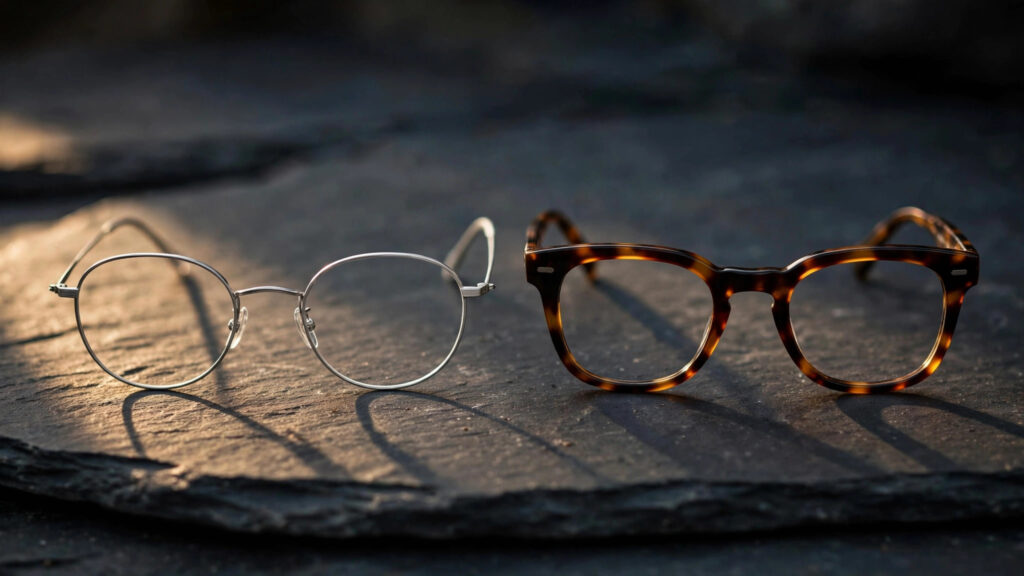
When shopping for glasses frames, you’ll quickly narrow to two dominant materials: titanium and acetate. They represent opposite philosophies — titanium is featherweight metal engineering; acetate is bold, colorful plant-based plastic. The right choice affects comfort, durability, style, and price.
Here’s an honest comparison of titanium vs acetate frames across every factor that matters, so you can pick the material that fits your face, lifestyle, and budget.
Table of Contents
- Titanium Frames: Overview
- Acetate Frames: Overview
- Weight and Comfort
- Durability and Adjustability
- Style, Allergies, and Cost
- Which Material Wins for You?
Titanium Frames: Overview
Titanium is a premium frame metal prized for its exceptional strength-to-weight ratio — it’s as strong as steel at roughly half the weight. Pure titanium and titanium alloys (often blended with nickel or aluminum) dominate the high-end metal frame market. Beta-titanium variants add flexibility, allowing temples that spring back into shape.
Titanium frames are typically thin, minimalist, and understated — the material’s strength allows for remarkably slim profiles that would snap in lesser metals. They’re also hypoallergenic and corrosion-resistant, shrugging off sweat and salt air that tarnish cheaper metals. If you’ve ever had green marks on your nose from cheap frames, titanium is the upgrade that ends that.
Acetate Frames: Overview
Acetate (cellulose acetate) is a plant-based plastic derived from cotton and wood pulp. It’s the material behind those bold, colorful, substantial frames you see everywhere — tortoiseshell patterns, vivid colors, and thick vintage-inspired designs are all acetate’s domain. Unlike cheap injection-molded plastics, quality acetate is cut from layered sheets, giving it depth and richness.
Acetate frames are hypoallergenic, endlessly customizable in color and pattern, and easy for opticians to adjust with gentle heating. They’re the fashion-forward choice and dominate the designer frame market. For children’s frames, acetate’s adjustability and fun colors make it a perennial favorite — though kids’ titanium options exist for those needing maximum lightness.
Weight and Comfort
Titanium wins on weight, decisively. A titanium frame can feel almost invisible — a major advantage for all-day wear, strong prescriptions (where lens weight already burdens your nose), and anyone prone to pressure marks or headaches from heavy glasses. If comfort is your top priority, titanium is hard to beat.
Acetate frames are heavier — substantially so in bold, thick designs. That weight isn’t all bad: many wearers find substantial acetate frames stay put better and feel more secure, especially with an active lifestyle. But for 12-hour wear days, the lightness of titanium is genuinely noticeable. Nose pad design matters too: most titanium frames use adjustable silicone pads, while acetate typically has fixed pads molded into the frame — relevant if you have a low nose bridge, where adjustable pads (and properly fitted sunglasses) make a real comfort difference.
Durability and Adjustability
Titanium is extraordinarily durable — it resists bending, snapping, and corrosion. Memory titanium (flexon-style alloys) can be twisted dramatically and spring back. The catch: when titanium does break or need major adjustment, it requires specialized equipment; your corner optician may not be able to weld it, and adjustments are less forgiving than with acetate.
Acetate is less inherently tough — it can crack under sharp impact and fades slowly with prolonged sun exposure — but it’s far easier to service. Any optician can heat and reshape acetate in minutes, and the material is inexpensive enough that replacement is painless. Acetate also handles daily knocks gracefully; small scratches blend into patterned finishes. For durability plus easy maintenance, both work — they just fail differently. Keep any frame healthy with regular check-ups alongside your routine eye exams.
Style, Allergies, and Cost
Style is acetate’s home turf: unlimited colors, patterns, transparencies, and bold shapes. Titanium’s aesthetic is refined minimalism — elegant, but limited. If your glasses are a fashion statement, acetate gives you the canvas; if you want eyewear that disappears, titanium is the answer.
Both materials are hypoallergenic, making them safe for sensitive skin — a meaningful advantage over nickel-heavy cheap metals. On cost, titanium frames command premium prices reflecting the material and precision manufacturing; quality acetate spans mid-range to designer-luxury. The AAO’s frame materials overview is a useful reference if you want to explore additional options beyond these two.
Which Material Wins for You?
Choose titanium if: you prioritize featherweight comfort, have metal allergies, want minimalist style, wear glasses all day, or have a strong prescription where every gram matters. It’s the engineering choice — maximum performance, minimum presence.
Choose acetate if: you want bold style and color, prefer substantial frames that stay put, need easy adjustments, or want designer variety at flexible prices. It’s the fashion choice — maximum expression, easy living. Many glasses wearers eventually own both: titanium for invisible daily comfort, acetate for style. There’s no wrong answer, only the right material for how you live and what you want your glasses to say.