
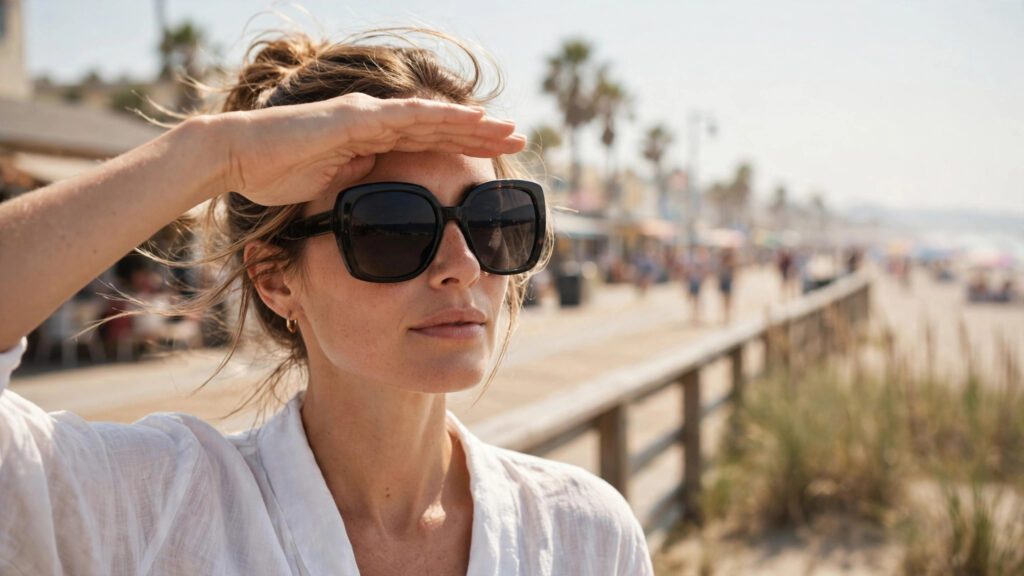
If bright daylight makes you squint within seconds, you are not alone. Light sensitivity affects millions of people, and it can stem from dry eyes, migraines, recent eye surgery, contact lens wear, or simply naturally sensitive eyes. For these individuals, ordinary fashion sunglasses often fail to deliver real comfort, because darkness alone is not what protects the eye.
Choosing the right pair of sunglasses for sensitive eyes means looking past style and focusing on ultraviolet protection, lens technology, tint density, and fit. This guide breaks down exactly what to look for so your next pair actually relieves discomfort instead of just dimming your view.
Table of Contents
- Why Dark Isn’t Enough
- UV Protection Is Non-Negotiable
- Best Lens Types: Polarized vs. Photochromic
- Tint Colors and Lens Density
- Fit, Wrap, and Anti-Glare Coatings
- When Sensitivity Needs Medical Attention
Why Dark Isn’t Enough
A very dark lens can actually be worse for sensitive eyes if it lacks proper UV filtering. Dark lenses cause your pupils to dilate, which lets more light and ultraviolet radiation reach the inner eye. If the lens does not block UVA and UVB rays, that dilation increases your exposure rather than reducing it. This is one of the most common mistakes people make when shopping for sunglasses for sensitive eyes.
True comfort comes from the combination of adequate visible light reduction and complete UV blocking. A medium-tint lens with full UV400 protection will protect your eyes far better than a near-black lens with no certified UV filter. The American Academy of Ophthalmology recommends choosing sunglasses that block 100 percent of UVA and UVB rays regardless of how dark they look.
Quality matters more than price, but the two often correlate. Cheap novelty lenses may claim UV protection without meeting standards. Look for a labeled UV400 rating or a specific “100% UV protection” statement from a reputable manufacturer.
UV Protection Is Non-Negotiable
Ultraviolet radiation contributes to cataracts, macular degeneration, and painful sunburn of the cornea known as photokeratitis. Sensitive eyes are often already dealing with inflammation or dryness, so added UV stress makes symptoms worse. This is why dermatologists and eye doctors alike treat sunglass UV ratings as medical information, not marketing.
The UV400 standard means the lens blocks wavelengths up to 400 nanometers, covering essentially all UVA and UVB radiation. Some lenses also advertise blue-light filtering, which can help with screen-related discomfort, but blue-light protection is no substitute for UV400 certification. For more on how UV damage accumulates, see our guide to protecting your long-term eye health.
Wraparound styles add another layer of defense by blocking peripheral rays that enter from the sides. UV light reflects off water, sand, snow, and pavement, so side coverage matters as much as front coverage for people whose eyes react strongly to glare.
Best Lens Types: Polarized vs. Photochromic
Polarized lenses are the top recommendation for most people with sensitive eyes. They contain a special filter that blocks horizontally reflected glare, the harsh bounce of light off roads, water, and car hoods. This dramatically reduces the squinting and eye fatigue that sensitive eyes experience in bright environments. Polarization does not reduce UV on its own, so polarized lenses still need a UV400 rating.
Photochromic lenses, which darken automatically in sunlight, are ideal if you move between indoors and outdoors frequently. They eliminate the constant on-and-off routine that annoys many sunglass wearers. Note that most photochromic lenses activate less behind car windshields because windshields already block the UV that triggers the reaction. If you drive a lot, a dedicated pair of polarized sunglasses may serve you better than photochromics.
Some people with extreme sensitivity do best with gradient lenses, which are darker at the top and lighter at the bottom, allowing clear dashboard or phone viewing while cutting overhead glare. Your choice should match your daily routine, not just your diagnosis.
Tint Colors and Lens Density
Tint color changes contrast and color perception, and certain tints genuinely help sensitive eyes more than others. Gray tints reduce overall brightness without distorting colors, making them the safest all-purpose choice. Brown and amber tints boost contrast and depth perception, which many people find soothing in variable light, though they can feel too warm for some.
Green tints preserve natural color balance while cutting glare, and rose or copper tints are popular among people with migraines because they soften harsh fluorescent and LED light. The key is to try tints in the lighting conditions where your eyes bother you most. A tint that feels perfect in a store may feel wrong under real midday sun.
Lens density is graded from 0 to 4. Category 3 is the standard for bright sunlight, while category 4 is extremely dark and suited to high-altitude or desert environments. People with severe sensitivity sometimes need category 4, but these lenses are too dark for driving in many jurisdictions, so check local rules before choosing them.
Fit, Wrap, and Anti-Glare Coatings
Even the best lenses fail if light leaks in around the edges. A close-fitting frame with a curved, wraparound shape keeps peripheral light from reaching your eyes and also shields against wind, which aggravates dry eye symptoms. Adjustable nose pads help the frame sit close without pressing uncomfortably.
An anti-reflective coating on the back surface of the lens is one of the most underrated features for sensitive eyes. It eliminates the bounce-back glare that reflects off the inner lens surface into your eyes. Mirror coatings on the front surface can further reduce visible light transmission and add a stylish look, though they do not add UV protection by themselves.
If you wear prescription glasses, clip-on or fit-over styles are convenient, but prescription sunglasses custom-made to your fit will always perform better. Contact lens wearers should know that UV-blocking contacts do not cover the whole eye, so sunglasses remain necessary. Our contact lens guides explain how to combine contacts with proper sun protection.
When Sensitivity Needs Medical Attention
Mild sensitivity is common, but sudden or severe light sensitivity can signal an eye infection, corneal abrasion, uveitis, or a migraine disorder. If your sensitivity appeared abruptly, is accompanied by pain, redness, blurred vision, or headaches, schedule an eye exam rather than simply buying darker sunglasses.
Certain medications, including some antibiotics and acne treatments, increase light sensitivity as a side effect. If your eyes became more sensitive after starting a new prescription, mention it to both your doctor and your eye care provider. They may adjust the medication or recommend a specific lens tint that helps.
For ongoing sensitivity, an eye doctor can check for underlying causes and may suggest FL-41 tinted lenses, a rose-colored tint studied for migraine and photophobia relief. The right diagnosis turns sunglass shopping from guesswork into a targeted solution.