
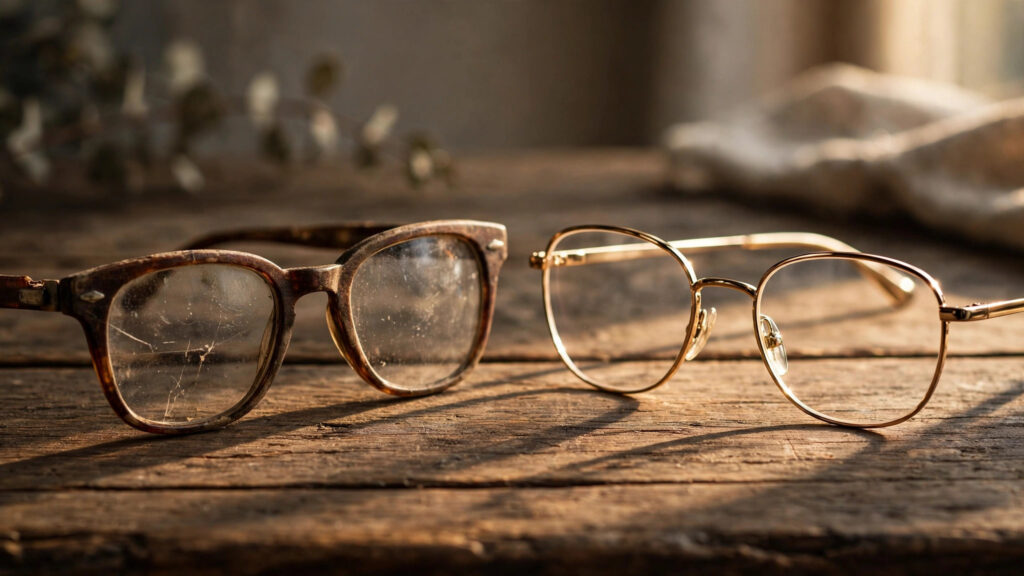
Most people replace their glasses far less often than they should — wearing the same pair for three, four, even five years while their vision slowly degrades and their lenses accumulate damage. But how often should you actually replace your glasses? The answer depends on your prescription stability, lens condition, and lifestyle.
Here’s how to tell when it’s time for new glasses, what happens if you wait too long, and how to get the most life from each pair.
Table of Contents
- The General Replacement Timeline
- Signs Your Prescription Changed
- Signs Your Lenses Are Worn Out
- Frame Wear and Fit Problems
- Special Cases: Faster Replacement
- Making Glasses Last Longer
The General Replacement Timeline
The standard guidance: replace your glasses every one to two years, aligned with your regular eye exam schedule. Annual exams catch prescription changes early; biennial replacement is the practical norm for adults with stable vision. This isn’t a sales tactic — vision changes gradually enough that you often don’t notice the decline until you compare old and new lenses side by side.
Children need more frequent replacement — often yearly or even every six to nine months — because their eyes change rapidly and they outgrow frames. Teens in growth spurts are similar. Adults over 40 should also stay on the shorter cycle, since presbyopia progresses noticeably year over year and lens needs evolve.
Signs Your Prescription Changed
Your eyes will tell you when the prescription no longer matches: frequent headaches (especially afternoons and evenings), eye strain or fatigue, squinting to see clearly, blurred vision at distances that used to be sharp, and difficulty with night driving. If you find yourself removing your glasses to see better — or seeing better without them than with them — your prescription has definitely shifted.
Don’t “wait and see” with these symptoms. An outdated prescription forces your eye muscles to compensate constantly, causing fatigue that people often blame on stress or screens. A quick exam and updated lenses usually resolve it immediately. Tracking changes over time also helps your doctor spot developing eye health issues before they become serious.
Signs Your Lenses Are Worn Out
Even with a stable prescription, lenses degrade. Look for: a haze of fine scratches visible in bright light, coating that’s peeling or crazing (spiderweb cracks in the anti-reflective layer), lenses that never seem clean no matter how you wipe them, and increased glare at night. Each of these scatters light and reduces the clarity your prescription is supposed to deliver.
Scratched lenses don’t just look bad — they measurably reduce visual quality, especially in challenging light. If your lenses are over two years old and showing wear, new lenses in your existing frames (if the frames are sound) can be a cost-effective refresh. Modern lens coatings are more durable than older generations, but they’re not immortal.
Frame Wear and Fit Problems
Frames wear out too: stretched temples that won’t stay adjusted, loose hinges, corroded nose pads, discolored or peeling finishes, and frames that constantly slide down your nose. Poor fit isn’t just annoying — it misaligns your lenses’ optical centers, degrading vision even with a perfect prescription.
Some frame issues are fixable: opticians can replace nose pads, tighten hinges, and re-adjust fit. But when the frame itself is bent, cracked, or structurally tired, replacement is the answer. And if your style has evolved — glasses are your most visible accessory — wanting a fresh look is a perfectly valid reason to upgrade.
Special Cases: Faster Replacement
Certain situations demand faster replacement. After eye surgery (cataract, LASIK, etc.), prescriptions often change significantly — follow your surgeon’s timeline. If you develop diabetes or start medications affecting vision, get checked promptly rather than waiting for your annual cycle. Eye injuries or infections warrant immediate re-evaluation.
Safety and sports eyewear should be replaced at any sign of impact damage, even without visible cracks — compromised impact resistance is invisible until it fails. And prescription sunglasses with scratched or delaminating lenses should be replaced before the damaged optics affect your driving safety.
Making Glasses Last Longer
Maximize each pair’s life: clean lenses properly (rinse before wiping, microfiber only), always use a hard case, keep a backup pair so you’re never stuck wearing damaged glasses, and get minor adjustments promptly before small fit issues become frame damage. Consider two pairs in rotation — alternating reduces daily wear on each.
But don’t stretch replacement past the point of diminishing returns. Wearing outdated or damaged glasses costs you in headaches, eye strain, and reduced quality of life — usually more than the price of new lenses. The AAO’s guidance on eye exams reinforces the connection between regular check-ups and timely prescription updates. Think of glasses like tires: they wear gradually, and replacing them on schedule keeps everything running smoothly.
One more tip: check your vision insurance before you buy. Many plans cover new frames and lenses every 12 months, and flexible spending accounts can pay for upgrades your plan doesn’t cover. Using benefits you’re already paying for makes staying on schedule essentially free — there’s little reason to wear tired glasses when a fresh pair costs you nothing out of pocket.