
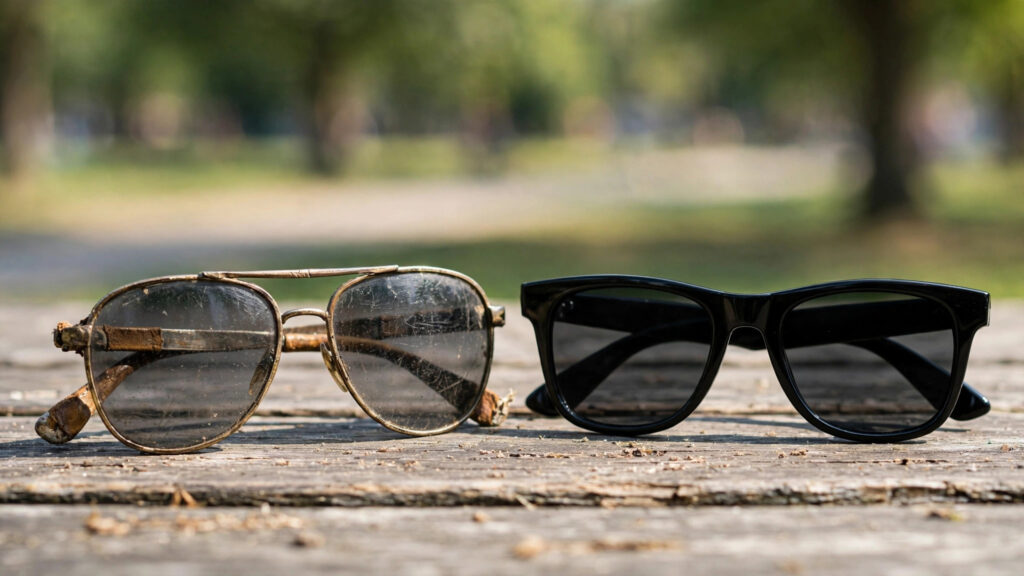
Sunglasses do not last forever, even expensive ones. Lenses accumulate micro-scratches, UV coatings degrade, frames loosen, and your vision itself changes over time. Yet most people wear the same pair for years without questioning whether it still protects their eyes.
Knowing when to replace sunglasses is a matter of both eye health and value. A degraded pair can give you a false sense of security while letting harmful UV reach your eyes. Here are the clear signs that your current pair has earned retirement.
Table of Contents
- Scratched Lenses
- Faded UV Protection
- Loose or Warped Frames
- Peeling or Bubbling Coatings
- Your Prescription Changed
- How Long Sunglasses Typically Last
Scratched Lenses
Scratches are the most visible sign of sunglass aging. Minor surface marks may seem harmless, but they scatter incoming light and create glare that forces your eyes to work harder. Over time, this contributes to eye strain and headaches, especially during driving or long outdoor activities.
Deep scratches in the center of your field of vision are an immediate replacement trigger. They distort what you see and cannot be polished out of coated lenses without damaging the coating further. If you find yourself tilting your head to see around a scratch, the lenses are done.
Prevention extends lens life significantly. Always store sunglasses in a hard case, never toss them lens-down on tables, and clean them with a microfiber cloth and lens spray rather than clothing or paper towels. Quality scratch-resistant coatings help, but they resist scratches rather than preventing them entirely.
Faded UV Protection
UV protection is invisible, which makes its decline easy to miss. The UV-blocking treatment in many lenses degrades with prolonged sun exposure, heat, and chemical contact. A lens can still look dark while blocking far less UV than it did when new, creating a dangerous situation because dark lenses dilate your pupils and admit more radiation.
There is no reliable home test for UV degradation. Some optical shops offer UV meters that can check your lenses in seconds, a check the American Academy of Ophthalmology suggests for aging sunglasses. If the meter shows reduced blocking, replacement is the only fix, since UV coatings cannot be reapplied to finished lenses.
This silent degradation is one reason eye doctors recommend treating sunglasses as protective equipment with a lifespan, not a permanent accessory. Our eye health resources explain how cumulative UV exposure contributes to cataracts and macular degeneration over a lifetime.
Loose or Warped Frames
A frame that constantly slides down your nose is more than an annoyance. Poor positioning means the lenses no longer sit at the correct angle and distance from your eyes, reducing both comfort and protection. Light leaks in around the edges, and you end up squinting anyway.
Some looseness can be fixed with a professional adjustment. Opticians can tighten hinges, realign temples, and replace nose pads in minutes, often for free. But if the frame itself is warped from heat or the hinge mounts are cracked, adjustment is a temporary patch. Plastic frames that have lost their shape rarely hold an adjustment for long.
Metal frames with corrosion around the hinges or nose pad arms are also candidates for replacement, since corrosion weakens the structure and can irritate skin. When repairs cost a significant fraction of a new pair, replacement is usually the smarter choice.
Peeling or Bubbling Coatings
Modern sunglass lenses often carry multiple coatings: anti-scratch, anti-reflective, hydrophobic, and mirror finishes. When these coatings start peeling, flaking, or developing a bubbly, crazed appearance, the lens is compromised. The damage scatters light and looks terrible, and there is no way to recoat a lens once the factory finish fails.
Coating failure usually starts at the edges and spreads inward. Heat accelerates it, which is why sunglasses left on car dashboards often develop that distinctive cracked-coating look. Salt water and harsh cleaning chemicals can also attack coatings prematurely.
Once peeling is visible in your line of sight, replacement is the only option. Continuing to wear damaged lenses means accepting distorted vision and reduced glare control, which defeats the purpose of wearing sunglasses at all.
Your Prescription Changed
If you wear prescription sunglasses, your lenses have an expiration date tied to your vision. An outdated prescription causes eye strain, headaches, and compromised safety while driving, even if the frames and sun protection are still fine. Most adults should have their vision checked regularly, and any prescription change means new sunglass lenses too.
Signs your prescription may be outdated include squinting despite wearing your sunglasses, difficulty reading signs at distance, and headaches after outdoor activities. Do not assume these symptoms are just sunglass wear; schedule an eye exam to check.
Some people keep old prescription sunglasses as backups, which is fine for emergencies. But your primary pair should always match your current prescription. Updating the lenses in a favorite frame is often possible and costs less than a whole new pair.
How Long Sunglasses Typically Last
With good care, a quality pair of sunglasses lasts about two to three years of regular use. Budget pairs may last a year or less before hinges loosen or coatings fail. Heavy outdoor users, such as runners, boaters, and construction workers, wear through pairs faster because of constant UV, sweat, and impact exposure.
Consider replacing sunglasses on a schedule rather than waiting for failure. Marking a two-year refresh keeps your UV protection reliable and lets you take advantage of improvements in eyewear design and lens materials. It also ensures your style stays current, which matters more than most people admit.
Finally, keep a backup pair. Sunglasses break, get lost, and get left behind at exactly the wrong moment. A spare pair in your car or bag means you never have to squint through a bright day unprotected while waiting for a replacement.